
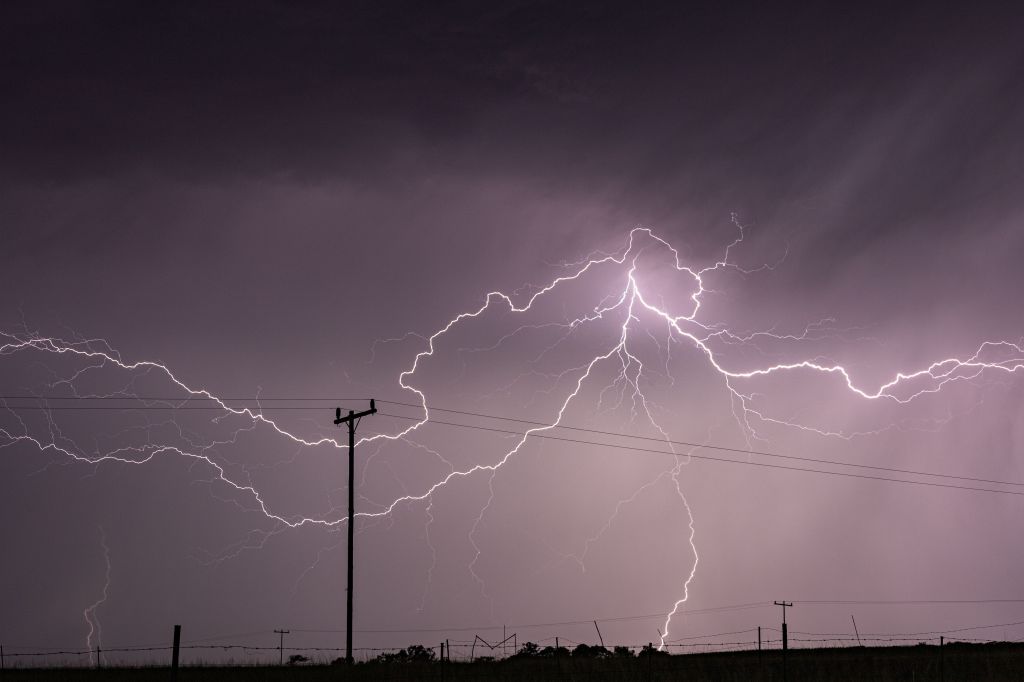
Storms and earthquakes level bridges and buildings— which is not the “fault” of those bridges and buildings.
Even bridges and buildings that are designed to stand up to storms and earthquakes, get f*cked up by them.
It usually has nothing to do with how intelligently or well they were built.
It’s more often the case that trauma is simply trauma.
It’s the same with human beings.
When something happens that injures us, it’s not our fault for not being “tougher” or “stronger.”
There are absolutely events that overwhelm the capacity of the toughest, strongest humans.
It’s not even necessarily the intensity of the trauma that makes the difference.
Trauma that is inescapable, that unfolds over time, and that entwines with our important relationships— that is to say, complex trauma— doesn’t have to be particularly “intense” in order to deeply injure us.
Why does this matter?
Because CPTSD survivors are absolute champions at self-blame.
It’s not our fault— we’ve been conditioned, conned, into the habit.
We’ve often been told, over and over again, by people in authority— parents, teachers, spiritual leaders— that we’re “bad,” we’re “lazy,” we’re “sinful.” That the problem is with us.
We are designed to believe things we’re repeatedly told. Especially by people who have power in our world, people we “should” be able to trust.
So when we start coming to terms with our post traumatic injuries, our first instinct is often to blame ourselves— our “choices” (which often were not choices), our supposed lack of “toughness,” our alleged lack of “strength.”
Shame and self-blame just don’t work to change how we feel and function. Not over time, not in positive or sustainable ways.
And but also, that shame and self-blame is often nothing more than BS (Belief Systems— but also the other kind of “BS”).
You and I, as humans, were not designed to weather the kind of pressure that we were put under.
Our evolutionary history may have designed us to withstand certain physical pressures— which is why you’re alive to read this, and I’m alive to write this— but evolution did not equip us to carry on in the face of mental or emotional or spiritual or financial abuse.
This matters, insofar as CPTSD almost always springs from a combination of those, often in addition to physical or sexual abuse.
All of which is to say, most of the people reading this (and the person writing this) could probably use a reminder that it’s not our fault that we get injured by things we’re not designed to withstand— and that’s not our fault.
A storm doesn’t have to be the worst storm in the history of storms to do significant damage to a structure— the storm just has to hit the structure in just the right way.
Have you ever seen that old time video footage of a bridge wildly deforming because an earthquake just happened to hit with aftershocks that resonated at exactly the right frequency to destabilize it? Go look it up, it’s wild.
The damage inflicted by trauma is not necessarily about intensity. It’s about how it resonates with our vulnerabilities.
And the longer trauma takes to unfold; the more inescapable it is; and the more it entwines with our relationships, the more opportunities it has to resonate with the vulnerabilities of our human nervous system.
None of which is our fault.
We don’t “choose” trauma, and trauma responses are not “choices.”
Recovery behaviors ARE choices— starting with noticing how we’re talking to ourselves, how we’re directing our “mental spotlight,” and how we’re breathing and using and taking care of our physical body.
Self-talk, mental focus, and physiology. Every effective trauma recovery tool or strategy reduces to a combination of these three.
Breathe. Blink. Focus.
And notice when Trauma Brain is trying to blame you for a storm you didn’t invite, an earthquake you couldn’t prevent, or for being a normal, vulnerable human being.


