Trauma recovery and reclamation.

Part— but not all— of trauma recovery is reclamation. 

Our abusers and bullies, whether the were people, churches, organizations, governments, or whatever— took things from us. 

Sometimes they took language from us. 

Sometimes they took activities from us. 

Sometimes they took whole chunks of our identity. 

What I mean when I say they “took things from us” is, after we’ve been through trauma, there tend to be things that we don’t want to think about, get near, engage with, or identity with, because they remind us of our abusers or abuse. 

Sometimes it’s something as simple as a word. 

Sometimes it’s an activity that we might otherwise find fun or meaningful. 

Sometimes it’s music. 

Sometimes it’s an identification with a family or tribe of some sort. 

The list of things trauma takes from us includes big and little things— and rarely a day goes by when we are not cognizant of trauma having taken something away from us. 

There are multiple moving part to trauma recovery, but I believe an important part is reclaiming what we choose to take back. 

I believe it really maters that we feel realistically able to claim and own and engage with things that are pleasurable or meaningful to us— even (especially!) after the’ve been “tainted” by our abusers. 

It’s true that many survivors in recovery define ourselves by what we aren’t— namely, we are not our abusers. 

Most survivors work really hard to be better people, better parents, better morally and spiritually and emotionally than the people who hurt us. 

Who we AREN’T tends to be such a huge part of our trauma recovery identity, that sometimes we can lose perspective on the fact that there may be things that we’re rejecting that actually have nothing to do with our abusers per se— and which we might actually value. 

I just don’t believe in letting abusers and bullies limit who we can be and what we can do.

Most of us have spent far too long tiptoeing through life like navigating a minefield— and make no mistake, emotionally and psychologically, that’s absolutely what many of us have been doing. 

Maybe reclamation for you looks like choosing to use words in a particular way that is authentic to you, but which got corrupted by an abuses’s habits of expression. 

(Welcome to why I so often use profanity in my writing.) 

Maybe reclamation for you looks like exploring or practicing a spatial path that an abuser poisoned for you once upon a time. 

Maybe reclamation for you looks like getting reacquainted with music that actually moves you, but which got associated with pain for you once upon a time. 

I’ve said it before: trauma recovery is a search and rescue operation. 

Think of reclamation as one of the most important ways we reestablish who we are and what we’re all about— and one of the most important ways we keep from being controlled by our abusers and bullies every day. 

WTF is the “f*ck” trauma response?

What I call the “f*ck” trauma response, where we respond to triggers by becoming hyper sexualized, fixated on sexual thoughts and behaviors, and vulnerable to risky sexual choices, is not the “fawn” response, where we please and appease in order to avoid danger. 

I think of the “f*ck” response as separate from, but related to, “fight,” “flight,” “freeze,” “fawn,” and “flop.”

(As you learn about the “F” trauma responses, you’ll come to understand they’re all related on certain levels, but very distinct on others.) 

Yes, sometimes sexual behavior is driven by the “fawn” “please and appease” reflex— but that’s not quite what I’m talking about with “f*ck.” 

When our abuse was sexual, it can do a real number on how we think about, respond to, and otherwise experience sexually. 

In some ways the “f*ck” response can appear to be a “fawn” reflex— but the main difference is that “fawn” focuses on please and appeasing the threatening person, whereas “f*ck” is focused on regulating our own nervous system. 

In some ways, “f*ck” does resemble the “flight” response, in that survivors experience it as a “flight” into sexual ideation and behavior to avoid feelings of threat— but the end goal of “f*ck” isn’t really escape, as it is with “flight.” 

In other ways, the “f*ck” response can resemble the “freeze” reflex, in that survivors can use sexual thoughts and behaviors as a way to “stop” triggering thoughts cold (in this way, “f*ck” also kind of resembles certain self harm behaviors, which survivors also use as “thought stopping” tools.)

In yet other ways, “f*ck” can resemble the “fight” trauma response, depending on how it manifests. “Fight” is a reflex centered on feeling a sense of power and efficacy as a survivor “fights back” against fear and helplessness— and anyone familiar with the “f*ck” response knows how empowering it can feel in the moment to proactively seize “control” of sexual impulses.

The reason I believe it’s important to discuss the “f*ck” response as its own thing alongside “fight,” “flight,” “freeze,” “fawn,” and “flop,” is that trauma survivors vulnerable to the “f*ck” response very often get shut down when they try to discuss it. 

Speaking as a survivor of childhood sexual abuse myself, I can affirm that sexualized trauma responses are not the easiest to acknowledge or explore, specifically because of stereotypes around how “damaged” we are after sexual abuse. 

Many survivors vulnerable to the “f*ck” response feel shame around it in ways we don’t around the other “F” responses. 

It can get to the point where we don’t even want to acknowledge that there is anything trauma-driven about how we experience sexuality, because we don’t want to navigate others’ judgment about our sexual behaviors, fantasies, or needs. 

Simply reducing “f*ck” to one of the more well known trauma responses diminishes what I believe to be an essential experience for many, many survivors of sexual trauma in particular. 

Trauma survivors should not have to go to sex therapists specifically to understand and work through their behaviors and needs surrounding their sexual trauma and consequent “f*ck” trauma responses. Sex therapists can be awesome at what they do— but the “f*ck” reflex is so much a part of so may survivors’ lives, working with it should be part of any trauma informed or trauma focused therapist’s skillset. 

If we, the trauma recovery community, ignore or minimize the “f*ck” trauma response because we feel icky about it or don’t understand it, we are ensuring that both therapists and survivors don’t know how to normalize, validate, and manage it— which leaves survivors very vulnerable to sexual manipulation, exploitation, and risk. 

There is nothing shameful about being vulnerable to the “f*ck trauma” response. It has nothing to do with your morals, your standards, or your intelligence. 

Creating and experiencing a safe, fulfilling sex life begins with understanding, with compassion, patience, and clarity, how our trauma has impacted how we experience and express our sexuality. 

It’s often not a simple equation— but few things in realistic trauma recovery are. 

You’re not a “pervert,” “freak,” or irreparably sexually damaged for being vulnerable to the “f*ck” trauma response. Trauma responses are not choices; they happen, and they do not discriminate. 

Meeting it with compassion, patience, and realism is how we understand and wrangle it. 

Breathe; blink; focus. 

Don’t overthink the “self love” thing.

Don’t overthink the “self love” thing. 

“Self love” is such a loaded term for CPTSD survivors. 

We were very frequently conditioned to hate ourselves— and self love feels virtually impossible. 

We get told a lot that we “have to learn to love ourselves” before we can love someone else (which, by the way, is bullsh*t— or, at the very last, nowhere near that simple). 

All the emphasis on “self love” can make trauma survivors feel hopeless and defective, given our frequent struggles to even like ourselves, let alone love ourselves. 

It’s true that how we feel about ourselves matters to our trauma recovery. 

After all, trauma recovery asks us to expend enormous effort caring for ourselves— and why would we do that, if we don’t even like ourselves? 

Feeling negatively about ourselves, feeling worthless, and feeling hopeless often feed suicidal ideation (though suicidal ideation is also nowhere near that simple most of the time). 

But insisting we jump right to “self love” from self-distrust and self-hate is almost always a leap too far, too fast for most trauma survivors. 

Where I find we get most hung up is the fact that we simply cannot imagine feeling love toward ourselves. 

And insisting that we FEEL something we don’t feel now is a recipe for shame and frustration— because you just can’t force a feeling. 

So: maybe don’t start with insisting that you feel, or “have” to feel, anything, including self love. 

The thing about “love” is, it’s not just a feeling. It’s also a verb. 

Yes, the verb “to love” often accompanies the feeling of “love”— but in the context of trauma recovery, it’s useful to remember that we are often called upon to do things that are inconsistent with how we feel. 

Recovery asks us to stay alive when we don’t feel like staying alive. 

Recovery asks us to try when we don’t feel like trying. 

And, to be sure: realistic, sustainable trauma recovery asks us to love ourselves, behaviorally, when we don’t feel particularly loving toward anyone. 

Put another way: we don’t ned to feel loving toward ourselves, to behave lovingly toward ourselves. 

Instead of asking the question, “how can I FEEL loving toward myself?”, maybe start out with the question, “if I DID love myself, how would I behave toward myself right now?”

Most of us can spitball a few examples of loving behavior if we think about it. 

And most of those examples of loving behavior don’t necessarily break the bank. 

First and foremost among “loving” behaviors might be, we absolutely refuse to talk to ourselves like our bullies and abusers did. 

A “loving” behavior toward ourselves might be feeding ourselves adequately and appropriately. 

A self “loving” behavior might be refusing to shame or punish ourselves for being human. 

Mind you: we don’t need to FEEL loving toward ourselves to DO any of those. 

We might have to DO those things “under protest”— but, realistically, we’re doing so many things “under protest” in the wake of trauma, we might as well do things that can actually nudge our recovery forward. 

When I say “don’t overthink the self love thing,” what I mean is, don’t imagine  you have to figure out how to FEEL something you don’t yet FEEL. 

Start with loving behaviors— and keep it simple. 

Something we know about self esteem is, it tends to developing as we behave toward ourselves with care and respect— that is to say, DOING the loving stuff tends to lead to FEELING loving toward ourselves over time. 

Yes, it takes patience. Yes, you may not be in the mood for it. 

So just think baby steps. 

Ask the Recovery Supporting Question (RSQ), “if I DID love myself, what’s the smallest possible thing I could do to demonstrate or communicate that?” 

Think a thing so small, that it’d almost be harder to NOT do it. 

Start there. 

That’s how nervous system change actually, realistically happens— by starting small and not overthinking it. 

Breathe; blink; focus. 

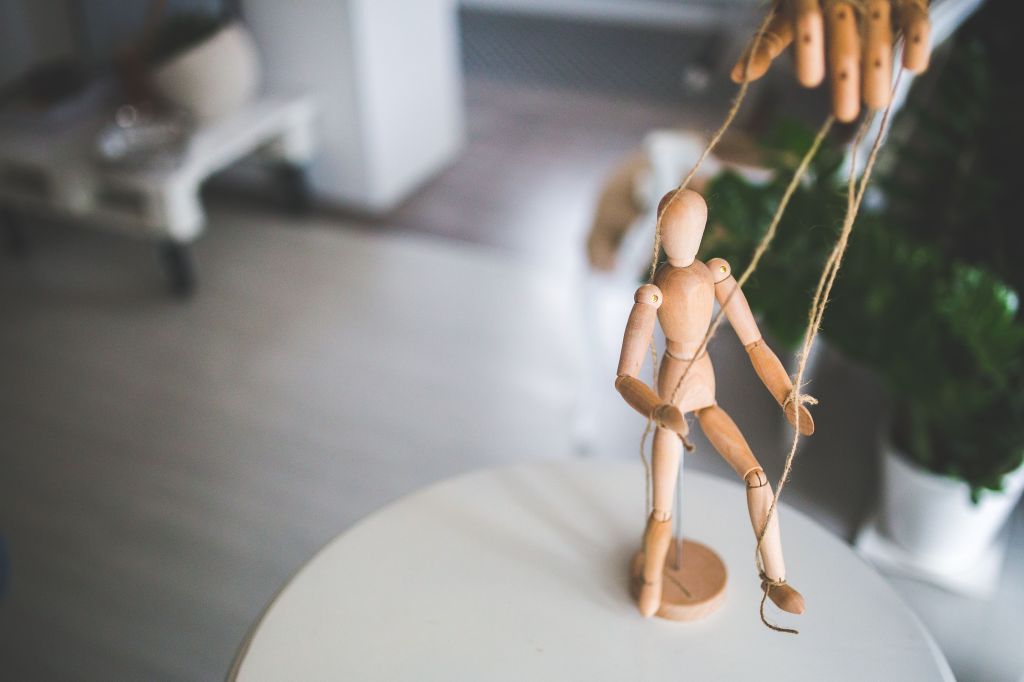
We’re not going to “control” our way out of this.

One of the things I say that make me the least popular trauma focused “influencer” out here, is that “control” is an utter illusion. 

I don’t know about you, but I can’t “control” sh*t. 

Oh, I’ve tried. So, probably, have you. 

I’ve tried to “control” my emotions. 

I’ve tried to “control” my behavior. 

I’ve even tried to “control” the feelings and behaviors of those around me. 

You can guess how successful my attempts to “control” things have been— probably because you’ve tried to “control” things, too. 

Experiencing trauma can get us preoccupied, almost obsessed, with “control.” 

I think it’s because traumatizing experiences make us feel controlled— and utterly powerless. 

We hate hat, rightly so. So we reflexively spend the rest of our lives trying to feel in “control” of …something, Anything, really. 

The reality is, “control” is largely an illusion. 

But the more energy we invest in trying to “control” things, the less energy we have for realistically INFLUENCING (not “controlling”) what we actually can— and coping with what we can’t. 

I cannot overstate how destructive that “control” illusion is. 

The Twelve Step tradition acknowledges “control” as so inherently destructive that it made Step One all about surrendering that particular illusion. 

Insisting that we “control” things exhausts and frustrates and distracts and ultimately depresses us. 

The difference between “control” and “influence” may seem small to you— but I promise, hat difference really will save your life and determine  your trauma recovery trajectory. 

How we realistically apply this principe is: when we’re checking in with ourselves, as realistic trauma recovery requires we do frequently, one of the questions we ask ourselves is, “Am I up in my head about ‘control’ right now?” 

We get good at detecting when we’re on that “control” trip— and we accept our own defensiveness about that trip as a a reflex. 

(I know, YOU would never be defensive about your control issues, but I definitely am. Your mileage may vary.) 

When we do detect we’re up in our head about “control,” creating tension in our body and getting distracted from our recovery needs and goals, we ask the Recovery Supporting Question (RSQ): “How can I shift from focusing on unrealistic ‘control’ to realistic INFLUENCE in this situation?” 

I understand that many would prefer a more sophisticated or esoteric approach to trauma recovery than mine, but for my money, realistic trauma recovery really is all about checking in with ourselves and asking RSQ’s. 

There really isn’t any magic to it: it’s all about using our self talk, mental focus, and physiology to scramble old, trauma based patterns, and reinforce new patterns grounded in safety, stability, and self-esteem. 

And in my experience, an excellent place to start is with our control bullsh*t— because we’re not realistically recovering while still hanging on this tight. Just isn’t going to happen. 

Breathe; blink; focus. 

Trauma recovery is earthy work.

Here’s the thing about affirmations: if they feel fake, they can make us worse. 

That’s a tough truth, but we can’t afford to be unrealistic about it. 

I like affirmations. I think what we repeat to ourselves really matters in how we feel and function. 

But when an affirmation clashes too sharply with what we feel and believe now, our nervous system isn’t going to just accept it. 

No, what our traumatized nervous system is going to do is reject both the message and the messenger. 

Toxic positivity is more than annoying to CPTSD survivors. 

Toxic positivity can be actually triggering to CPTSD survivors. 

It triggers our bullsh*t radar. 

And our bullsh*t radar is finely tuned after years of interpersonal trauma and emotional neglect and mental abuse. 

Some people don’t love the language I use on this page— and I get it. 

They are 100% entitled to not love the language I use in discussing trauma and recovery, up to and including setting boundaries with me or my page because of it. 

Of course I understand why profanity and colloquial language trigger some survivors. No shame, no shade. 

But one of the reasons I use the language and idioms I do on this page is explicitly to avoid toxic positivity bullsh*t. 

There are some people who think ANY discussion of recovery that accompanies the discussion of trauma is “toxic positivity”— but I don’t believe that. 

I believe trauma recovery is both possible and realistically achievable for every survivor (yes, I said “every,” deal with it) reading this— IF we manage our expectations and are deliberate about our focus and language. 

That is to say: if we don’t sugar coat this sh*t. 

I’m actually not all that “profane” a person in everyday life. If anything I probably use relatively less profanity than many people. 

But when it comes to discussing both trauma and recovery, I don’t believe in candy coating. 

 I think it’s super important we avoid fluffy pop psychology tropes and fantasies. 

That’s why I keep coming back, again and again, to some unglamorous truths about recovery, such as: 

Therapy and therapists are not the be all, end all of trauma recovery. 

Most of the important trauma recovery work we’ll ever do, we do alone. 

EVERY effective trauma recovery tool is a version or combination of self talk, mental focus, and physiology— including the most appealingly branded tools, like EMDR. 

And the connections between trauma and addiction are undeniable and MUST be accounted for, in EVERY survivor’s recovery blueprint. 

I guarantee, there are survivors reading this who profoundly disagree with some or all of those points— and they’re likely piping up in the comments right now (as is is their right— God bless!). 

My thoughts on trauma recovery aren’t for everyone. 

But those who do resonate with and benefit from what I write, know that toxic positivity— including bullsh*t affirmations— don’t get us where we need to know. 

I believe in affirmations. 

But I believe in making them realistic and grounded. Gritty, if you will. 

I like my affirmations earthy because I believe trauma recovery is earthy work. 

Your mileage may vary. 

Breathe; blink; focus. 

Validation: the least fluffy, non-bullsh*t concept in trauma recovery.

Validating our pain can be a really tough ask for CPTSD survivors. 

Pain sucks. Why on earth would we want to “validate” it? 

Many of us were actually taught to do the exact opposite: to INVALIDATE our pain at every opportunity. 

To tell ourselves our pain doesn’t count. 

To tell ourselves our pain is “crazy.” 

To call ourselves “weak,” among other things, for even experiencing pain. 

Over and over again, we were taught to communicate to ourselves that our pain should simply not exist— and maybe WE simply should not exist if we’re experiencing pain. 

We’ve often been invalidating our own pain for so long, invalidation as our default setting can feel very “right.” Very “natural.” 

Why would we want to challenge something that feels right or natural? 

Because the truth is, our pain IS valid. 

Our pain is NOT “crazy.” 

Our pain and symptoms actually make all kinds of sense, given what we’ve been through (and that’s true whether we happen to completely or coherently remember all we’ve been through or not). 

If we consistently communicate to ourselves that we “shouldn’t” be feeling or responding the way we are, that we are “crazy” or “weak” for doing so, not only are we lying to ourselves— but we’re doing our abusers’ and bullies’ dirty work for them, in our own head. 

The truth is that strong, smart people experience pain. 

There is nothing about the pain you or I are experiencing that actually means we’re “crazy” or “weak.” 

Our pain means we’re injured. Not “weak” or “crazy.” 

Why does how we talk to ourselves about or own pain matter? 

Because we are not particularly motivated to actually heal pain that we decide is “crazy” or otherwise invalid. 

Telling ourselves our pain doesn’t make sense and shouldn’t exist just leads us to try to “stuff” it, or ignore it, or maybe try to pressure or punish ourselves into not feeling it. 

I probably don’t have to tell you how well that works. 

Leading off with validation, though— telling ourselves ourselves the truth, that our pain represents an injury— gets us feeling and responding to our pain differently. 

Injuries and wounds very often heal, with the appropriate care and support. 

Validating our pain as an injury or a wound, rather than dismissing it as “crazy” or evidence of “weakness,” opens us up to realistic healing— and keeps us from needlessly, pointlessly beating ourselves up over being hurt in the first place. 

Validation is not some warm and fuzzy, pop psychology bullsh*t. 

It is a practical, essential tool in sustainable trauma recovery. 

Your pain is valid and you are valid. 

No matter how familiar or pervasive that “you suck” programming feels as you read this. 

Trauma recovery is not about “just getting by.”

Yes, I want you getting by every day. Surviving every day. 

But I want you doing more than that. 

Trauma recovery, to me, is about more than just getting by. 

It’s about realistically creating a life we don’t hate waking up to. 

Realistically creating relationships we don’t resent, with people who feel safe and who are interesting to us. 

What I think CPTSD recovery REALLY is all about is developing life skills many humans are just never taught. 

Most humans are never taught the basics of happiness. Of life satisfaction. Of realistic emotional management and goal achievement. 

Now, many humans pick these up— sort of— throughout life…if they’re not busy, you know, just f*cking surviving. 

We were busy just surviving. 

So we’re a little behind the 8 Ball. 

Our life management skills are good for, say, combat, either literal or metaphorical. 

They’re less good for, say, working a job or relating to a romantic partner. 

So— we trauma survivors have to explicitly focus on and learn things about life and self management that many other people take for granted or pick up by osmosis over time. 

There’s no denying that this sucks— but, in my view, there’s also no denying that the skills and tools we trauma survivors need to develop to claw our way out of CPTSD hell, also set us up to create and live purposeful, pleasurable lives that many other people don’t know how to create.

Put another way: what we have to do to stay alive, ultimately equips us to create a life worth staying alive for. 

A life that is more than “just getting by.” 

Why say any of this at all? 

Because I believe it’s super important to realistic trauma recovery to begin with the end in mind. 

I believe it’s important to our focus and motivation to remind ourselves that there’s more to this “recovery” thing than just staying alive. 

That promise of a better life isn’t just a fantasy. 

It follows from he fact that we have to develop certain skills, step by step, in order to do this at all— and those skills will put us ahead of others who didn’t have to learn them step by step to stay alive. 

You can believe that or not. I wouldn’t have believed it at certain points in my recovery. 

But it’s the truth. 

Don’t set the bar at “just staying alive.” 

This isn’t about survival. You’ve already survived. 

This is about realistic joy. 

What a concept. 

Tonight’s emotional flashback.

I got sucked into an emotional flashback tonight. 

I’m packing up my apartment, preparing for a cross country move. And in doing so, I’ve been going through documents in my personal files, shredding ones that are no longer useful to keep. 

I found a bunch of documents related to one of my first jobs as a therapist, even before I was licensed, working in the private practice of my then-mentor. 

In the years since that professional relationship ended, I’ve come to believe that many aspects of it were toxic— to the point that, in retrospect, I wish I’d not chosen to work for her. 

For all she introduced me to in trauma work (she didn’t really “teach” me much, but she did provide opportunities to work with complex trauma and dissociation that few early career psychologists get), she also impeded my professional growth in multiple ways— and I’ve come to believe our dynamic on a personal level was ultimately destructive to my own trauma and addiction recovery.

That said: the relationship ended, I built my own career, and we’ve not spoken in fifteen years. Neither she, nor that early career experience, has much of anything to do with what I do now. 

Anyway, in clearing out my files tonight, I came across multiple documents that triggered not just memories of working for her— but brought my nervous system right back to patterns of feeling and responding exactly like it was 2011. 

I’ve worked hard to develop tools that help me stay out of headspace I associate with growing up— but as it turns out, it took me a minute to realize I was actually in an emotional flashback, not just experiencing memories. 

As I went through my files, I was feeling incompetent. 

I was feeling “in trouble.” 

I was feeling insecure. 

And I wanted, very very much, to salve those feelings by using substances. 

Mind you: there was no “rational” reason for why I was feeling these things. There was nothing in those files that “should” have made me feel incompetent, in trouble, insecure, or at risk of relapse. 

That’s how we know it’s a flashback, not just a memory. 

I wasn’t REMEMBERING feeling those ways. I was feeling them viscerally, here, now. 

Emotional flashbacks are real good at making us forget who we are and where we are in our recovery arc. 

It’s only when we realize what’s going on— as I finally did— that we can actually use our trauma recovery tools to reassert ourselves in the here and now. 

I used the tools we all have, the tools that I believe comprise the basics of recovery— self talk, mental focus, and physiology— to remind myself of who I am and what my life is all about. 

I sought support from people— and a cat— who know me now, who know of my life’s passion and priorities, and who could help me feel like myself again. 

I asked Recovery Supporting Questions (RSQ’s) and reviewed my Recovery Mission Statement to manage the risk of relapse in particular. 

That’s how we do this, gang. 

When we get freaked out, when a trigger hits us, we back up, we name what’s happening, and we don’t try to just “white knuckle” our way through it— we use the tools we’ve developed in working our recovery. 

Flashbacks of any kind are not fun. 

But we don’t have to just let them run their course. 

We can interrupt them, as surely as we can scratch a record or CD so it doesn’t play the same way. 

Breathe. Blink. Focus. 

And bring it back to improving this minute by .01%. 

Your future has f*ck all to do with your past. 

Remember who the f*ck you are. 

CPTSD almost always involves relationship f*ckery.

Betrayal is almost always a part of the CPTSD wound. 

Almost always there is an element of “this person/institution/community should have taken care of me…but didn’t.” 

Many people understand that CPTSD results from trauma that was prolonged and inescapable— but, in addition to those, CPTSD almost always involves relationship f*ckery. 

Betrayal. 

Someone who should have been there…not being there. 

Someone who should have listened…not listening. 

Someone who should have put our needs ahead of theirs…choosing themselves over us. 

Trauma spiked with betrayal hits differently. 

It’s not just painful— it’s disillusioning. 

It makes us question our worth. 

It makes us question the very existence of “love.” 

(I guarantee there are survivors reading this, who are nodding their heads.) 

It’s one thing to be hurt. 

It’s something else to be hurt by someone who was supposed to have your back. 

And it’s something else as well to be hurt by someone who claimed— maybe STILL claims— to “love” you. 

Betrayal takes trauma from painful to mind f*ck. 

That’s why exposure therapy will never be enough to heal CPTSD. 

The damage wasn’t just done by a thing that happened that hurt us, that we need to “get over” being afraid of. 

The damage in CPTSD was done to our beliefs and our sense of self. 

The damage was done to our feeling of emotional and relational safety in the world— not just our sense of physical safety. 

We don’t heal hose wounds by “exposure.” 

We heal those wounds by being there for our “parts” and inner child the way we needed our parents and clergy and others to be there for us once upon a time. 

The thing that makes CPTSD particularly complicated is, we need to be for ourselves what we never saw, what we never experienced. 

We need to nurture a relationship with our own nervous system that is unlike anything we actually experienced: we need to create safety inside our head and heart. 

Tall order. 

And also, doable— if we’re willing to risk extending compassion and patience toward ourselves, one day, one hour, one minute at a time. 

To me, the backbone of realistic CPTSD recovery really is the relationship we reestablish— or maybe establish for the first time— with ourselves. 

Without that relationship, none of the tools or skills will do any good. 

We need to be on our own side in this project. 

That’s what begins healing the betrayal wound almost all of us bear. 

About that “emotional regulation” thing.

Reality check: sustainable trauma recovery does not require us to have our emotions perfectly regulated at all times. 

For all the talk about emotional regulation and dysregulation that gets thrown around in trauma treatment and recovery, you’d think the project is entirely about keeping our sh*t together emotionally. 

But the truth is, people who very much have their sh*t together when it comes to trauma recovery, can easily lose their sh*t at the right (or wrong) trigger. 

NOBODY reading this is perfectly emotionally regulated— and the person writing this is DEFINITELY not perfect when it comes to his emotional regulation. 

Realistically, we’re all going to have ebbs and flows when it comes to our emotional regulation. 

Some survivors are even under the misconception that “emotional regulation” means an utter LACK of emotional experience or expressiveness.

What we’re actually going for when we talk about emotional regulation is, we don’t want whatever we’re feeling to hijack us and drag us away from what matters in our life. 

It’s true that trauma survivors tend to be particularly sensitive overall— but many survivors actually have a whole lot of practice coping with and containing our strong feelings. 

Our problems with emotional regulation are often less about emotions themselves, and more about our attention span and skillset when it comes to functioning THROUGH strong emotions. 

Speaking for myself, I love powerful, passionate feelings. 

I think they’re the “juice” of life. I believe the only reason we do anything in life is to experience certain feelings that we like and value. 

Personally, I don’t WANT to be perfectly or robotically “regulated” emotionally. 

But I also don’t want those “juicy” emotions that I experience to bludgeon me and drag me off course when it comes to my values and goals. 

THAT is what emotional regulation in trauma recovery is actually all about: finding realistic ways to stay present and focused on our projects, no matter what we’re feeling in the moment. 

The way we do that is getting clear about how our patterns of self talk, mental focus, and physiology either do or don’t support us in functioning through strong feelings and reactions. 

There is no “magic bullet” to emotional regulation. EVERY effective emotional regulation philosophy or tool, from Dialectical Behavior Therapy to EFT tapping to Neurolinguistic Programming to mindfulness to contemplative prayer, leverages those thee basic tools: self talk, mental focus, and physiology. 

It takes patience and experimentation to figure out how specifically to use those tools inside your head and body to realistically manage what you’re feeling and stay On Purpose. 

But emotional regulation is a skill we can learn. 

We should have been safe and supported enough to learn it when we were kids— but that ship has sailed. 

No shame; not our fault. 

And also not something we’re going to let ourselves be held prisoner by for one more minute. 

Breathe; blink; focus.