
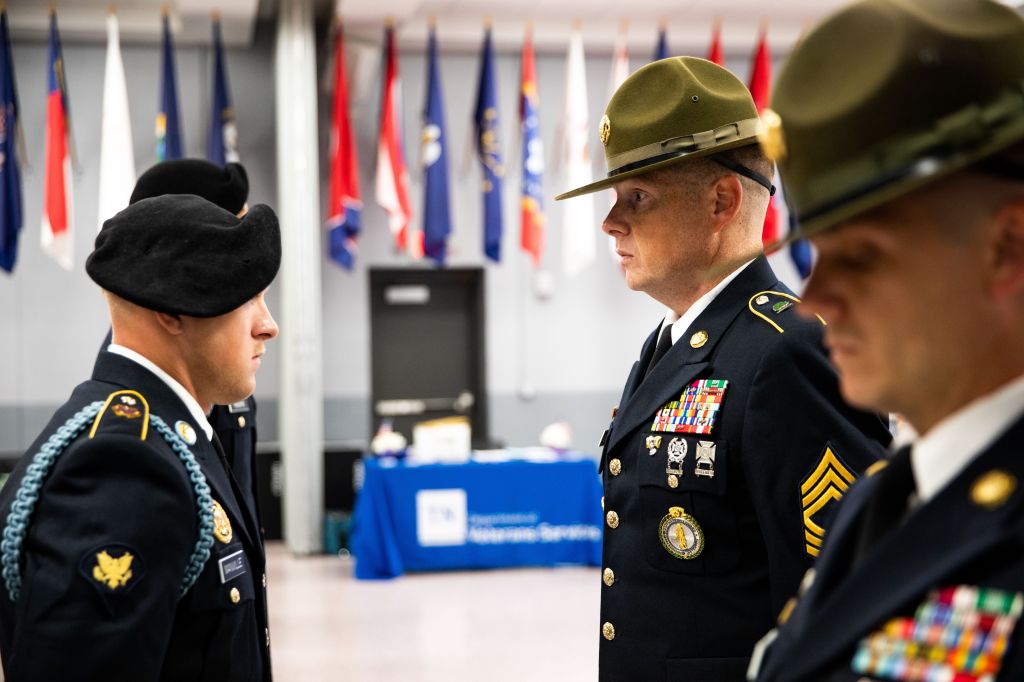
The “drill sergeant” thing doesn’t work when we’re trying to change the habits of self-talk and mental focus that keep us stuck in trauma.
But it may be the only approach many of us know.
We might not have seen or experienced many other techniques of changing habits.
We might have been subjected to years of other people trying to coercively change us, and we might have “downloaded” their tactics into our head.
Most trauma survivors know— or at least we hear, over and over again— that self-compassion is necessary in this work. But we don’t have any real experience with what “compassion” looks like.
We do have a lot of experience with what kicking the sh*t out of ourselves, verbally and otherwise, looks like.
So that’s what we keep returning to.
Add to that, many of us have developed and reinforced the belief that we “deserve” harsh punishment for every imperfection.
Part of us may truly believe that, whatever our habits happen to be at the moment, getting the sh*t kicked out of us is still about right.
Something to think about is the fact that the military uses drill sergeants to create soldiers.
Why? Because soldiers, at least at the beginning of their careers, aren’t supposed to think. They’re only supposed to follow orders.
Drill sergeants exist to get new soldiers out of the habit of thinking for themselves, and into the habit of doing what authority figures tell them to.
You could argue this is very necessary to a disciplined military— but I’m going to argue that this is a lousy model to create realistic CPTSD recovery.
Whether we developed CPTSD in childhood or later, every survivor has been coercively controlled (and betrayed, for that matter) on some level.
The reason why the “drill sergeant” style of relating to ourselves comes so naturally is because it’s what we’ve been immersed in. It feels “right” because it feels familiar. Our nervous system recognizes it (and our nervous system prefers things we recognize, even painful things, over things we don’t).
But if we want to reverse the painful patterns conditioned in us by CPTSD, we’re going to need that critical thinking that “drill sergeants” would otherwise extinguish.
We’re going to need that emotional intelligence that soldiers about to be sent to war are taught to suppress.
We’re going to need compassion and patience that are not front line tools of most infantry soldiers.
Don’t get me wrong: trauma survivors working our recovery are definitely warriors.
But we’re not soldiers, per se. And trying to shape us like soldiers— i.e. staying in “drill sergeant” mode when you relate to yourself— will only deprive us of tools we need in everyday recovery.
All of which is to say: my problem with the “tough love,” kick-the-sh*t-out-of-yourself, “drill sergeant” approach to emotional and behavioral change isn’t that it’s unkind. (Though I don’t love that aspect of it, either, honestly.)
My problem with it is that it’s not just ineffective, it’s counterproductive.
Realistic trauma recovery asks us to get OUT of the habit of harsh self-punishment, and to intentionally eschew shame as a “tool” of behavior change.
Drill sergeants “motivate” via concentrated doses of fear and shame— and, again, I’m not passing judgment on methods of military training. (I don’t know near enough about it to pass judgment on it even if I wanted to.)
Trauma survivors cannot stake developing our recovery behaviors on fear or shame. It just doesn’t work. It’s antithetical to the entire project.
This leaves us with the question of, if not coercive tactics, what do we instead use to motivate us to change?
Compassion. Patience. Realism. Grace.
None of which come easy to people with histories or injuries like you and I have.
Easy does it. We start where we start: noticing when we’re reflexively doing the “drill sergeant” thing in our self talk and mental focus, and engaging our “pattern interrupt” tools.
Every CPTSD survivor has a version of this problem. DID survivors often have entire “parts” devoted to that “drill sergeant” voice.
Easy does it.
Breathe; blink; focus; and give it the time it needs.


