
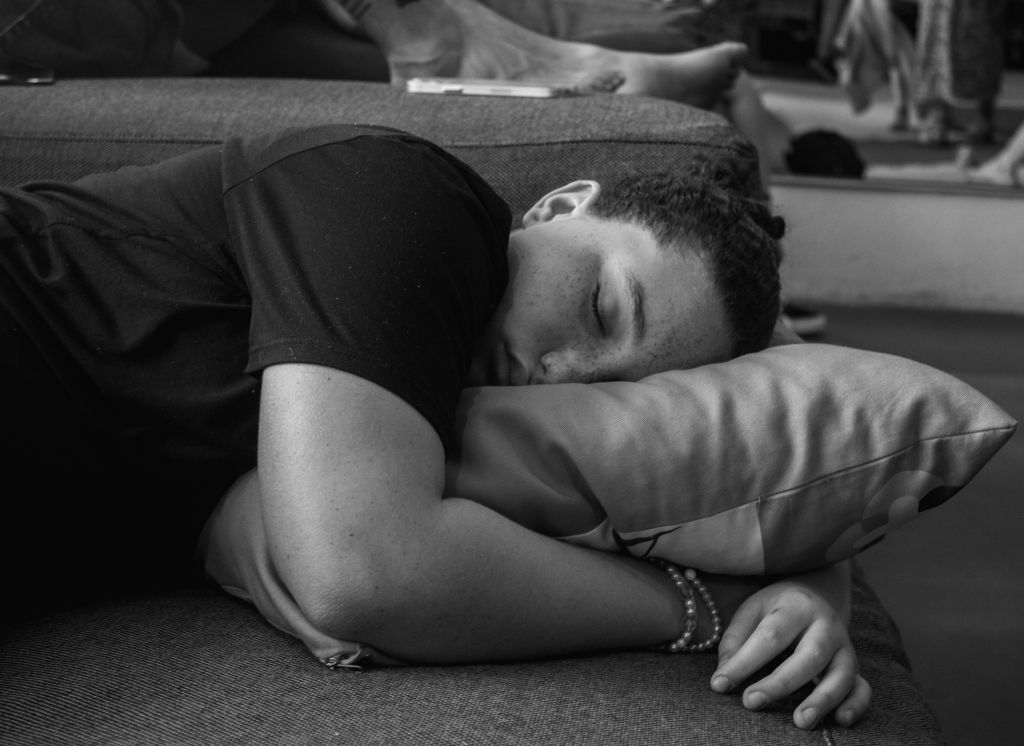
Ever wonder why coercive controllers love to shame rest and recreation?
It’s because rest and recreation make us less easy to control.
Rest and recreation literally make us smarter.
Rest and recreation make us more creative— and thus more dangerous to them.
There’s a reason why every cult documentary includes the part where the “guru” tells their followers to sleep less.
And there’s a reason why every grind culture wannabe “guru” tells their audience that sleep is a waste of otherwise “productive” time.”
(Remember James Arthur Ray telling his “Spiritual Warriors,” three of whom would die by the end of the retreat, that while they could sleep while they were doing the event, he “wouldn’t recommend it?”)
Trauma survivors are conditioned to have all sorts of negative feelings about rest.
Not only have we been programmed to believe rest is for the “weak” or “lazy,” many of us are very aware of how vulnerable sleep or relaxation can make us.
Some of us were primarily abused at night, literally woken from our sleep by our abusers.
Many of us experience hyper vigilance and intrusive thoughts that make even trying to sleep or rest pure torture.
When it comes to recreation, things we do for no other reason than we enjoy them and they make us feel good, many of us were conditioned to believe we do not “deserve” the opportunity to either enjoy things OR feel good.
Some of us were heavily conditioned to believe that recreation was a waste of time— that it necessarily distracts us from being “productive.”
If you read my material, you know how I feel about that: the things that we like, the things that inspire us, the things that tickle us, the things that make us feel good in any way, shape or form— I feel these things are integral to our recovery.
They wake up our brain. They soothe our nervous system. They reconnect us to our authentic self.
Resting and seeking out opportunities for recreation goes entirely against a LOT of our conditioning. Many of us have been programmed to be profoundly skeptical of and uncomfortable with either rest or recreation.
A very common attitude I see in trauma survivors is that rest and recreation are “nice,” but optional. They truly believe that the “work” of trauma recovery is done primarily in therapy sessions, “processing trauma.”
Let me tell you what I believe: trauma processing is “nice,” but the REAL work of trauma recovery is day to day self care.
That means rest and recreation.
Pro tip: anything that our abusers and bullies shame as much as they shame rest and recreation is probably a POWERFUL recovery tool.
Get curious about why you were so heavily conditioned to eschew rest and recreation.
And reframe them from “nice” but optional, to non-negotiables we absolutely have to figure out if we’re serious about trauma recovery.
Breathe; blink; focus.


