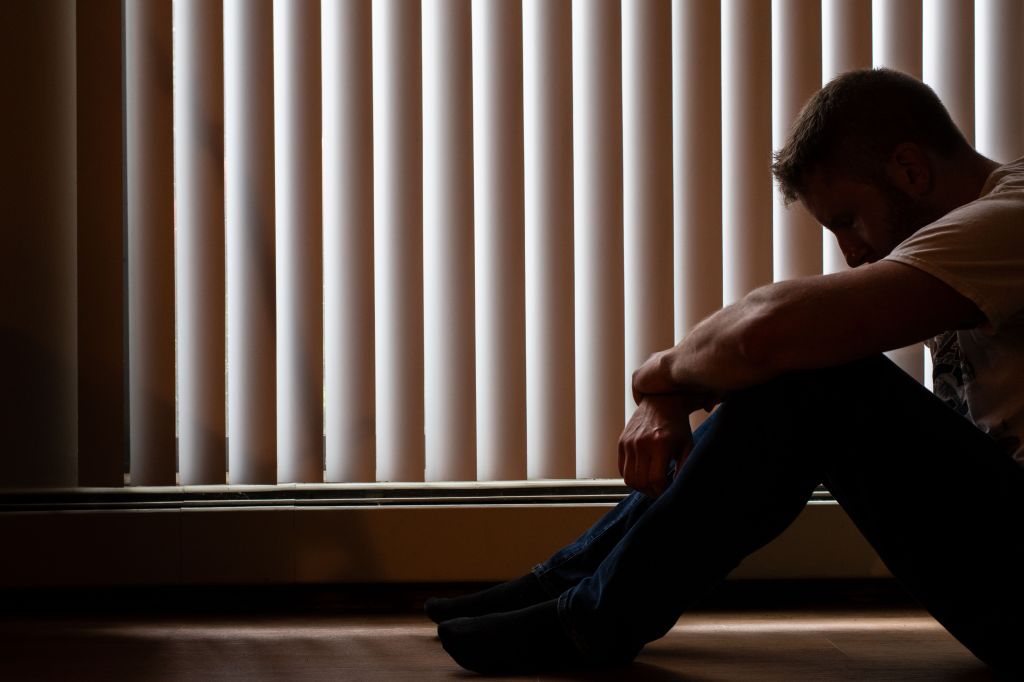
What to do about that pesky “freeze” response.

When we’re trying to shake out of a “freeze” response, we have to think small. 

After all, frozen things don’t “melt” all at once. 

And, for that matter, you can’t “force” a frozen thing to melt. 

To me the best way of getting out of a freeze state starts with wiggling my pinky finger. 

Not even a wag— just a little, teeny, tiny movement. 

The essence of “freeze” is that a part of us believes if we move, we’ll be seen, and we’ll be in danger. 

It’s like that scene in “Jurassic Park,” when Dr. Gran asserts that the tyrannosaurus’s vision is based on movement— so to staying still means staying safe. 

Our nervous system has no interest in suddenly, charismatically bursting out of that “freeze” state. That would feel overwhelmingly dangerous. 

What our nervous system needs is a little, teeny, tiny bit of proof that it’s safe to move. 

We can give that to it, by wiggling our little finger. 

It’s such a teeny, tiny movement, and usually one we can manage, even when we’re “frozen.” 

Not only does wiggling our little finger start building momentum, but, more importantly, it demonstrates to our nervous system that movement is safe. 

We wiggled our little finger, and the world didn’t end. The T-Rex didn’t eat us. 

That being the case, our nervous system might let us wiggle a few adjacent fingers— just testing the waters, seeing if it’s safe. 

That’s how we get out of “freeze”— not by telling, but by showing, our nervous system that movement is safe. 

We wiggle our little finger; then a few more fingers; then maybe we open and close our hand 

Then maybe we move around our wrist a little; then maybe we move our forearm. 

Bit by bit, body part by body part. Imagine your body parts warming up, after being physically cold and frozen. 

Imagine how you might gently, gingerly move your body parts, to get warmth and circulation moving again. 

You wouldn’t aggressively jerk or shake your fingers or other body parts if they’d been frozen or had fallen asleep. You’d be gentle. You’d move from little appendage to progressively bigger ones. 

We need to meet every trauma response, including “freeze,” with validation and respect— not a demand that it immediately change. 

Trauma responses are not “choices,” and they don’t happen for the hell of it. 

Meeting our “freeze” response with gentle, tiny movement that gets progressively bigger is us meeting it with care. It’s us working with our nervous system and “parts,” not against them. 

So— don’t overthink “freeze.” 

Just wiggle your pinkie finger. 

And then go from there. 

Trauma, choices, and “choices.”

Ever not been your best self? Me too. 

Ever had your trauma symptoms contribute to you not being your best self? Me too. 

The fact that sometimes our trauma symptoms contribute to us not being our best self, doesn’t negate our responsibility in those situations. 

And, the fact that we’re responsible for our behavior doesn’t negate the fact that trauma can contribute to our vulnerability to certain moods and decisions. 

It’s complicated. 

Many of us walk around feeling guilty for even having trauma symptoms. 

Those aren’t, actually, our fault or “choice.” 

The choices we DO have often get obscured by our trauma symptoms— by how overwhelming they are, by how painful they are. 

Some of us made poor “choices” because we truly didn’t see any survivable alternatives. 

Some of us made certain choices because we did not have the safety or support to realistically choose otherwise. 

And some of us made certain choices because we were never taught how to make different choices. 

As a rule, I’m not a fan of shaming ourselves over our supposed “choices.” 

Whether we could have made different choices or not— we didn’t. And we can’t change the past. 

Shame is just not an effective behavior change lever, in my experience. Not for long, and not without destructive side effects, anyway. 

And but also, I am a big fan of identifying choices we do realistically have. 

We do have choices when it comes to self-acceptance. 

We do have choices when it comes to living consciously or going on autopilot. 

We do have choices when it comes to learning about our basic needs— predictability, novelty, significance, connection, growth, and contribution— and making teeny, tiny micro choices every day that move toward meeting our needs. 

We do have choices when it comes to acknowledging, validating, and communicating with our “parts,” including our dissociative self-states. 

We don’t have the choice to just not have CPTSD or DID. 

We don’t have the choice to forget or “stuff” our past experiences indefinitely. 

We don’t have the choice to just not do any of this “trauma recovery” stuff, and expect to be safe and stable. 

Sometimes we’re not our best self, and sometimes our trauma symptoms contribute to that. That’s reality. That describes everybody reading this, and definitely the person writing this. 

Realistic trauma recovery hinges on identifying and leaning into the choices we realistically have. 

(Notice Trauma Brain piping up right now, telling you you actually don’t have any meaningful choices? That’s Trauma Brain being predictable and tiresome— and a pretty good indication that you have more choices than Trauma Brain has let you believe over the years.)

Breathe; blink; focus. 

Trauma Brain is neither “objective” nor “reliable.”

Don’t mistake Trauma Brain for a reliable source of information. 

Trauma Brain is the internalized voices of our abusers and bullies. 

It’d be like if our abusers and bullies bought a cable news network, the subject of which was us and our lives. 

All day, every day, their reporters would produce stories about us— but do you think those stories would be accurate, coming from our abusers and bullies? 

Not hardly. 

They’d probably focus disproportionately on how we suck. 

They’d focus on how our problems were our fault— and definitely not the fault of our abusers and bullies, who just happen to own the network. 

Those stories would focus on how we’re probably doing life entirely wrong— especially if we’re working a trauma recovery and trying to break free of our bullies’ and abusers’ influence. 

If our bullies and abusers had a cable news network, that’s what we’d expect. 

What we need to understand is that the cable news network that our bullies and abusers do have, and which is broadcasting 24/7/365, is Trauma Brain. 

Trauma Brain is particularly tricky, too, because it is the result of conditioning over time— meaning we often don’t realize that what we’re “hearing” from it is anything other than our own, spontaneous, “natural” thoughts. 

We readily acknowledge when a cable news network run by people with whom we disagree, runs news stories with a particular “slant.” 

We understand that cable news networks that have an agenda are going to omit certain facts and spin others, such that their point of view is strengthened.

I’m telling you, Trauma Brain is doing that right now, inside the head of every survivor. 

Trauma Brain omits facts. 

Trauma Brain spins other facts. 

Trauma Brain is NOT an objective source of information, any more than the cable news network run by your least favorite political actors is. 

Yet, we know that the biases and agendas of cable news networks don’t keep some people from watching them, and believing everything they broadcast. 

Any smart, objective person understands that the real truth is probably not what is being broadcast by those networks. 

And survivors who succeed at trauma recovery understand that Trauma Brain is not so much a truth-seeker or truth-teller, as it it is a spin doctor or an advertising executive. 

Trauma Brain is in the business of persuasion and coercion— not information. 

Yes, Trauma Brain can be convincing. So can cable news networks. 

But remember who is pulling the strings. 

Remember what the real agenda is. 

Remember that in order to see what we see and know what we know, we have to step back from the “news” ticker. 

Breathe; blink; focus. 

And look closer. 

Go ahead. Be needy.

Realistic trauma recovery is ultimately about self-care. Radical self-care. 

And radical self-care requires radical acceptance— but that’s a different subject. 

What do I mean when I say self-care? I don’t mean it in the abstract way it’s often thrown around. 

I mean self-care in the literal sense: are we caring for ourselves? As in, are we meeting our needs? 

Trauma survivors often have a complicated relationship with our needs. 

We’ve often been conditioned to believe our needs don’t matter. 

We’ve been conditioned to believe even HAVING needs, let alone expressing them, makes us “too much.” A “burden.” “High maintenance.” 

I’m going to tell you the exact opposite: getting in touch with our needs and taking realistic steps toward meeting our needs is essential. Non-negotiable. 

What are our needs, beyond survival needs like nutrition and hydration and rest? 

Different theorists are going to have different answers to that question, but the framework I like the best posits six psychological needs that are shared by almost all humans: predictability, novelty, significance, connection, growth, and contribution. 

Most psychological needs I hear expressed by most people trace back to one or more of those. 

Predictability is a particularly important need for trauma survivors, insofar as our experiences have “taught” us that the world is unpredictable and uncontrollable— often in tragic, painful ways. 

But we also have a psychological need for novelty— to not have EVERY event of our life scripted out in advance, which would lead us to becoming bored and unmotivated. 

(In my experience, the tension between our needs for predictability and novelty often help explain our relationship and career choices— for better or worse.) 

Similarly, trauma survivors tend to have a conflicted relationship with our need for significance— to know we matter, that our existence and happiness is important— because we’ve been told over and over again by our bullies and abusers that we DON’T matter. 

The need for connection can also throw us survivors for a loop— I’m not sure we simultaneously crave and fear anything as intensely as connection on a daily basis. 

Growth can be a tricky need for trauma survivors, especially when we’ve gotten the sh*t kicked out of us by Trauma Brain to the tune of, “your life is over, don’t bother trying to learn anything new or develop any new skills.” 

Likewise, Trauma Brain can get us sideways with our need to contribute, insofar as it can convince us we don’t HAVE anything to meaningfully contribute to other people or the world. 

There’s no denying that we trauma survivors can have enormously tumultuous, complicated relationships with each of the six basic psychological needs— but we cannot let that stop us from taking each need seriously, and taking realistic steps to meet each need in some way. 

We do not recover from trauma by pretending certain of our basic psychological needs “don’t matter.” 

We don’t recover from trauma by deciding we’re just going to ignore needs that we feel weird or icky about. 

Radical self-care of the kind that heals trauma asks us to take our needs seriously. 

I recommend writing them down— predictability, novelty, significance, connection, growth, and contribution— and keeping them handy. Check in on them every now and then, and ask how your life patterns are or aren’t serving them. 

We can’t escape our needs. 

And, as it turns out, we don’t need to. 

Regardless of the bullsh*t Trauma Brain is whispering in your ear right now. 

It’s all stuff you’re doing anyway.

So much of what trauma recovery asks us to do, we’re doing already. 

We’re talking to ourselves all day anyway. 

We’re focusing our mental “spotlight” on SOMETHING. 

We’re breathing anyway. We’re doing SOMETHING with our physiology anyway. 

Why not leverage our self talk, mental focus, and physiology in ways that reinforce our safety and stability, that help us feel and function better? 

The reality is, much of our “autopilot” self talk, mental focus, and physiology were programmed into us by abusers and by abusive experiences. 

We often talk to ourselves using vocabulary and tone that we learned from our abusers. 

What we focus on now is often determined by what we had to focus on once upon a time to stay safe. 

How we breathe and use our posture is often a reflection of what we had to do “back then.” 

This is the essence of CPTSD: not just what happened to us, but what those experiences conditioned in us— and how we unwittingly carry them forward in what we say to ourselves, what we focus on, and how we breathe and use our body. 

I didn’t just make up the “self talk, mental focus, and physiology” trifecta. 

I emphasize those because it’s my observation that any and every effective trauma recovery tool is some combination of those three. 

CPTSD recovery has to, has to, has to chip away at that old conditioning. 

It has to, has to, has to scratch that old record. We CANNOT allow that old record to keep playing the way it has been. 

We can “process” our old trauma up and down and sideways— but if we’re not also addressing those old, conditioned patterns, that old programming, we’re going to stay stuck, feeling like garbage, at risk of self harm and addiction and suicide. 

That’s not me being dramatic; that’s the real experience of many CPTSD survivors. 

Remember: we’re all doing versions of the trauma recovery stuff all the time anyway. 

What we need to do is do those things consciously, purposefully, with self-acceptance, self-compassion, and accountability. 

That is to say: you can do this. 

What you “learned” through your traumatic experiences, you can unlearn. 

What has been conditioned, can be reconditioned. 

You are not the one human being in the history of human beings whose nervous system cannot change. 

If you can read this, you can make incremental changes in your self talk, your mental focus, and your breathing and physiology, starting today. And those changes WILL add up. 

That’s not toxic positivity. That’s how recovery has worked throughout the centuries of human beings who have recovered from trauma, depression, and addiction. 

(That’s right, by the way: in working your recovery, you’re part of a recovery tradition that is literally centuries old. Trauma recovery did not start with western psychology, and it will continue being a thing long after psychology is no longer a thing.) 

Easy does it. This is not a “just do (whatever) and you’ll be fine” thing. 

This is a “think realistic, sustainable, .01% choices” thing. 

This is a “slow is steady, and steady is fast” thing. 

This is a recovery thing. “They” wouldn’t get it. 

Breathe; blink; focus. 

Depression, self-esteem, and trauma recovery.

Experiencing depression does not make you “weak.” 

Weak? Are you kidding me? 

Depression is a killer disease. 

Depression kills more people every year, every day, than anyone will ever acknowledge. 

Living with depression, surviving depression, is a testament to your strength— not your supposed “weakness.” 

There are lots of reasons why people struggle with depression. But “weakness” is not one of them. 

Depression is real. It feels more real to many people than recovery, especially early on in their recovery journey. 

Depression does not just result from “distorted thoughts”— though depression absolutely does distort our thinking. 

Depression is not our fault. 

Depression is not something anyone asks for or wants. 

You’re going to hear lots of bullsh*t about depression. 

You’re going to hear depression framed as a “choice,” and you’re going to hear lots of victim blaming, both implicit and overt. 

Let’s be clear: we do have choices in how we talk to ourselves, where we direct our mental focus or “spotlight,” and how we breathe and use our body— and those choices can impact how we experience and recover from depression. 

But that doesn’t mean you are depressed because of your “choices.” 

Risk factors for depression run the gamut, from genetics to trauma to economic vulnerability to discrimination. Factors that maintain depression can be internal and external, conscious and unconscious. 

There tends to be nothing simple about most peoples’ depression. 

And managing and healing it is almost never a matter of “just do (X).” 

Managing and reducing depression tends to mirror the basics of trauma recovery: we begin with self compassion, patience, and realism. 

Depression tends to meaningfully shift when we start seriously working on our self-esteem— which is also the driver of realistic trauma recovery. 

The six “pillars” of self esteem— living consciously, self-acceptance, personal responsibility, living purposefully, self-respect, and assertiveness— are a roadmap to realistically working on our depression. 

They’re also not f*cking easy. Don’t put up with anyone suggesting they are. 

Both trauma recovery and reducing depression take commitment and time. 

But if you’re a trauma survivor working your recovery— which you probably are, if you’re reading this— you know about commitment and time. 

Easy does it. You can do this. I believe in you. 

Even if I don’t know you, I’m prepared to give you the benefit of the doubt— because I don’t believe anybody is reading these words by accident. 

Breathe; blink; focus. 

Please, please, please walk your talk, for the trauma survivors in your life.

Few things trigger CPTSD survivors like the people who say they love us, or whose job it is to take care of us, not walking their talk.

This doesn’t just apply to individuals. 

It can apply to institutions who claim to love us— like churches. 

It can apply to businesses whose job it supposedly is to take care of us— like insurance companies. 

It can apply to governments and government programs, the supposed purpose of which is to help us. 

And, of course, it can apply to family members who say they love us. 

Survivors are real sensitive to whether what we’re being told is bullsh*t. 

We’re real sensitive to whether the person saying they love us, or who has committed to taking care of us, is actually doing the thing. 


Love, as it turns out, is a verb. 

If you follow my work you know I’m constantly telling survivors to start their self-love projects with concrete behaviors, even if they’re not vibing with the “feeling” part of “self love” yet. 

Many of us overcomplicate what it means to behaviorally love somebody. 

Love, the behavior, means showing up. 

It means being demonstrably concerned with helping the beloved’s needs get met. 

It means consistently refraining from words or behaviors that will hurt the beloved. 

Do the institutions, people, or families that claim to love us, actually do that? 

Or do their words and actions hurt and discourage us? 

Usually, if we can think to ask that very practical question, the answer will be clear. 

One of the core components of CPTSD tends to be relational trauma— specifically, betrayal trauma. 

Almost everyone who struggles with CPTSD or DID has experienced a relationship that did not live up to what it promised— be it with a person, a family, a church, a job, or something else. 

It’s not that we feel the need to be constantly taken care of, either by people, or by businesses, or by anyone or anything. 

It’s that when we put our faith in someone or something, when we take the risk of trusting them, let alone DEPENDING on them…we need that risk to pay off. 

The people and institutions and companies that we allow into our lives have to walk their talk. 

They have to be who and what they say they are. 

They have to do what they say they’re going to do. 

Something trauma survivors do NOT tolerate well in relationships is feeling set up or duped. 

When we feel betrayed in relationships, we very frequently default to harshly blaming ourselves for having trusted anyone or anything in the first place. 

So much of trauma recovery is about establishing realistic safety. 

It’s really hard to establish safety with a person, a professional, an organization, or anyone or anything else that does not follow through on what it promises— not with perfection, but with transparency and consistency. 

Whether you’re a therapist, a professional, a romantic partner, a clergyperson, or even an insurance adjustor, if you want a trauma survivor to trust and continue to engage with you, you need to walk your talk— and you need to be prepared for survivors to put you through your paces. 

Trust is valuable in any relationship— but in relationships with CPTSD survivors, it is even more precious. 

And we come by that honestly. 

Breathe; blink; focus. 

Trigger me this, Batman.

Not feeling heard or accurately understood can be a particularly intense trigger for many CPTSD survivors. 

Many of us grew up feeling invisible— or, worse, visible, but disregarded. 

Many of us grew up with people making all kinds of erroneous assumptions about what we’re thinking, who we are, what we need. 

Even now, some of us experience difficulty expressing ourselves, which can lead to others misunderstanding us— or, worse, feeling angry or hurt because of something we said or how we said it. 

All of this means that our nervous system is very sensitive to those feelings— feeling unheard or misunderstood. 

Our traumatized nervous system is all about sounding the alarm when something feels off. 

And our nervous system isn’t particularly shy or subtle about it, either. 

The classic trio of CPTSD triggers are feeling trapped, controlled, or in trouble— but feeling unheard or misunderstood are right up there, too. 

All this matters because it goes to the most effective strategy for soothing and managing our feelings when we’re activated. 

A really useful Recovery Supporting Question (RSQ) tends to be, “What’s getting triggered right now— trapped, controlled, in trouble, unseen, misunderstood?” 

If we can think to ask that RSQ, almost always we can strategize around what we’re experiencing— as opposed to randomly throwing coping skills at it. 

When we’re triggered by feeling unheard or misunderstood, it’s often a young “part” that’s hurting. 

It’s often— not always, but often— a “part” of us that “holds” memories and feelings associated with feeling uncared for, unimportant, or abandoned once upon a time. 

Whatever “part” of us is stinging, we need to meet it with compassion and patience in those moments. 

Getting triggered is not our fault. Trauma responses are not choices. 

But we DO have choices once we realize what’s going on— specifically, choices in how to talk to ourselves, how to direct our mental focus or “spotlight,” and what to do with our physiology, specifically how to breathe. 

Triggers happen. Don’t shame yourself and don’t overthink it. 

Breathe; blink; focus; and remember what the most common triggers are. 

Then ask yourself what a kid who was experiencing those emotions might need from a consistent, gentle adult right now. 

Easy, easy does it. 

Complex trauma and complex healing.

If trauma recovery were simple or easy, a matter of “just do (whatever),” we would have done it already. Multiple times, for that matter. 

The fact that most of us have multiple false starts in trauma recovery, or we make some progress and then backslide, or we struggle to identify a realistic starting point— that’s not due to our “weakness” or “stupidity” or “laziness.” Truly. 

That’s due to the fact that our wounds are deep and real, and require a thoughtful recovery blueprint to heal. 

Not only are our CPTSD wounds deep and real, but they go beyond symptoms that have anything overtly to do with our trauma. 

Many survivors don’t even realize that it’s CPTSD they’re struggling with, because what they’re experiencing doesn’t seem directly related to their past. 

Many CPTSD symptoms hook into our beliefs about who we are, what we’re all about, and what the world and other people are all about— and they can masquerade as thoughts and beliefs that are completely removed from anything we’ve ever experienced. 

Often, CPTSD presents as difficulty with executive functioning— making decisions, following through, staying motivated. 

CPTSD can present as anxiety and paralysis around money and finances. 

CPTSD can present as sexual dysfunction. 

CPTSD can present as social anxiety. 

CPTSD can present as anxiety related to something as random as driving or talking on the phone. 

Many survivors look at that array of symptoms and they think, “Okay, even if I DO have trauma in my past, surely THOSE things have nothing to do with it. I just need to get my sh*t together, right? I just need to be an adult and FUNCTION, right?” 

If only it were that simple. 

One of the things that makes complex trauma “complex” is the fact that the connections between what happened to us and what we experience as survivors isn’t straightforward or static. 

A consequence of this is, there aren’t one-stop answers or modalities that “fix” every CPTSD symptom we have— and, to make the waters even muddier, sometimes we can do a meaningful chunk of trauma processing and resolve certain things about our past…but then return to many of these symptoms that we’ve developed in the years since our trauma. 

I know I sound like a broken record when I keep saying trauma recovery is largely about life management, but it is. 

Trauma processing is important, what actually happened to us matters. 

But it also really, really matters how we’re taking care of ourselves now— how we’re talking to ourselves now, how we’re leveraging our mental focus now, how we’re managing our physiology now. 

The quality of our trauma recovery is the quality of our relationship with ourselves. 

And the quality of our relationship with ourselves is the quality of our consistent, realistic self-care. 

CPTSD resists simplistic “just do (whatever)” solutions because it manifests in dozens of ways, in multiple life domains. 

And yes: this can feel overwhelming. 

That’s not about you. That’s about the scope and complexity of the task. 

And it’s also why I keep repeating: come on back to basics, every day. Your 1% “nudge” goals revolving around self talk, mental focus, and physiology— i.e., your relationship with yourself. 

Trauma recovery is real and doable. 

But only if we expand our understanding of how CPTSD can manifest— while at the same time simplifying and concretizing how we meet it, day by day, hour by hour. 

Breathe; blink; focus. 

And identify the next recovery supporting micro choice. 

Trauma recovery is a no-bullsh*t zone.

Realistic trauma recovery is mostly about not bullsh*tting ourselves. 

Because Trauma Brain is real good at getting us to bullsh*t ourselves. 

We bullsh*t ourselves about the fact we do “everything” wrong or bad. 

Sometimes we bullsh*t ourselves about how something is “fine.” 

Sometimes we even bullsh*t ourselves about not needing to work on something or improve at something. 

As a rule, if we’re leaning toward bullsh*t, either in telling ourselves we’re awesome at everything or we suck at everything, we’re off track in our trauma recovery. 

One of the biggest barges of bullsh*t Trauma Brain— the internalized voices of our bullies and abusers— shovels at us is about how EVERYTHING is our fault, and EVERYTHING is our responsibility. 

That’s just not true. 

It’s also patently untrue that we’re at fault or responsible for other peoples’ choices— including our abusers’ choices to hurt us. 

We absolutely DO have choices in trauma recovery— but that DOESN’T mean we were abused or neglected because we made poor choices in the past. 

But Trauma Brain will push that load of bullsh*t, every day. 

And we often run with it, because the alternative can feel so powerless. 

Put another way: we figure that if we truly did nothing to “attract” or “allow” our abuse, if we truly had no control over it, that means we were powerless— and we might be powerless now over certain things, too. 

Our traumatized nervous system HATES that. 

So it tells us a story about how we we could have avoided it. How we could have escaped, fought back, done or said something to make it stop or not happen. 

It’s bullsh*t. 

(Someone’s going to argue in the comments about that one, and you’re entitled to your feelings— but in my book, any version of “we are responsible for our abuse” is bullsh*t. Your mileage may vary.)

Not bullsh*tting ourselves takes courage. 

Not bullsh*tting ourselves takes persistence. 

Not bullsh*tting ourselves takes energy. 

Most of us would MUCH rather just run with Trauma Brain’s bullsh*t than push back against it every day— because, as painful as Trauma Brain bullsh*t is, we’re utterly unsure what the world might look like if that bullsh*t turned out to be, well, bullsh*t. 

If we’re serious about trauma recovery, we have to take that risk. 

We have to consider the idea that what we’ve believed and felt to be true about how much we suck, how at fault we are, how everything is our fault and everything is our responsibility…is bullsh*t. 

None of that means we don’t have choices or responsibilities in trauma recovery. You bet your ass we do. 


But if we’re going to make those choices well and take those responsibilities seriously, we have to get real. 

We have to see and smell Trauma Brain’s bullsh*t for what it is. 

It’s bullsh*t that feels “right,” mostly because it’s familiar. 

But it’s not about reality— it’s about our bullies and abusers still making us feel like garbage inside our own head and heart, sometimes years after we’ve left them behind. 

I, personally, am over letting them have a vote in what I believe or how I feel. 

So: activate the anti-bullsh*t measures in your head and heart. 

That space is a no-bullsh*t zone. 

Replace the bullsh*t with realism and self-compassion. 

Our abusers would HATE that.