Codependence and spontaneous combustion.

One of the main reasons we keep doing that f*cked up codependent dance with certain others in our lives is because “part” of us truly believes it’s necessary for safety or survival. 

Codependence is frequently rooted in the “fawn” trauma response. 

Our nervous system believes that if we aren’t who “they” want or need us to be, we’re in danger. 

It’s not that we “choose” it, exactly. 

It’s more that we don’t know how to not do it. 

We don’t know how to tolerate the anxiety that would come with not doing it. 

We may not even know who we are if we didn’t do it. 

The reality is, our identity is very often entwined with who we are to and with others. 

For example, many of our beliefs about who are are are overwhelmingly influenced by who our parents and family believe we are. 

Even now, the easiest way to evoke an emotional flashback in me is to toss me back into a situation with my family of origin— my nervous system, my personality reflexes, even my physiology will start responding to who I was to and with them, decades ago. 

We don’t choose those intellectual and emotional and behavioral reflexes, any more than we “choose” any other trauma responses. 

And breaking out of those codependent loops requires a ton of effort, because it requires us to tolerate a ton of anxiety. 

“Anxiety” kind of undersells it, actually. “Doom-certianty” is closer. 

Our nervous system and “parts” truly believe that certain doom is imminent, if we opt out of those old interpersonal patterns. 

The thing is: it’s not. 

No one has ever spontaneously combusted beucase they opted out of a codependent dynamic, choose not to be who someone else expected them to be. 

We’ll survive opting out of a codependent dance, at least physically. Our anxiety might try to convince us otherwise, but we will. 

And but also, the fact that we’ll survive physically doesn’t speak to what the person we refused to “dance” with might say or do. 

They might, in fact, try to make us feel guilty. Or wrong. Or selfish. 

And, yes: they might try to damage us socially, for the “sin” of abandoning our codependent dance with them. 

I’ll never be flippant about the real costs of opting out of a codependent “dance” with someone who has relative influence in our life. It might not be pretty. 

But you know what else isn’t pretty? Feeling trapped in a self-defeating “dance” with someone we may not even like, just because we’ve been conditioned to keep the beat. 

That’s not pretty for our self-esteem, our values, or our goals— you know, those things that define our trauma recovery. 

No— codependent patterns are not a “choice.” 

But breaking out of them has to be. 

And of course, choices do have consequences— but not all of those consequences are bad. 

Some of them can be quite liberating, even if others mean them to be destructive. 

“Freedom’s just another word for nothing left to lose,” as Ms. Joplin reminds us. 

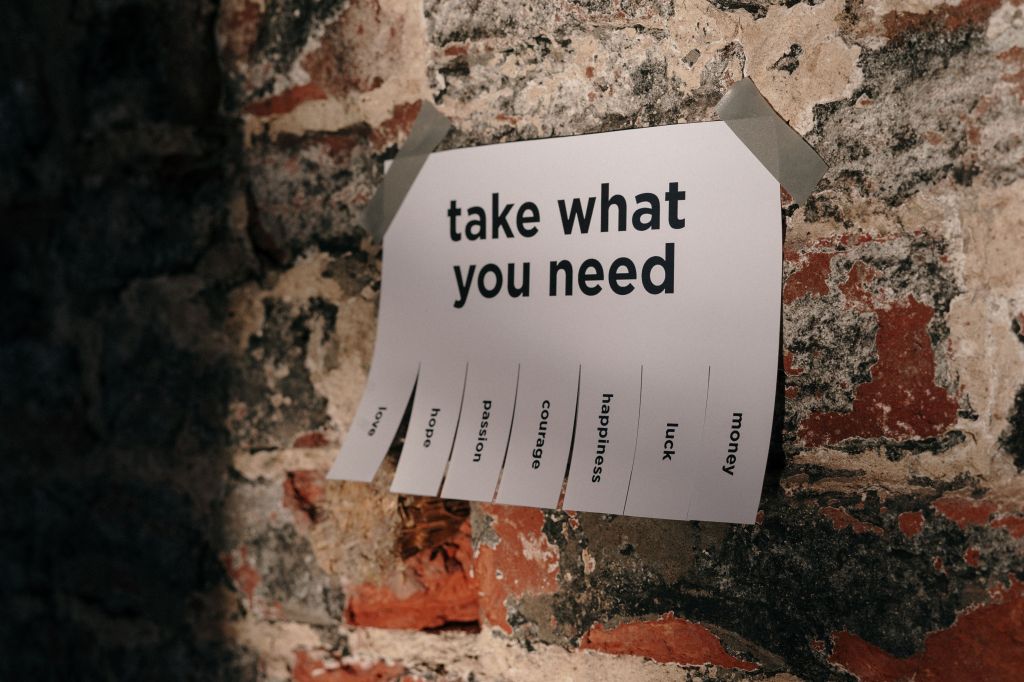
“Needy” is not an insult. Or it shouldn’t be, anyway.

Yes: as we work our trauma recovery, we will get better at identifying and expressing our needs. And that’s awesome. 

It’s also not a guarantee others will be at all interested in meeting our needs. 

Unfortunately, there’s no magic to expressing our needs. I wish there was. 

But we’re going to run into plenty of people who just don’t care. 

Not everyone, mind you. We’ll also run into people who will be supportive and invested. 

But we want to be realistic. That won’t be everyone. 

Does that mean there’s no point to expressing our needs? 

No, it does not. 

Identifying and expressing our needs is vital to our self-esteem. 

Identifying and expressing our needs is important to our self-respect. 

Identifying and expressing our needs is necessary to identify the subset of people who actually WILL help us get our needs met. 

If there’s anything you take away from my writing about trauma recovery, it’s that recovery needs to be realistic and sustainable. 

That means we can’t be hanging on to fantasies that the world is kinder than it is. 

The world is not kind. 

But some people in the world can be kind. 

It may not be the case that we’ll have people lining up to help us get our needs met, even if we identify and express those needs. 

But it is the case that if we’re going to realistically recover from CPTSD, WE need to be in touch with those needs—especially if years of abuse and neglect have made us believe we “can’t” or “shouldn’t” be clear and expressive about our needs. 

What the hell are our needs, anyway? 

The theory I like about human needs is that there are six basics: predictability, novelty, significance, connection, growth, and contribution. 

In my experience, most human needs reduce to one or a combination of those. 

Abuse and neglect sever our connection with our needs. 

Which leaves us no less “needy”— just less able to make a realistic plan to meet our needs. 

Your needs are not “bad” or “weak.”

“Needy” is not an insult. Or it shouldn’t be, anyway. 

Get clear about what you need. Put words to your needs. 

Not because there’s “magic” to any of this— but because things that matter deserve specificity and expression. 

And make no mistake, your needs matter— because you matter. 

“Love” and “safety” shouldn’t be conditional.

Trauma survivors know: it is exhausting to constantly feel we have to earn, and re-earn, and re-earn again, love or safety. 

In fact, it can be so exhausting that we figure it’s not even worth it. 

The belief that love or safety is conditional, that we have to keep earning and re-earning it, often comes from childhood neglect— and it hooks hard into our “fawn” trauma response. 

When we’re kids, we’re not wired to understand that what we’re getting— or not getting— is not our fault. 

We assume that, if we’re starved for our basic needs (emotional or physical), that it probably has to do with us. 

Hell, sometimes we’re basically told as much by our abusers or bullies, especially when the needs in question are emotional. 

We don’t grow up believing that our caretakers had blocks of their own or made choices that resulted in us not being loved— we assume it was us who wasn’t “lovable.” 

This pattern has lots of variations. For example, if we grew up feeling invisible, we may assume that we simply weren’t attractive or entertaining enough to “deserve” attention— not that our caretakers just didn’t do their job. 

There are, of course, some things that are conditional. We choose our playmates, and later our friends, based at least partially on how they make us feel— and we’re not “unconditional” in it. We’re very conditional. 

But a parent taking care of a kid and providing for that kid’s needs should be held to a different standard than a kid choosing their playmates or friends. 

The bottom line, though, is that may CPTSD survivors arrive in adulthood feeling the crushing weight of what we think is our “failure” to “earn” the love and safety that we should have been entitled to growing up. 

Consequently we rarely feel secure or calm when it comes to love or safety, no matter what happens to be going on— because our nervous system is thoroughly convinced that there IS no such thing as “secure” love or safety. 

Our traumatized nervous system thinks it can never rest, because to do so would be to risk losing the love and safety we have. 

This is how the trauma symptom of “hypervigilance” shows up in CPTSD: never being able to relax, for fear of loss. 

The reality is, “love” or “safety” we have to earn, and re-earn, and re-earn again, is not actual “love” or “safety.” 

“Love” is not the same as affinity or attraction, both of which can vary. But “love” is a deeper level of investment and commitment, that cannot be “lost” that easily. 

Similarly, “safety” should not, cannot be dependent on someone else— we have to create it for ourselves and inside ourselves first and foremost. Otherwise it’s never truly “safe.” 

Do not let your early conditioning convince you you have to exhaust yourself “earning” love or safety. 

There are plenty of tasks in trauma recovery that require plenty of effort— but if someone says they love you, they don’t get to make you feel like you’re constantly auditioning for their love. 

And if someone represents that they’re a “safe” person, that safety should not be contingent upon their attitude toward you today. 

Breathe; blink; focus. 

You’re not “too much.” That’s just Trauma Brain f*cking with you.

Let’s be clear: the respect you’re asking for, the respect you’re entitled to, is not asking for anything unusual. 

We trauma survivors can lose perspective on that. 

We’ve been conditioned to believe most ANY boundary we assert is “mean.” 

We’ve been conditioned to believe that basic respect— for our physical body, for our time, for our needs, for our boundaries— is “too much.” 

We’ve often been conditioned to believe that WE are “too much.” 

The truth is, we actually deserve lots of things we’ve been programmed to believe we don’t. 

We do, actually, deserve respect. 

We do, actually, deserve privacy. 

We do, actually, deserve to be taken seriously. 

And believe me when I tell you that a not-small subset of survivors just read that and thought some version of, “he’s not talking about me. Maybe everybody ELSE deserves those things; but I don’t.” 

That’s how deep the conditioning goes. 

It goes so deep that smart, self-aware survivors all read what I just wrote, and actually believe that they are somehow The Exception to it all. 

You are not The Exception. 

It’s actually not hard to extend basic respect to other human beings. 

It’s actually not hard to be broadly kind to other human beings. 

When we want and need respect and kindness from other people, it’s important we keep in mind that we’re not asking for something that requires a ton of effort. 

We’re not asking for the moon, here. 

We’re asking for the courtesy and thoughtfulness that most people would extend to basically any creature. Most people would be nice to a dog they don’t know by default. 

It’s real important we reprogram ourselves around this subject as we work our trauma recovery. 

It’s real important we remember— that we remind ourselves— that asking for basics from other human beings does not make us “high maintenance.” 

That feeling— that belief— that having ANY need or boundary makes us “too much” is just that: a feeling, a belief. It’s not reality. 

I find the expression “feelings are not facts” to be more than a little reductionistic, but this is one of those situations where it applies. 

And but also: let’s say our basic boundaries and needs really are “too much” for someone— that sounds like a “them” issue, don’t you think? 

Remember: if you’re “too much” for them, they are always welcome to go find less. 

But you just existing does not make you “too much.” Really. 

Don’t let Trauma Brain convince you otherwise. It just wants you to feel bad— for existing, for breathing, for anything. 

Why compliments can be tricky for trauma survivors.

To many trauma survivors, compliments often are not compliments. 

To many trauma survivors, compliments feel like traps. 

They feel like setups. 

They feel like someone trying to get us emotionally vulnerable. 

It doesn’t particularly matter how sincere the compliment, or how trustworthy the complimenter— compliments can trigger us. 

To understand what’s going on, you need to know that many CPTSD survivors only ever received backhanded compliments growing up. 

For many of us, the people closest to us only ever complimented us for the purpose of somehow making us feel bad. 

Do you know what a “neg” is? 

A “neg” is a manipulation tactic, wherein someone gives you a backhanded compliment for the purpose of kicking you in the self-esteem. 

Why would somebody do that? Because many people— and especially trauma survivors— will respond to that kind of thing by feeling a need to earn that person’s respect or approval. 

That is: “negs” work because they evoke a “fawn” trauma response. 

Do you know the kind of psychological harm that results from a parent “negging” a child, over and over again, at some of the most developmentally sensitive periods of that kid’s life? 

Actually, I suppose you might. 

Anyway— compliments often feel suspicious to us. And we come by that skepticism honestly. 

We’ve come to understand compliments as potential manipulation. 

We’re not “choosing” to be “difficult” about compliments. We’re not “ungrateful.” 

We’re not trying to push people away— though sometimes pushing people away does feel safer, doesn’t it? 

That sensitivity to compliments won’t last forever. Though many of us do struggle with wondering when the other shoe will drop, or when we’ll be “found out” for the “imposter” we are, for awhile. 

Don’t get up in your head about it. 

Just work your recovery today. 

Self-talk, mental focus, physiology. Micro choices. 

(I’d tell you “good job,” but…you know.) 

Quit trying to make self-punishment work.

Stop trying to make self-punishment work as a trauma recovery strategy. 

It doesn’t. 

And you’re not the first trauma survivor who’s going to make it work. 

You’re DEFINITELY not the first trauma survivor to TRY to make it work. 

We trauma survivors really love that idea— that we’re going to punish ourselves into feeling and functioning better. 

Of course we love it. Punishment is very frequently how our behavior was “managed” growing up. 

Many of our most formative experiences revolved around punishment— and not just at home, either. 

My father was a dangerous, addicted, narcissistic man, and many of my damaging early experiences involved him— but many of them also revolved around peer group bullying I experienced for years (and years), primarily at school. 

Abuse at home— physical, verbal, and emotional— and bullying at school are punishing experiences. They’re painful experiences, inflicted by someone else, that shape our behavior. 

And even when we’ve left those experiences behind, we often pick right up where our abusers and bullies left off, in trying to shape our own behavior via punishment. 

Maybe it’s what we feel we “deserve.” 

Often it’s what we feel we “need.” 

We just cannot imagine a world in which any force other than pain or threats or humiliation shapes our behavior. 

Many survivors reading this truly think the only way we realistically manage or adjust our behavior is through shame, pressure, or humiliation. 

Understand: it’s not our fault we think this. 

We’re just doing what we know. We’re using the “tool” we have, that was programmed into us. 

The truth about punishment, at least from a behavioral science perspective, is actually pretty well-established: punishment does not change behavior. Not long term. 

If punishment reliably changed behavior, crime recidivism rates would be very different— but they’re not. 

There are two was punishment DOES change behavior: it makes people sneaky about behavior they’re not “supposed” to do; and it makes people resent whatever entity is dishing out the punishment. 

So what happens when we’re the ones punishing ourselves? 

It means “parts” of us get “sneaky”— that is to say, we’re way more vulnerable to dissociatively “hiding” things from ourselves. 

It also means we come to resent ourselves. 

Does that sound like a combination that is supportive of trauma recovery? 

I understand: the urge to punish ourselves can be strong. I struggle with it, especially when my behavior falls short of my values and goals. 

But we need to resist. 

Self-punishment is a distraction from our goals. It’s a layer of stress and self-conflict we don’t need and we can’t afford in trauma recovery. 

Quit trying to make it work just because it’s familiar. 

Breathe; blink; focus. 

Sacrificing self harm, so we don’t become the “sacrifice.”

Trauma recovery is going to ask us to do some hard things— no all of which have to do with confronting trauma memories & feelings. 

Some of the hardest things trauma recovery asks us to do, are the things it asks us to not do. 

For example: trauma recovery is going to ask us to not harm ourselves. 

That’s harder than it seems for a lot of survivors. 

For a lot of survivors, harming ourselves is what we’ve been trained to do. It’s what we’re used to doing. 

For some survivors, harming ourselves is the only way we’ve found— yet— to change how we feel. 

For many survivors, self-harm is what we’ve been conditioned to believe we “deserve.” 

Yet: trauma recovery is going to ask us to not do that. 

Why? Not because we’re “bad” for doing it. 

It’s because trauma recovery is fundamentally about reshaping our relationship with ourselves to be safe and sustainable— and it’s hard to build a safe, sustainable relationship with someone you’re harming. 

It’s also because, as we get deeper into trauma recovery, we start to understand that we’re still carrying around younger versions of who we once were — “parts” of us— in our head and heart, and it very frequently scares and hurts them if we harm ourselves, even as a self regulatory strategy. 

I know better than most that not harming ourselves is sometimes not so simple or easy, any more than giving up other addictions are simple or easy. 

Self harm can be a deeply ingrained behavior pattern that we’ve come to rely on. I’ve known people who have considered self harm their only “friend,” in exactly the way I once considered my substances and behaviors of addiction as “friendly” and familiar. 

But self harm is something we just cannot take with us into recovery. Not if we want it to be realistic, not if we want it to be sustainable. 

Trust me, I know what Trauma Brain is saying to you right now. 

“He just doesn’t get it.” 

“He’s just saying that because it’s what therapists are supposed to say.” 

“He doesn’t know you, maybe you’re the exception, the one survivor who can recover while hiding your self harm. F*ck that guy.” 

(Believe me: you’re not going to be the one survivor who figures out how to drag their self harm habit into recovery. You’re not The Exception, any more than I am.)

Trauma recovery is about thinking, believing, feeing, and doing unfamiliar stuff— and also giving up some stuff that is familiar, but which communicates to our “parts” and inner child that we are “deserving” of pain. 

Ultimately, self harm imitates our bullies and abusers. 

And we’re done with that noise. 

We need to sacrifice self harm— so our recovery does not become the sacrifice. 

Who are you “performing” for?

Who were you conditioned to “perform” for? 

Because something many trauma survivors have in common is that we were all conditioned to “perform” for somebody. 

Many of us were conditioned to believe that we did not have worth if we did not “perform.” 

Or we were not safe if we did not “perform.” 

Maybe we were conditioned to believe we would be abandoned if we did not “perform.” 

Our “performances” take many forms. Some of us were programmed we had to look a certain way. 

Some of us were heavily programmed to believe we had to weigh a certain amount. 

Maybe we were programmed to believe we had to be funny. 

Some of us were programmed to believe we had to be sexually available. 

Whatever it was, we were programmed to believe that our life literally depended on our “performance.” 

We couldn’t opt out. Not realistically, not safely. 

Fast forward to now: many of us believe that we still have to “perform.”

The person or entity that we were originally conditioned to believe we had to perform for may not even be in our lives anymore— may not even be alive anymore— yet we STILL believe we have to “perform” for them. 

Who it for you? 

For me, it tends to be a combination of my father, and my former mentor in the trauma treatment field. 

For as much as I develop my self esteem and work my trauma and addiction recovery, my brain still steers right back to imagining what ether or both of them would think or say about how my life and career are going. 

It’s no way to live. 

“Performing” for people from our past will exhaust and demoralize us. 

It’s important to know that we’re not “choosing” to “perform”— we were conditioned, programmed, brainwashed to believe we “have” to. 

Stopping it is going to take more than a one time decision. 

It’s going to require us to be patient, realistic, and self compassionate with ourselves when we stop “performing”— and our anxiety spikes. 

Because it will. 

Neither you nor I have to “perform” in the way we were once upon a time conditioned to believe we had to. 

We have worth and our lives and careers have value, whether or not our father or mentor would approve of them or not. 

But we’re going to have to sit with those “parts” of us that are so afraid of abandonment and punishment if we stop “performing.” We’re going to have to sit with those “parts,” in their uncertainty and their anxiety and their urge to just do what they were told they “had” to. 

Show time is over. 

And that’s okay. Really. 

For CPTSD recovery to work, sometimes we have to give up on a relationship.

Sometimes we’ve gotta give up on certain relationships, personal or professional. 

It sucks, but it’s a fact. 

Some relationships just do not meet our needs— any need we have. 

Some relationships we entered into when we have different needs than we have now. 

Some relationships we entered into not quite knowing what we were in for. 

Some relationships we entered into under false pretenses— that is, we were deceived about what would be expected and asked of us in the relationship. 

I’m not talking only, or even mainly, about romantic relationships. 

All of us have dozens of relationships we engage with daily. Our job is a relationship. Services we use are a relationship. If and how we engage with our church is a relationship. 

Our very identity is a relationship— with ourselves. 

We even have relationships with “parts” of ourselves that determine many aspects of how we feel and function that we’re often not even all that aware of. 

And sometimes we need to reevaluate if or how we engage in those relationships. 

Now, the relationships with “parts” of ourselves, we can’t opt out of. We need those relationships to be positive and trustworthy. 

But, other relationships, personal and professional? Well— sometimes they need to significantly change, or even end, if our trauma recovery is to be realistic and sustainable. 

Sometimes we outgrow relationships. 

Sometimes we heal, and a relationship we entered into when we were wounded no longer fits. 

Sometimes a relationship that once upon a time served a need for us, just doesn’t anymore. 

I wish I could tell you we could work our CPTSD recovery and never have to confront leaving a job or limiting contact with a person or going no contact with a person or leaving a church or breaking up with a toxic partner. 

I wish I could tell you that we can do all of this without making significant changes to our beliefs about who we are. 

But that’s not reality. 

Turns out CPTSD recovery is full of realities that are going to make us uncomfortable, at least in the short term. 

And the fact is, many of the relationships that have been a part of our world have also maintained and depend our trauma. And we have to be uncompromisingly real about that. 

It is okay to have mixed feelings about giving up on some relationships. Especially if they’ve been part of our world for a long time. 

It can be bittersweet. And it’s often anything but “easy.”

(Yes, “easier said than done.” Let me say it first.)

But what we’re building in CPTSD recovery is too important.

Our recovery has to come first. 

About that “safe relationships heal trauma” thing…

You’re going to hear it said again and again that you need to experience safe relationships in order to heal trauma— and, yes, safe relationships can sure help heal trauma. 

But I wouldn’t go so far as to say safe relationships are “the” thing that heals trauma. 

There isn’t really one universal thing that does heal trauma, unfortunately. 

But specifically when it comes to safe relationships: you can have all the safe relationships in the world, but they won’t help heal trauma unless you can internalize that safety. 

That is to say: unless you can use those relationships as a model for how to relate to yourself. 

The essence of CPTSD is that we don’t feel safe in our own skin. 

Yes, that lack of safety inside does mirror the lack of safety outside, especially in the past— but it’s the lack of internal safety that we’re carrying around, into every situation, into every relationship. 

It’s the lack of INTERNAL safety that drives our trauma responses, irrespective of how much safety does or does not exist around us. 

(Mind you, I’m NOT saying that external safety “doesn’t matter.” It’s just not what I’m talking about here.) 

If we’re going to realistically recover from our CPTSD, we have to find a way to internalize a feeling of safety— and that can only be generated by how we talk to ourselves, how we consistently leverage our mental focus, and how we use our physiology, notably our breathing. 

Safe relationships can HELP us develop self talk, mental focus, and physiology that support us feeling safe in our own skin— but I get real annoyed whenever I see someone pretending that “safe relationships” in themselves “heal” trauma. 

Why does this matter? It matters because if we try to put all our recovery eggs in the basket of “safe relationships,” we’re misunderstanding the task in front of us— and we’re setting ourselves up for potentially unhealthy dependence on others. 

I used to have a therapist to whom I felt very positively attached. He offered a great deal of modeling when it came to consistency, honesty, and kindness. But for a long time, even with this experienced, skilled therapist, I stayed stuck— because I had this idea that it was something about him that would somehow “heal” me. 

I now understand that that therapy relationship, like any healing relationship, was a tool— useful, but not in itself what was going to complete the project. 

The project is a DIY project— a Do It Yourself one. 

Many people don’t love hearing that, but it’s the f*ckin’ truth. 

I want everybody to have safe relationships. Everybody reading this DESERVES safe relationships. There is no denying the power of safe relationships to support us in learning and practicing new ways of relating to ourselves. 

But we need to be crystal clear on the fact that it’s the “relating to ourselves” part that does the heavy lifting. 

Easy does it. Breathe; blink; focus.