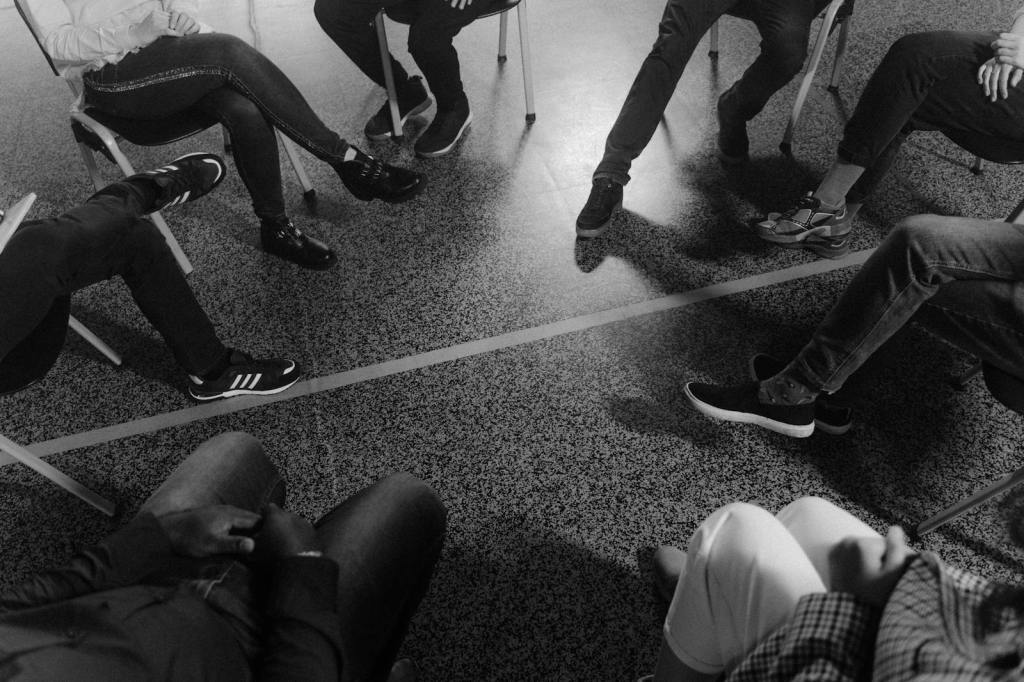
Feelings and trauma and our relationship with ourselves.

The problem with numbing out our negative feelings and experiences is, we also tend to numb out our positive ones, too. 

Not always, but often. Very often. 

Often enough that, when we’ve spent years, decades numbing out our pain, we often can’t remember what it’s like to feel even sort of good. 

We often settle for feeling some facsimile of good— that, honestly, doesn’t feel all that good. 

Understand: almost nobody reading this made a “choice” to numb out their feelings. 

Almost everybody reading this was conditioned to do it, to some extent or another. 

Blaming ourselves for it is a dead end. 

Realistically regulating our feelings often begins with finding ways to feel our feelings— good, bad, and otherwise— in ways that aren’t overwhelming. 

You have probably gotten all sorts of messages about your feelings over the years. 

You’ve probably been told you’re “too much.” 

You’ve probably been told you’re “too sensitive.” 

You’ve probably been told your feelings are, to one extent or another, just…wrong. 

So— you, like me, probably got in the habit of not feelings things. 

Well…that kind of oversimplifies it, doesn’t it. 

Because, after all, we do feel the things, don’t we. 

Just not…consciously. 

But we feel them. 

In our bodies. In our dreams. In our fight, flight, freeze, fawn, and/or flop reactions. 

Yeah. There’s no bypassing feelings, not really. And to the extent we try to bypass our feelings, we hand them power over us— notably, the power to interrupt our day, interrupt our relationships, interrupt our goals. 

My point is, trauma recovery often involves reevaluating our relationship with our feelings— and our conditioned strategy of trying to opt out of feeling them. 

Again: it’s not our fault. 

But our feelings have been waiting for us to return to them, to acknowledge them, to care for them. 

Trauma recovery broadly is about repairing and nurturing our relationship with ourselves. 

For my money, every decision we make in recovery comes back to: does this build or chip away at my relationship with myself? With my parts? With my inner child? 

Usually, if we can think to ask that Recovery Supporting Question, we can figure out the answer. 

Don’t fear your feelings. 

Hold them. Sit with them. Be with them. 

Even—especially— the rough ones. 

Trauma recovery is improv. “Yes, and.”

Trauma recovery is improv. 

Improv is a form of performance art in which the performers are given broad prompts, and they come up with scenarios, skits, and stores around what they are given. 

Improv obviously requires creativity. It requires focus. It can seem to require a fair amount of confidence, although it’s my experience that many introverts are surprisingly good at improv. 

People who don’t have experience with improv can find it intimidating. 

They can get it in their head that improv is a form of performance art that you’re either good at or you’re not— and if you’re not good at it, you may as well not bother trying. 

It’s true that some people tend to be naturally better at improv than others— though, in fairness, that’s true about literally any activity. 

The real truth is, as freewheeling and instinctive as improv can appear, there are principles that make for successful improv performances. 

It’s not just pure creativity or talent. It’s not all about confidence. 

The ability to perform improv is a skillset— one at which most people get demonstrably better as they work at it. 

Yes, there is a lot of room for potential flexibility within the principles and skills that make for good improv— but there’s no question that performers who know how improv works, what tends to make for successful improv performances, consistently do better at the art form. 

People who don’t think they can do improv very often surprise themselves as they learn the skills and principles of the art— and they increasingly find that they can weave their own personality and creativity into their improv skills. 

All of this can be said of trauma recovery as well. 

Many people assume they can’t “do” recovery because they’re not naturally good at the skills and tools recovery requires us to develop— but those skills and tools can be learned and developed. 

Just like no two improv performances are the same, because different performers have different strengths and styles, no two trauma recoveries look exactly the same— because different survivors have different strengths, needs, and supports. 

My trauma recovery may not look like your trauma recovery, any more than my improv performances may look like yours— but there will be principles and structure that will be common to both. 

The reason I don’t get ultra specific with recovery tools and skills on the internet is the same reason improv coaches can’t get super specific with advice on how to do improv— because each survivor and performer has different strengths, styles, and needs. 

Perhaps most importantly, the success of an improv performance depends upon accepting the implications and limitations of the prompt. In improv this process is known as meeting the prompt with a “yes, and” attitude. 

Performers who do not accept the implications and limitations of the prompt (think Michael Scott in the episode of “The Office” where he continually tries to redirect his improv scene to his own “secret agent” storyline, which had nothing to do with the prompt) can’t explore the possibilities of the potential performance. 

They can’t bring their tools or skills as performers to bear, because they refuse to accept the realty of the prompt— the baseline requirement of the performance. 

This is analogous to the necessity of trauma survivors’ accepting the realty of what happened to us— and the reality and severity of our symptoms. 

If we refuse to accept these basics of our situation— our “prompt”— we cannot bring our skills, tools, or philosophies to bear. None of it will matter, because we’ll be too busy staying in denial, instead of crafting our recovery. 

Designing a trauma recovery is like crafting an improv scene. 

Does it require creativity? Yes. Does it require individuality? Yes. 

But is it more likely to be successful if it follows the principles and involves the tools and skills known to support recovery? Yes. 

Everyone in trauma recovery could stand to learn about the skills and structure of improv. 

Your recovery is more important.

Your recovery is more important. 

More important than what just happened. 

More important than what happened back then. 

Your recovery is more important than what they say. 

More important than what they think. 

Even more important than what they may or may not do. 

Your recovery is more important than what you feel. I know that may sound strange, but often we might feel as if we can’t do this, as if we don’t deserve this, as if there’s no point to this. 

That’s all trauma conditioning BS (Belief Systems)— and your recovery is more important than trauma BS. 

Your recovery is more important than your grief. I know that might sound strange, too, but we very often experience our grief as overwhelming, and get the idea in our head that we can’t continue on in recovery because our grief is so overwhelming. 

Your grief is important. Your grief matters. Your grief needs to be acknowledged and honored and mourned. 

But your recovery is still more important. 

Your recovery is more important than all of these things, because it’s your recovery that enables you to functionally care about any of these things. 

Your recovery is more important than anything that might come along trying to derail your recovery— and, believe me, there will absolutely be people and events that are going to try, effortfully, to derail your recovery. 

They will try to convince you you “have no choice” but to put your recovery on hold. Put it on the back burner. 

That’s simply not true. 

I don’t care what the person or event is that is trying to convince you to disrespect your recovery — it’s wrong. 

You don’t “have to” pause or give up on your recovery for anybody or anything. 

Your recovery does not take bandwidth away from any relationship or any project you care about. 

That said, your recovery absolutely will take bandwidth away from certain projects and relationships— namely, projects and relationships that are detrimental to your authenticity, safety, or stability. 

Yeah. Your recovery is not consistent with THOSE things— and that’s the good news, actually. 

Your recovery is more important than your past. 

Your recovery is more important than your fear. 

Your fear is real, and, much like your grief, it deserves to be acknowledged with respect and clarity. 

But there is no fear that is worth abandoning your recovery over. 

There is no news that is worth abandoning your recovery over. 

There is no loss, or potential loss, that is worth abandoning your recovery over. 

Even if you’re looking at losing the most important, most treasured, most loved thing in your world, that loss is not worth abandoning your recovery over. 

To the contrary: that loss or potential loss is worth honoring and maintaining your recovery over. 

No reason or excuse or heartache is a “good” reason to abandon your recovery. 

There s no NEED to abandon your recovery. 

Breathe. Blink. Focus. 

It’s a long walk back to Eden. Don’t sweat the small stuff.