Trauma recovery is about happiness– not just managing symptoms.

Something many trauma recover resources don’t tell you, that I think they should, is that your daily life management routine and rituals and skills have got to be linked to your overall philosophy and model of what happiness is. 

Because the goal of all of this is not just “symptom management.” 

The goal of all of this is happiness. 

A barrier I ran into in my own trauma recovery (and my recovery from addiction and ADHD) was, I felt that the tools I was developing were only useful for managing symptoms— which was fine, but also not especially motivating. 

Yes, we all want to manage and reduce painful symptoms. 

But “managing symptoms” is not really something that gets me up in the morning. 

Digging into that, I discovered a specific fear: that if I got too good at “managing” my symptoms, everything in my life would be stable…and boring. 

I know, hell of a problem to have, right? 

The truth is, there are times in the chaotic sh*t show that used to be my life, that I would have BEGGED for “boring.” 

It’s not that I liked or wanted drama. I didn’t, and don’t. 

What I did want, though, was to feel alive. 

I wanted to work on projects that mattered to me. That inspired me, that turned me on, that focused me. 

And the version of life that I felt I was developing by just focusing on skills and tools was just not especially interesting. 

Now, the solution to that is not to give up on tools and skills, nor to discredit safety and stability as goals. All of those are super important. 

But they need to be tied to something bigger. 

I don’t want you sleepwalking through your days, acceptably “managing” your symptoms, but with no bigger model of how happiness and fulfillment happen. 

I want you taking time, every day, to connect what you’re working on today— the safety and stability and executive functioning stuff— with what you ultimately want. 

Your big goals. Your big dreams. 

And, yes, I know: trauma does a real number on our ability to dream big and to set goals and to dare to even think about what “happiness” is. 

It’s anxiety provoking. And, not for nothing, we’re not taught how to do that— to connect our daily routines and decisions to the bigger picture of what creates a life worth living. 

But I truly think that’s the ultimate key to sustainable recovery. 

Put another way: there are plenty of resources that will teach us the “what” of trauma recovery. For that matter, the “what”— the specific tools and skills— are going to vary based on who you are, what your learning style is, and what your specific injuries and wounds are. 

But the “what” of trauma recovery won’t sustain us. We’ll get bored with it. We’ll get tired of it. 

We also need the “why.” 

We need something to do all of this for. A reason to endure the hassle and the heartache. 

What I want you thinking about, at last a little every day, is: your model of happiness. 

What creates it? 

What sustains it? 

Because if experiencing trauma has taught us anything, it’s that life or other people are not going to come along and hand us happiness. 

If we’re going to get realistically, sustainably happy, it’s on us. 

Don’t let that freak you out. Happiness is like anything: it has building blocks. A formula. Those aren’t the same for everyone— but your equation is out there. 

I just want you starting to think about it and ask questions about it. Even if you’re just trying to stay alive every day at this point. 

Recovery is about philosophy, not just skill.

Your mileage may vary, but I don’t think we are here to merely survive. 

I think we’re here to master ourselves. 

I think we’re here to grow stronger, in realistic, sustainable ways. 

The philosopher Nietzsche called it the “will to power”— that instinct in human beings to test our limits and discover who we truly are. 

That’s what I think trauma and addiction recovery are really about. Not just “coping with” symptoms. Not just processing memories. 

As far as I’m concerned, we learn to manage symptoms and process memories specifically so we can get on with this business of why we’re really here, why we really exist. 

You don’t have to agree with me. I know plenty of people who don’t— plenty of people who believe that we’re basically here as a cosmic accident. 

Trauma makes us particularly vulnerable to believing that we’re not here for any particular reason at all. 

One of my favorite trauma recovery resources that doesn’t often get discussed as a trauma resource is the book “Man’s Search for Meaning,” by Viktor Frankl. It’s about how Fankl, a Holocaust survivor, made it through that experience by seeking out and creating meaning, even in the little everyday moments inside the concentration camp. 

Don’t get me wrong: I’m not in the “everything has meaning” or “everything happens for a reason” camp. 

But I do believe that life has purpose— and that purpose is to see how far we can realistically go with the tools and resources we have, find, and develop, even after trauma. 

F*ck it— especially after trauma. 

Why mention it here? Because I believe philosophy is as important as skill in recovering from trauma. 

You’re going to be exposed to all kinds of trauma recovery tools on this journey. Some will resonate with how you function; others won’t. You’ll adapt some to how you work, and you’l choose not to develop others. 

Bu no matter what tools you do or don’t embrace along this trauma recovery journey, you’re going to need a trauma recovery philosophy— a life philosophy— that makes those tools worth using. 

What makes life worth living? 

You get to answer for you. But for me, Nietzsche nailed it. 

No. You are not “just like them.”

I don’t mind saying it: we’re better than our abusers and bullies. 

As in, we’re better people. 

Yes, they may be wounded. 

Yes, they may have even survived trauma in their life, similar to the trauma we survived in ours. 

Did the fact that they survived trauma lead them to abuse or hurt us? No. 

Trauma or pain in one’s life does not “make” them become an abuser. 

There may have been factors that made them vulnerable to the decisions they made— but decisions were still made. 

Sometimes I’ll get pushback for asserting that we, survivors working our trauma recovery, are better than our abusers— but I stand by it. 

So often trauma survivors walk into my office, fully prepared to tell me all 2,482,200 reasons why they suck— and those same survivors often want to tell me all the reasons why their abuse wasn’t “actually” abuse, or why their abusers deserve empathy “as human beings.” 

I’ll never tell you you “have” to feel a particular way about your abusers and bullies. 

And I do believe that every human being deserves as much compassion as their pain requires. 

But that still doesn’t let them off the hook for their decisions. 

We are better than our abusers and bullies. Quote me on it. 

The fact that you are working your trauma recovery makes you better. 

The fact that you are reading this and taking it seriously makes you better. 

The fact that you are even thinking about issues of fault and responsibility when it comes to how humans affect each other, makes you better. 

Sympathize with your abusers all you want. I happen to believe my father, for all his flaws and poor or cruel choices, was a very tortured man. I have all kinds of sympathy and even empathy for him. 

And also: my choices make me better than him. 

You don’t have to believe that. But I do. 

Trauma recovery does not, actually, ask us not to judge. 

Trauma recovery asks us to judge intelligently and realistically— not in the distorted, bullsh*t way we were conditioned to judge ourselves. 

I don’t want anybody reading this to get a big head about being “better” than their abusers. That’s not the point. 

The point is to remind ourselves: what we do really does matter. The choices we make matter. How we process and respond to our pain and vulnerability, matter. 

We are not passive victims of fate or prisoners to our past, any more than our abusers were. 

Both we and our abusers had choices. 

We are choosing profoundly differently from them. 

Profoundly better. 

This post is dedicated to anyone who has struggled with the question of “am I just like them?” 

You’re not. Really. 

You don’t need to do it all. Really.

CPTSD will have us trying to do all the things all the time— not because it’s a good idea or we’re up to that impossible “challenge,” but because we don’t feel safe if we try to slow down or do less. 

Many of us grew up believing that we “have” to do it all— or else we’re worthless. 

(Hell, many of us were TOLD as much.) 

Many CPTSD survivors grow up believing that our worth is primarily, maybe exclusively, tied to our ability to not just perform, but to overperform. 

After all, who even WERE we if we weren’t The Best At The Thing??

It’s a byproduct of the fact that we weren’t taught how to develop authentic self-esteem. 

Since we have no context for creating realistic, sustainable feelings of self worth that endure regardless of how we perform, we get very, very attached to our performance metrics. 

Which is great— as long as we’re performing “well.” 

And which creates all the problems you think it creates when we’re not performing “well”— or when life asks us to be someone beyond a performing robot. 

Trauma recovery is going to ask us to get real about who we are and what we’re all about, above and beyond anything we can do— or can do for people. 

It’s going to ask us to be a person who is more than entertaining, or attractive, or useful. 

It’s going to ask us to be, well, us. 

Which can be a problem, when we’re not sure who the hell “we” could possibly even be. 

That’s okay if you have that “who the hell even am I?” problem right now. Almost every survivor working our recovery has that— and at usually more than one point in our recovery, for that matter. 

For now, be clear about the fact that you don’t have to do it all. 

You don’t have to do it perfectly. 

And you don’t have to be anyone other than who you are— I mean who you are right here, right now, as you read this— in order to “deserve” safety, support, recovery…or love. 

Yes, yes— Trauma Brain didn’t like reading that last part, did it? 

That’s a pretty good indicator that last part’s real important to  your recovery. 

Start with internal safety.

Yes: it would be better if everybody reading this was physically, externally safe. 

But they’re not. 

And for a subset of the people reading this, perfect external physical safety is not possible right now. 

That’s not the way it should be. Everybody should have realistic safety available to them. We should create a world where realistic physical safety is available to everyone. 

But, since that is not the world we live in, we trauma survivors have to adapt. 

It’s not fair, it’s not right, and we should aspire to create and live in a different world—  but in this current version of reality, we have to adapt. 

One of the most important adaptations we can make is focusing on internal safety. 

We may not be able to stop or control attacks that come from the outside. 

But we can decrease and protect against attacks we launch against ourselves. 

We can commit to using our self talk, mental focus, and physiology to soothe and support ourselves, instead of tearing ourselves down. 

Every survivor reading this needs to know that Trauma Brain, the internalized voices of our abusers and bullies, is out to make us miserable. That’s its job, its mission statement. 

And Trauma Brain very often tries to get us to collude with it— to repeat and amplify its attacks on us. 

That’s what we have to stop. 

That’s what we have to recognize and say “no” to. 

Only we can create internal safety. Only we can choose to use our self talk in constructive, affirming, realistic ways— not the cruel, distorted ways Trauma Brain tries to get us to use. 

I’ve said it before: the quality of our trauma recovery is the quality of our relationship with ourselves. 

If we relate to ourselves primarily as a prosecutor or a punisher, we’re committing to basically doing our bullies’ and abusers’ dirty work for them— in our own goddamn head, in our own voice. 

F*ck that, you know? 

I’m not talking about sophisticated trauma processing theory here. 

I’m talking about basic verbal and emotional first aid and self care. 

For all the people asking me again and again about the “how” of trauma recovery: it starts right here. By shifting how we talk to ourselves, leverage our mental focus, and use our physiology. 

Do we talk to ourselves, focus, and behave toward ourselves in ways our bullies and abusers would prefer? 

Or do we talk to ourselves, focus, and behave toward ourselves— today, right here, right now— in was that communicate self-love (even if we’re not necessarily FEELING loving toward ourselves just now)? 

I want everybody reading this to be safe in the outside world. I hope to contribute to a world in which external physical safety is is a realty for everyone. 

But, barring that: start with internal safety. Start with self talk, mental focus, and physiology. 

That is to say: start basic. 

I love basic. Basic is friend. 

Breathe; blink; focus. 

You don’t owe your past anything.

You don’t owe your past anything. 

You don’t owe it allegiance. 

You don’t owe it attention. 

You don’t owe it your suffering. 

We trauma survivors can be weirdly, morosely “sentimental” in a way. 

We can be reluctant to create and nurture our present and future, because we feel “bad” about leaving our past behind. 

Maybe we feel like in leaving our past behind, we’re leaving that version of ourselves behind. 

We’re not. 

We’re leaving behind the relationships and situations that hurt our past self. 

Our past self is actually coming with us into our new, recovery-focused future. 

Trauma recovery is not about rejecting or abandoning our past self. 

It’s about choosing not to worship our past or our pain. 

Many of us have been programmed and conditioned to do exactly that. 

I remember how furious I was when I realized that’s what I was doing. 

I would save sh*t from my past— not because those things were useful to me, but because I felt to let them go would be to somehow dishonor my past or my pain. 

Now, I understand: holding on to those things— or those people— does not “honor” anything worth honoring. 

It just ties me back to that time and that place. 

We don’t need to be connected to our past. We’re already too connected to our past. 

I hate when people tell trauma survivors to “let go” of our past in the abstract. What the hell does that even mean? 

I’ll tell you what I’ve come to understand about “letting go” of the past: it means being willing and able to redirect our self talk and mental focus, over and over again, every day, when either tries to go down old pathways. 

“Letting go” of the past means being willing to throw certain sh*t out. To declutter— mentally, spiritually, and, yes, physically. 

When I say “release the past,” I’m talking about literally throwing certain sh*t away. 

Not having it in front of our face, to look at, to read, to ruminate on. 

You don’t owe you past a goddamn thing. 

You do owe yourself— including that version of you that got you through the sh*t— undivided focus on realistically creating a life, here, now, that you don’t hate. 

When in doubt, throw it out. 

Trauma recovery has a lot in common with hoarding clear outs. 

So they didn’t love us. And?

Something many CPTSD survivors have to come to terms with is, we were not loved by the people who were supposed to love us. 

That’s a hard f*cking pill to swallow. 

You’ll notice how many people want to deny and disown that fact. 

There will be people who want to make excuses and rationalize all day. 

They simply cannot process the fact that they weren’t loved. 

To me, it doesn’t even matter why we weren’t loved. I don’t especially care what “their” limitations or motivations may or may not have been. The result is the same. 

Harsh? Eh, maybe. But I don’t particularly care. 

We get all up in our head about what that fact means. 

We weren’t loved by the people who should have loved us, and our brain wants to make some kind of meaning out of that. Because that’s what brains do: they make meaning. 

It wants to tell us a story about why we weren’t loved— and very often that story focuses on how much we supposedly suck, how supposedly “unlovable” we are. 

You need to know: that story is BS— which stands for “Belief Systems.” 

Also bullsh*t. 

You and I weren’t loved. The people who should have loved us may have felt what they thought was “love” toward us— but they did not operationalize that “love” into behaviors that registered with our nervous system the way they needed to. 

And that is not our fault. 

That was not the result of us being inadequate or unloveable. 

That was not “evidence” of anything other than the fact that we weren’t loved. 

It was what it was. It is what it is. 

It doesn’t mean we can’t build a life. 

It doesn’t mean we can’t love and be loved now— although that’s probably going to be complicated, given what we didn’t experience and didn’t see modeled. 

The story your brain is telling you about why you weren’t loved is fake news. It’s what cognitive therapists call “mind reading”— that is, not so educated guesses, usually rooted in a cognitive distortion called “emotional reasoning” (i.e., “it MUST be true because it FEELS true”). 

To realistically recover from trauma or addiction, you and I have to get seriously unattached to the stores our brain makes up about the “why.” 

We may never know why we weren’t loved. 

And that doesn’t change anything. 

And it doesn’t, actually, matter. 

You are valid and valuable whether or not you were loved by the people who happen to share your name and/or DNA. 

Honestly, your parentage is maybe the least interesting thing about you.

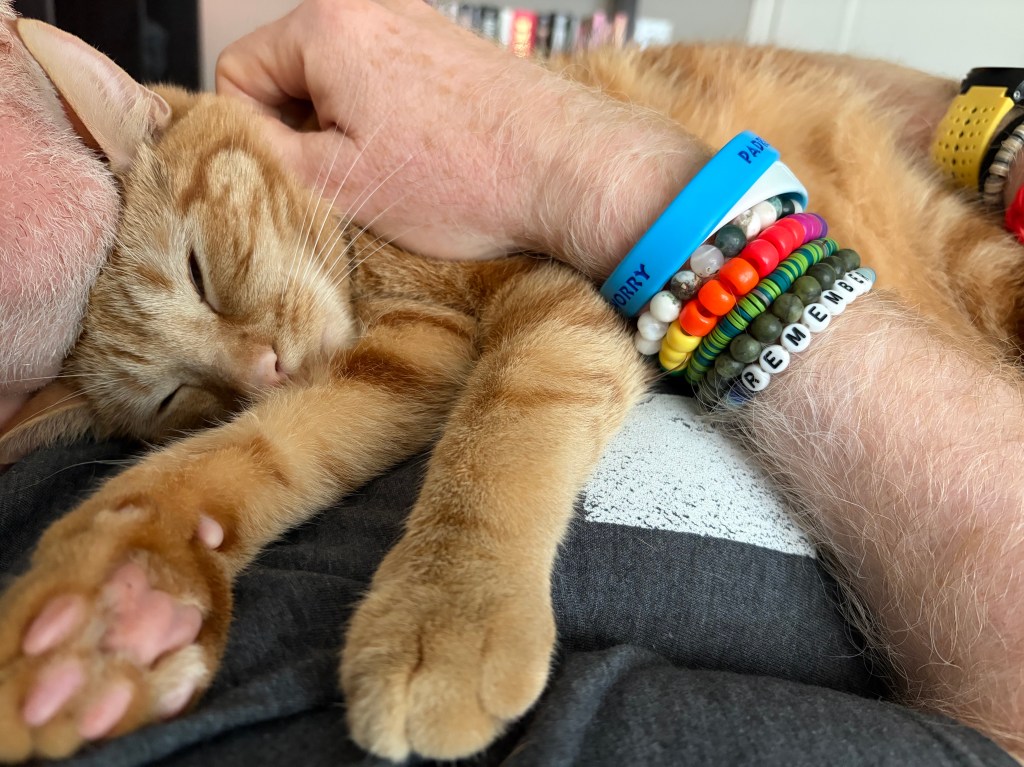
Remember. Remember. 

Breathe; blink; focus. 

“Fawning” is not a “choice.”

It’s real important we be clear with ourselves that other peoples’ approval or acceptance does not, cannot, make or break our actual worth. 


Sounds obvious, right? 

Not so much when we’re operating with a nervous system wounded by CPTSD. 

It can be more than a little counterintuitive that we get so attached to— and f*cked up by— the very idea of others’ approval or acceptance. After all, we’re smart grown ups, right? Why should we care? 

It’s not a rational thing. 

No one reading this woke up this morning and thought to ourselves, you know what, I think I’m going to get way up in my head about what other people think. 

It’s a deep, gut level thing— a reaction, a reflex. 

Caring what other people think is most closely tied to the “fawn” trauma response, which I describe as that “please and appease” reflex. 

“Fawn,” just like any other trauma response, is not a “choice”— we do it because our nervous system truly believes, in that moment, that we would be literal dead meat if we DON’T please and appease. 

“Fawn” can FEEL a little more like a “choice,” insofar as it manifests in was that tend to be a little more cerebral or nuanced than “fight,” “flight,’ “freeze,” or “flop,” but it’s real important we be clear: no matter how nuanced or complex a trauma response seems to be, it’s still a trauma response. 

That is to say: it’s still not a “choice.” 

When we’re up in our head about making others happy or meeting others’ expectations—that s to say, when we’re drowning in anxiety about others’ approval or acceptance— we’re very frequently playing out a “fawn” response. 

We’re not “weak” and we’re not “stupid.” We’re responding reflexively to conditioning— and trying like hell to survive a situation that truly, honestly feels like like life or death to a “part” of us. 

Yes, learning to care less about others’ approval or acceptance is going to be a significant part of everyone reading this’s trauma recover blueprint— but don’t get sucked into thinking that’s a simple, straightforward “decision” we make, to just “care less.” 

What was conditioned into our nervous system by trauma needs to be reconditioned in our nervous system by recovery— and that takes the time it takes. 

Easy does it. Grace over guilt. 

You didn’t ask for these patterns, and you exist in a culture that does not understand we can’t make significant positive changes in our nervous system in an instant. 

Whether it’s “fight,” “flight,” “freeze,” “fawn,” or “flop” we’re trying to recondition in our nervous and endocrine systems, we need to start by creating realistic safety inside our head and heart— and THAT project starts with giving ourselves permission to find this hard and unfair. 

Others’ approval or acceptance can nether create nor destroy our true worth. 

No matter what the “fawn” response is whispering in your ear right now as you read this. 

Breathe; blink; focus. 

Trauma recovery and reclamation.

Part— but not all— of trauma recovery is reclamation. 

Our abusers and bullies, whether the were people, churches, organizations, governments, or whatever— took things from us. 

Sometimes they took language from us. 

Sometimes they took activities from us. 

Sometimes they took whole chunks of our identity. 

What I mean when I say they “took things from us” is, after we’ve been through trauma, there tend to be things that we don’t want to think about, get near, engage with, or identity with, because they remind us of our abusers or abuse. 

Sometimes it’s something as simple as a word. 

Sometimes it’s an activity that we might otherwise find fun or meaningful. 

Sometimes it’s music. 

Sometimes it’s an identification with a family or tribe of some sort. 

The list of things trauma takes from us includes big and little things— and rarely a day goes by when we are not cognizant of trauma having taken something away from us. 

There are multiple moving part to trauma recovery, but I believe an important part is reclaiming what we choose to take back. 

I believe it really maters that we feel realistically able to claim and own and engage with things that are pleasurable or meaningful to us— even (especially!) after the’ve been “tainted” by our abusers. 

It’s true that many survivors in recovery define ourselves by what we aren’t— namely, we are not our abusers. 

Most survivors work really hard to be better people, better parents, better morally and spiritually and emotionally than the people who hurt us. 

Who we AREN’T tends to be such a huge part of our trauma recovery identity, that sometimes we can lose perspective on the fact that there may be things that we’re rejecting that actually have nothing to do with our abusers per se— and which we might actually value. 

I just don’t believe in letting abusers and bullies limit who we can be and what we can do.

Most of us have spent far too long tiptoeing through life like navigating a minefield— and make no mistake, emotionally and psychologically, that’s absolutely what many of us have been doing. 

Maybe reclamation for you looks like choosing to use words in a particular way that is authentic to you, but which got corrupted by an abuses’s habits of expression. 

(Welcome to why I so often use profanity in my writing.) 

Maybe reclamation for you looks like exploring or practicing a spatial path that an abuser poisoned for you once upon a time. 

Maybe reclamation for you looks like getting reacquainted with music that actually moves you, but which got associated with pain for you once upon a time. 

I’ve said it before: trauma recovery is a search and rescue operation. 

Think of reclamation as one of the most important ways we reestablish who we are and what we’re all about— and one of the most important ways we keep from being controlled by our abusers and bullies every day. 

WTF is the “f*ck” trauma response?

What I call the “f*ck” trauma response, where we respond to triggers by becoming hyper sexualized, fixated on sexual thoughts and behaviors, and vulnerable to risky sexual choices, is not the “fawn” response, where we please and appease in order to avoid danger. 

I think of the “f*ck” response as separate from, but related to, “fight,” “flight,” “freeze,” “fawn,” and “flop.”

(As you learn about the “F” trauma responses, you’ll come to understand they’re all related on certain levels, but very distinct on others.) 

Yes, sometimes sexual behavior is driven by the “fawn” “please and appease” reflex— but that’s not quite what I’m talking about with “f*ck.” 

When our abuse was sexual, it can do a real number on how we think about, respond to, and otherwise experience sexually. 

In some ways the “f*ck” response can appear to be a “fawn” reflex— but the main difference is that “fawn” focuses on please and appeasing the threatening person, whereas “f*ck” is focused on regulating our own nervous system. 

In some ways, “f*ck” does resemble the “flight” response, in that survivors experience it as a “flight” into sexual ideation and behavior to avoid feelings of threat— but the end goal of “f*ck” isn’t really escape, as it is with “flight.” 

In other ways, the “f*ck” response can resemble the “freeze” reflex, in that survivors can use sexual thoughts and behaviors as a way to “stop” triggering thoughts cold (in this way, “f*ck” also kind of resembles certain self harm behaviors, which survivors also use as “thought stopping” tools.)

In yet other ways, “f*ck” can resemble the “fight” trauma response, depending on how it manifests. “Fight” is a reflex centered on feeling a sense of power and efficacy as a survivor “fights back” against fear and helplessness— and anyone familiar with the “f*ck” response knows how empowering it can feel in the moment to proactively seize “control” of sexual impulses.

The reason I believe it’s important to discuss the “f*ck” response as its own thing alongside “fight,” “flight,” “freeze,” “fawn,” and “flop,” is that trauma survivors vulnerable to the “f*ck” response very often get shut down when they try to discuss it. 

Speaking as a survivor of childhood sexual abuse myself, I can affirm that sexualized trauma responses are not the easiest to acknowledge or explore, specifically because of stereotypes around how “damaged” we are after sexual abuse. 

Many survivors vulnerable to the “f*ck” response feel shame around it in ways we don’t around the other “F” responses. 

It can get to the point where we don’t even want to acknowledge that there is anything trauma-driven about how we experience sexuality, because we don’t want to navigate others’ judgment about our sexual behaviors, fantasies, or needs. 

Simply reducing “f*ck” to one of the more well known trauma responses diminishes what I believe to be an essential experience for many, many survivors of sexual trauma in particular. 

Trauma survivors should not have to go to sex therapists specifically to understand and work through their behaviors and needs surrounding their sexual trauma and consequent “f*ck” trauma responses. Sex therapists can be awesome at what they do— but the “f*ck” reflex is so much a part of so may survivors’ lives, working with it should be part of any trauma informed or trauma focused therapist’s skillset. 

If we, the trauma recovery community, ignore or minimize the “f*ck” trauma response because we feel icky about it or don’t understand it, we are ensuring that both therapists and survivors don’t know how to normalize, validate, and manage it— which leaves survivors very vulnerable to sexual manipulation, exploitation, and risk. 

There is nothing shameful about being vulnerable to the “f*ck trauma” response. It has nothing to do with your morals, your standards, or your intelligence. 

Creating and experiencing a safe, fulfilling sex life begins with understanding, with compassion, patience, and clarity, how our trauma has impacted how we experience and express our sexuality. 

It’s often not a simple equation— but few things in realistic trauma recovery are. 

You’re not a “pervert,” “freak,” or irreparably sexually damaged for being vulnerable to the “f*ck” trauma response. Trauma responses are not choices; they happen, and they do not discriminate. 

Meeting it with compassion, patience, and realism is how we understand and wrangle it. 

Breathe; blink; focus.