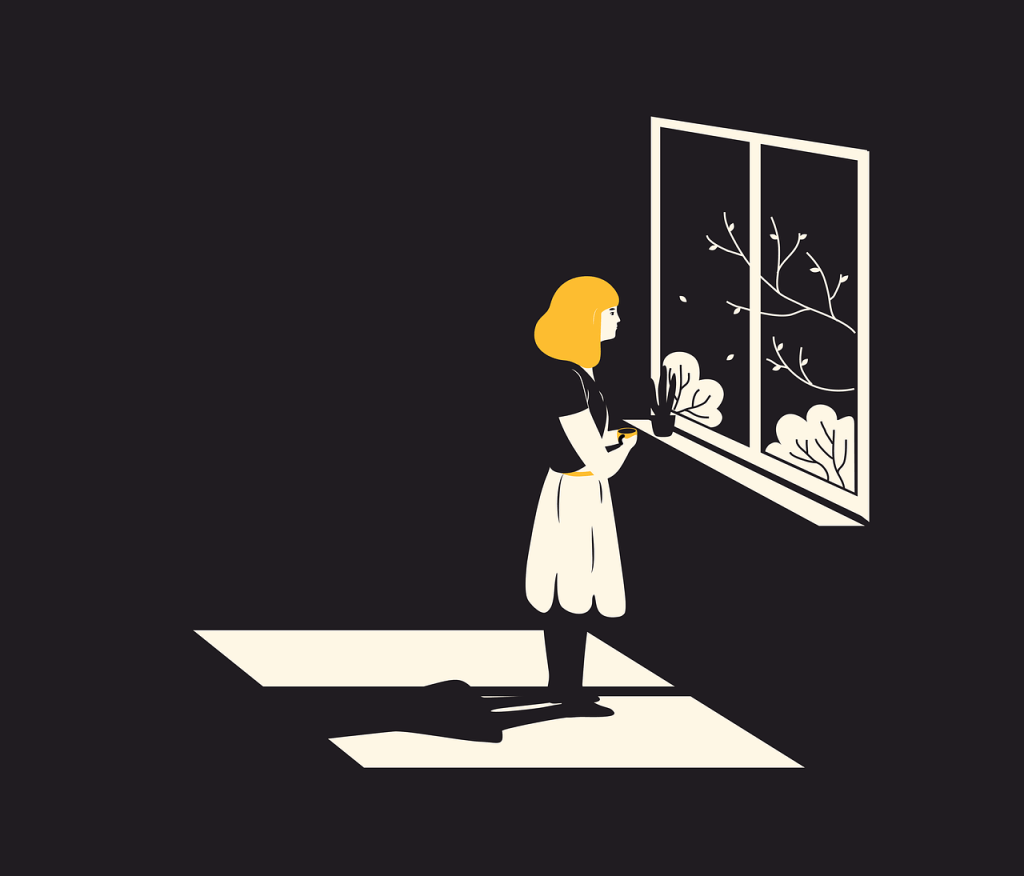
“Why are you depressed?” Shut up, that’s why.

“Why are you depressed?” has always struck me as such a useless question. 

I remember once I got irrationally angry at a perfectly well-meaning friend who asked why I was depressed…and I wasn’t even exactly sure why I got so angry. 

I wasn’t exactly sure why I was so depressed, either. 

I think the reason the question, “Why are you depressed?”, strikes me as so absurd is that we very often don’t know “why” we’re depressed…and it’s very often not even a straightforward answer. 

Depression is almost always what we call multidetermined— that is, there’s a lot that goes into it. 

Most people who experience depression have a biological disposition toward it, that involves their nervous system (specifically the production and functioning of neurotransmitters, the chemicals your brain uses to talk to itself) and their endocrine system (specifically the production of hormones that regulates— or upends— our mood and physical alertness and energy). 

Most people who experience depression also tend to have it in their family history— meaning that not only is their biochemistry probably keyed toward depression, but they probably grew up with depressive behavior and attitudes modeled and reinforced. 

And all of that is on the table BEFORE we even get to what most people think they’re asking about when they ask, “Why are you depressed?” 

It seems to be the case that most people, when they ask “why are you depressed?”, are looking for the external reason— the thing that happened outside of you, that “made” you depressed. 

It’s definitely true that external factors can contribute to depression. 

When we don’t have emotional or physical energy to spare, the presence of life stressors will absolutely drag us down and make things worse. 

But I think it’s also true that our culture overestimates the causal impact of external factors in depression. 

We get TOO invested in this idea that things outside of us “make” us depressed— when what actually happens is, external factors INTERACT with what’s already going on with us to produce the emotional and physical state we call “depressed.” 

Add to all THAT, the fact that depression is also commonly associated with conditions such as ADHD or PTSD— or, more specifically, the life difficulties experienced by people who have ADHD and PTSD. 

All of that is before we approach the fact that depression is a normal part of the grieving process…and the grieving process usually lasts much longer than many people think it “should,” given that we’re often supposedly functional and back to our everyday lives before we’re really substantively “over” a loss. 

All of which is to say: how on earth can all that mess be summed up in a cogent response to the question, even well-meaning, “Why are you depressed?” 

I think people ask “why are you depressed?”, because they want to help. 

They want to make suggestions. They want to assist you in getting over or past whatever is “making” you depressed. 

Don’t get me wrong: I’m very GLAD there are people who care about us enough to even ask what’s going on with us. 

But we need to be careful to avoid simplistic thinking when it comes to depression. 

It’s usually not ONE THING that can be adjusted or fixed in order to snap us out of it. 

Recovering from depression is a process, much like recovering from addiction:  we manage what we’re experiencing every day, we make small shifts in our thinking and our lifestyle, we slowly evolve different ways of thinking and behaving that support consistently feeling different. 

And even then: it’s not all under our control. 

Brain and body chemistry can be influenced by what we think and what we do, but it’s a notoriously, maddeningly imprecise project. 

Yeah. It can be a slog. 

The good news is, recovery from depression is possible. It does happen, and we’re learning more and more about HOW it happens. 

Recovery from depression is a project worth engaging and persisting in. 

But don’t get sucked into the premise that you’ll discover one “why,” and then proceed to knock it out. 

Subscribe to the Doc’s free email newsletter, and never miss a blog or Facebook post!

When you want to go “home” to a place you’ve never been.

Sometimes you just want to go home— and sometimes that has nothing to do with where you actually grew up or your actual family. 

Lots and lots of people have the experience of feeling lost and lonely— and they felt that way BEFORE the pandemic. 

A lot of the time it has nothing to do with whether or how many people are physically around us. 

In fact, for many people, the presence of a lot of people around them can weirdly make them feel MORE lonely. 

There are few feelings lonelier than being in the middle of a crowd…and feeling like you’re from a different planet. 

For a lot of people it’s not about how many people they know or have contact with every day. 

It’s about feeling cut off. 

Like there’s a really important piece of themselves or their life experience that they just can’t meaningfully share with anyone, no matter how hard they try. 

Some people also get the feeling that everybody else is having some experience of life that they, personally, aren’t sharing…and they can’t quite understand why. 

Part of what makes it all so frustrating to so many people is, it’s really hard to talk about, because it’s really hard to put words to. 

After all, how do you explain to someone that you feel…just…different? 

You could put words to some potential reasons why…but those words all seem to just kind of miss the mark somehow. 

Other people MIGHT be nice enough to listen…but even if they listened to every word you say, you feel that somehow they still wouldn’t get it. 

Nobody WANTS to feel this way. 

Nobody seems to be quite sure how they wound up feeling this way. 

Sometimes we don’t even know exactly how LONG we’ve been feeling this way. 

Sometimes we can remember feeling meaningfully connected to other people…but we can’t quite put our finger on when we started to feel so alone. 

What we do know, however, is that we want to go “home.” 

We want somewhere, and someone, familiar, comforting, safe. 

What’s confusing for many people is that we often can’t quite identify anyone or anywhere that really fits that description. 

But we know it exists. It must. 

That feeling— of being someplace and with someone familiar and safe— is a place we can create for ourselves. 

Unfortunately, it’s not effortless— nor does it come particularly easy for many of us, particularly if we grew up feeling unsafe and misunderstood. 

(It’s not necessary for someone to have experienced overwhelming trauma for us to struggle to create and experience a familiar feeling of “home”— though having grown up with pain in our lives certainly impacts our ability to feel safe and connected.) 

Over time, we can identify people and things that help nudge us toward that feeling of familiarity and security, even a little bit. 

A song. A voice. Certain words spoken in a certain order. A smell. 

We can learn to identify the building blocks of what helps us feel secure, connected, and wanted. 

The reality is, any place we want to go— or return to, as the case may be— is first constructed in our heads. 

It’s the fantasy or memory of a feeling, more so than a place. 

(Many people have the experience of physically going to a place where they assumed they would feel safe, but not feeling what they were expecting…because what they were “missing” wasn’t the place itself, but what they imagined the place to be.) 

We can create or recreate that feeling in our heads, with practice. 

It takes time, patience, and some skill. 

But the good news is: that place of familiarity and connectedness and safety does exist. 

And, as it turns out: you hold the key. 

Subscribe to the Doc’s free weekly email newsletter, and never miss a blog or Facebook post!


You don’t have to feel guilty for wanting what you want or needing what you need.

You don’t have to feel guilty for acknowledging what you’re not getting, even in your closest relationships. 

It’s not selfish to acknowledge what you miss and what you want. 

It’s just observing where you are. 

We can kind of get up in our heads when talking about what we AREN’T getting in intimate relationships. 

We can feel guilty and ungrateful for putting words to what we’re feeling. 

Who am I, we think, to think that I’m “entitled” to more than I’m getting?  

Often we become aware that many people don’t even have intimate relationships— so maybe we shouldn’t be so choosy about what we want in the intimate relationships we’re lucky to have at ALL. 

Lots and lots of people feel conflicted about what they are or aren’t getting in their relationships, what they “should” and “shouldn’t” be unhappy about in their relationships, what they’re “allowed” or “not allowed” to want in their relationships. 

Especially if we’ve grown up lonely, we can feel even MORE conflicted about being unhappy or dissatisfied in aspects of our adult relationships. 

Speaking for myself, I know that, growing up, I swore that if I was ever lucky enough to have intimate relationships I’d keep my mouth shut and deal with ANY imperfections in my relationships— as long as I HAD them. 

Many people grow up believing they’re not “worth” having needs or preferences in relationships. 

Many people grow up feeling that the fact they have relationships at all is a miracle— and they don’t want to endanger them by being TOO specific about what they like or want. 

We can get very anxious that to be too clear about our needs and wants in relationships is to endanger them. 

The thing is, though, if we ignore or deny our needs and preferences in intimate relationships indefinitely, our self-esteem pays the price. 

It’s not a matter of feeling “entitled” to anything. 

It’s a matter of being realistic about what functions relationships serve in our lives. 

When you’re in an intimate partnership with somebody (or even an important friendship), that relationship serves a specific purpose in your world. 

We don’t get into relationships just to be in them. Different relationships serve different purposes. 

When you’re not getting your needs met in a relationship, it begins consuming more energy and resources than it produces in your life— it wears you down more than it lifts you up. 

You don’t want to feel that way about anyone you’re in an intimate relationship with. 

You want to feel good about your intimate relationships— to feel the they’re playing the role you need them to play in your life. 

If you go on, day after day, year after year, in a relationship that’s not meeting your needs and preferences (and, yes, preferences do matter in close relationships), you’ll begin to resent it. 

And with resentment comes guilt and internal conflict— which is a cycle nobody wants in their life. 

It’s okay to want and need what you want and need out of your intimate relationships. 

It’s okay to be clear about it and put words to it. 

It’s okay to acknowledge if a relationship with someone you very much like or love isn’t what you want or need it to be at the moment. 

You don’t need to deny or disown it. You don’t need to apologize for feeling the way you do. We don’t ask for feelings; we just feel them. 

If you really want to DO something about any of it, you kind of HAVE to be clear about what you want and need. 

Scary, I know. Especially when we’ve had a complicated attachment history. 

But worth it.  

Subscribe to the Doc’s free weekly email newsletter and never miss a blog or Facebook post!

It’s about being “in recovery”– not being “done.”

I use the word “recovery” when discussing not only only addiction, but depression, anxiety, and trauma, very intentionally. 

The reason why addiction treatment traditionally uses the phrase “in recovery,” as opposed to more emphatic phrases like “overcoming” or “conquering” or other phrases that indicate someone has definitively healed from their addictive patterns, is to remind those who struggle with addiction that they always remain at risk for relapse. 

Once the compulsive, self-perpetuating, destructive patterns of addictive thinking and behavior have been etched in your nervous system, it can be incredibly easy to go back to them in times of stress or negative feeling. 

Addiction treatment acknowledges that every single day, recovering addicts need to think and do things that manages their risk of relapse. 

Managing the risk of relapse tends to get easier the more “clean time” one accumulates, and as one gets better wit the skills and tools that help them deal with addictive thinking and cravings. 

But to get it in one’s head that one is “past” the risk of relapse can be enormously destructive. 

We can let our guard down, slack off on using the tools and skills that contribute to healthy living…and that puts us at risk for relapse when we least expect it. 

Thus, no one is ever really “recovered” from addiction— everyone is perpetually “in recovery.” 

I find the same to be true of depression, anxiety, and trauma. 

When our nervous system is wired and conditioned for depression, managing it is very much possible— there are skills and tools that can absolutely make life much easier to live, even IF our biochemistry and environment makes us vulnerable to depression. 

But successfully managing depression depends on recommitting to using the tools and skills necessary to manage it every day. It’s like addiction that way. 

We’re never really “recovered” from depression. We will likely always have that predisposition toward depression in our biochemistry and nervous system. 

But if we think of ourselves as constantly “in recovery” from depression— a phrase that reminds us that, even on our good days, we NEED to access our tools and skills to stay emotionally on balance— we stand a much better chance of doing the things we need to do EVERY DAY to keep our heads above the emotional water. 

The same is true for trauma. 

Most of my experience is in working with people who have had really awful things happen to them, either in the recent or distant past— and who struggle with the aftereffects so much that they wonder if they’ll EVER see light at the end of the tunnel. 

Many of them want to know when they’ll be “DONE” with their trauma work— when the truth is, trauma work is much like addiction work: when you’ve been traumatized, it’s highly likely that you’ll always be vulnerable to post traumatic symptoms and triggers. 

But that doesn’t mean you can’t create and experience a life worth living. 

It just means that we have to be realistic about the need to use certain skills and tools every day to manage what trauma has done to our nervous system. 

Hence: I tell people we are “in recovery” from trauma…not that there will come a point where our trauma work is “done.” 

I completely understand why the way I refer to depression, anxiety, and trauma work as ongoing “recovery” work might be a bummer for some people. 

I hear you, I really do. I, too, want to be “done” with my own recovery work. I want to be past it. I want to know that I’ve done what I need to do to “handle” that painful part of my life. 

But something I’ve learned in my own journey is that the fantasy of being “done” with recovery work is a major risk factor for relapse. 

There won’t be a day where I get to wake up “without” ADHD. 

There won’t be a day when I get to wake up “without” having had a panful history. 

There won’t be a day when I get to wake up “without” a nervous system and past experiences that make me vulnerable to addiction. 

If i’m going to live a successful life, I need to  be realistic about that. 

Surrendering the fantasy of ever being definitively “done” with recovery work can be sad. 

But it is also a tremendous relief— because it is real. 

And it truly does give us the best shot at a real life. 

Subscribe to the Doc’s free weekly email newsletter, and never miss a blog or Facebook post!


You’ll feel helpless. But you’re not.

Over time, helplessness can really get stuck at the core of our very identity. 

And why wouldn’t it? Our identities form around what we feel most often. 

When we’re depressed, anxious, dealing with trauma, or struggling with addiction, it’s as if we are constantly beaten over the head with how ineffective we are at dealing with life. 

That’s what our struggles do: they hijack our focus and make us think that we suck. 

Our emotional and behavioral struggles work hard to convince us that we can’t stay focused on what really matters in life…and we only have ourselves to blame. 

It’s not true— but depression, anxiety, trauma, and addiction work hard to make us FEEL like it’s true. 

The truth is, who WOULDN’T have a hard time doing what they need to do every day, when every second their thoughts and physical energy are being dragged down by depression?

Who WOULDN’T have a hard time doing life, when they feel so anxious that their stomach literally hurts and it feels like they literally can’t think because they’re so tense? 

Who WOULDN’T have a hard time doing life when every second their attention is scattered due to dissociation— or pulled back inexorably toward a past full of pain and fear? 

Who WOULDN’T have a hard time making good decisions when every cell in their body feels like its screaming out for a fix of some substance or behavior? 

Think about it this way: let’s say you were the best conductor in the world. You’re the maestro of maestros. In front of an orchestra, no one is more skilled or suave than you. 

And let’s put you in front of an orchestra. Ready to conduct? 

And then, just as you’re about to conduct your orchestra, let’s point a bunch of huge speakers right at your face— the type of speakers they use at rock concerts— and let’s blast Aerosmith’s Greatest Hits at you so you can’t hear yourself think, let alone hear the orchestra you’re supposed to conduct, let alone be able to actually CONDUCT it. 

That’s what depression, anxiety, trauma, and addiction do to us. 

They blast their destructive nonsense at us so loudly and obnoxiously and obtrusively, that it doesn’t even MATTER how good we are at life: it’s going to appear that we suck at it. 

It’s going to APPEAR as if we are helpless. 

Over time, we experience that again and again…so much so that we forget that, actually, we CAN conduct an orchestra, when Aerosmith isn’t being blasted in our face. 

Recovery is partially about learning how to get that speaker blaring heavy metal out of our face. 

But it’s also about remembering that we are not how we feel in our most helpless moments. 

Are are not helpless and hopeless. We don’t suck at life— no matter how we’ve been made to feel when we’re exhausted and in pain. 

It’s really important that we not let ourselves be defined by our most difficult moments. 

EVERYBODY, including the most competent person you can think of right now, has felt helpless and hopeless at times. 

But helplessness does not have to become part of our identity. 

It’s a state, a condition, a feeling, a reality at times. But it is not who we fundamentally are. 

The greatest artists and leaders in the world have felt helpless and hopeless. 

Everyone who has ever recovered from depression, anxiety, trauma, or addiction has very much felt helpless and hopeless. 

I’ve felt helpless and hopeless. 

But we are more than our most difficult feelings. 

Remember who you are. 

It may have been awhile— but remember. 

Subscribe to the Doc’s free weekly email newsletter and never miss a blog or Facebook post!


Your pain matters because your life matters.

I start out from the premise that your life is valuable. 

I can’t prove it. I can’t even really argue for it. It’s not the kind of thing you talk somebody into. 

The premise that your life valuable and worth saving is one of those things you either believe or you don’t— or you’re willing to accept or not. 

I’ve worked with lots and lots of suicidal people. 

In my job as an inpatient therapist on a hospital unit that worked almost exclusively with severe post traumatic and dissociative disorders, the overwhelming majority of my patients were suicidal. That’s how they wound up on the unit to begin with. 

I’ve been suicidal. I’ve been in intimate relationships of varying kinds with other people who have been suicidal. 

I cannot crawl inside anybody’s head and know exactly their experience— but I’m not coming at the subject of the value of life from an abstract, theoretical place, either. 

I know that I’m not going to “convince” a deeply suicidal person that life is worth living. 

There’s nothing I’m going to say to someone that will suddenly convince them, “OH! I hadn’t thought of THAT! OF COURSE I want to keep living now!” 

It’s not that simple— and acting as if it IS that simple is insulting to people who are already in a great deal of pain. 

I’ve never met a suicidal person who is happy to be in the amount of pain they’re in. 

Suicide is never anyone’s first option. 

Neither is self-injury, substance abuse, or dozens of other self-harmful behaviors. 

The world strangely likes to focus on some of those behaviors, rather than the pain behind them— as if the problem here isn’t the fundamental pain, but rather how an overwhelmed, suffering person responds to the pain they’re in. 

And we wonder why more people don’t seek help. 

Anyway: I don’t expect you to agree with me that your life is with living or saving right now. You’re in a lot of pain, and that pain has often been invisible to the people who should care about it. 

You may have often felt invisible to the people who are supposed to care about you. 

I don’t want your pain to be invisible anymore. 

I don’t want you to be invisible anymore. 

That’s why I start out from the premise that your life is valuable and worth saving— because to get into a philosophical discussion about the intrinsic value of life completely misses the point of why we’re even interacting, why you’re reading these words, why you even know who I am. 

I just accept it as given, so we can get on to talking about the REAL problem here: your pain. 

People respond to their pain in all sorts of ways— and they’re very often judged for it. 

They’re called cowards, they’re called weak, they’re called attention-seeking….as if the problem isn’t their pain, but how they respond to their pain. 

Don’t get me wrong, people respond to pain in all sorts of ways that creates more problems than it solves. 

But the pain is the thing. 

I believe your pain is worth trying to do something about— and in the vast majority of cases, there CAN be things done about your pain. 

I know, I know. You might be thoroughly convinced you’re the exception to that, you’re the one actually, truly hopeless case— and if you’re reading this, I probably don’t know you personally, I’m not going to arrogantly assert that you’re wrong.

Who am I to say? I’m no one, some prick on the internet. 

I will tell you this, though: I’ve met dozens, maybe even hundreds, of people who were thoroughly convinced that nothing could be done about their emotional pain. 

They were convinced they were nothing but the trauma of their pasts. 

Or they were nothing more than the everyday depression that weighed down their every waking moment. 

Or they were nothing more than the addiction that seemed to make every decision for them from a place of craving and desperation. 

They’d often tried a lot of things— and they were at the end of their rope. 

And they’re still with us— but more importantly, they feel better. 

Your pain matters BECAUSE your life matters. 

If your life didn’t matter, it wouldn’t matter that you were in pain. 

If you didn’t matter, your pain wouldn’t matter. 

But you do matter. 

That’s what I think, anyway. 

Subscribe to the Doc’s free weekly email newsletter to get blogs, posts, and thoughts in your inbox once a week!

“Gratitude” is not a cure.

We hear a lot about gratitude. 

We’re told to be grateful. 

Actually, it’s more insistent than that— we’re emphatically told we SHOULD be grateful. 

We’re often told that no matter how difficult a situation is or how badly we may be feeling, there is ALWAYS something for which to be grateful…and it’s on us to find it. 

It’s often heavily implied that emotional problems such as depression and anxiety can be healed, at least partially, by focusing on gratitude. 

This carries with it, of course, the implication that emotional problems such as gratitude and anxiety are at least partially CAUSED by our LACK of gratitude. 

Hmm. I don’t know about that one. 

We’re going to tell someone who struggles with, say, depression, that what they’re struggling with— at least PART of what they’re struggling with— stems from the fact that they’re not sufficiently focused on the stuff in their life for which they “should” be grateful? 

We’re going to tell them that this feeling they have— that they are worthless, that life is pointless, that the future is bleak— is at least partially caused by the fact that they’re just focused on…the wrong stuff? 

That they should just make a choice to focus on other stuff, and they’d feel differently? 

Meaning it’s…basically their fault. Because they’ve made poor choices about what to focus on, therefore they’re depressed. 

You might think I’m exaggerating, maybe setting up a straw man for the purpose of writing a blog post, but I assure you, this really is the attitude out there: depressed people “choose” depression because they’re not sufficiently focused on the good things in life, in this case gratitude. 

I’ve known and worked with a lot of depressed people in my career. And anxious people, and addicted people, and people who have experienced trauma. 

Not once have I sad across a therapy room from a person and thought, “You know what the problem with this dude is? HE’S NOT GRATEFUL ENOUGH!” 

Not once. 

Lack of gratitude focus is not the cause of depression. It is the result of depression. 

Lack of gratitude focus is not the cause of anxiety. It is the result of anxiety. 

Depression and anxiety hijack our focus. We are not ourselves when we’re depressed and anxious specifically because we are NOT choosing our focus— because our focus has been forcibly rerouted by the processes and chemicals in our brain and body. 

We can learn to reclaim our focus from depression and anxiety and addiction and trauma— over time, with practice. 

But please, this Thanksgiving, I beg you: don’t share posts that state or imply that depression or anxiety is CAUSED by a lack of gratitude. 

People who struggle with depression WISH they could just flip that gratitude switch and feel better— and they’ve been told, again and again, that they “should” be able to do so. 

People who struggle with depression and anxiety are even told this by people who say that “gratitude” is how they healed their OWN depression or anxiety— therefore they KNOW for a FACT that gratitude heals emotional problems if only it is tried. 

Guys, depression and anxiety are complex. 

There is not one “just do this” solution. 

“Just be grateful” doesn’t cure psychiatric disorders. 

It ay have been helpful for you, and I’m glad. 

But please don’t try to cream everyone who is suffering into one mold. You don’t know what’s happening in their nervous system. You don’t know what’s happened in their past. You don’t know what they are or aren’t grateful for. 

I can tell you from experience that gratitude and suicidality are quite capable of coexisting. 

Focus on gratitude if it is helpful and meaningful to you. 

But please remember your experience always has limited relevance to someone else’s. 

Subscribe to the Doc’s free weekly email newsletter!

Stop digging.

You’re going to have bad days. Bad weeks. Bad months, even. 

They’re going to happen. 

You’ll run into obstacles. You’ll experience loss. 

You’ll get dumped. A friend or colleague will disappoint you. 

Someone will die. 

These things don’t happen because your life sucks. These things happen because we’re human beings and this is the real world. 

The quality of your life is not dependent upon bad things not happening. Bad things WILL happen. 

The quality of your life is far MORE dependent upon what we do WHEN bad things happen. 

Can we somehow respond to the negative events of life in such a way that they are not painful? No. 

Some things will always be painful. 

But can we respond to the negative events of life in such a way that we don’t kick our own ass? 

Yes. 

There is always a way to respond to even the most negative life event without digging ourselves into an even deeper hole. 

Without self-sabotaging. Without self-harming. 

The negative events of life do not have to lead us to self-destructive behaviors— no matter what our history has been. 

Negative events in life can be overwhelming and confusing. 

Especially when we’re already tired and kind of desperate, negative and painful life events can really put a strain on our ability to cope and function. 

You’re not weak for struggling or feeling bad when negative events happen. The fact that they elect those reactions in us is WHY we consider them negative. 

But for many of us, the occurrence of negative or painful events has historically been a cue to dive into self-destructive behavior as a way of trying to avoid feeling bad. 

Drug or alcohol abuse. Self harm. Impulsive sexual behavior. Suicide attempts. 

What ultimately ends up happening, is that as painful as a life event might have otherwise been, we end up in even more pain because of how we responded to it. 

Many of us don’t experience those patterns as a “choice.” 

All we know is, we feel bad, and we do stuff. 

It feels very reactive, very instinctive. 

What we need to understand is that we’ve been conditioned into patterns of response. 

Most of our conditioning has been with us for a very, very long time. So long that it usually doesn’t even feel like condoning— it feels like behavior that somehow comes from inside of us. 

We may think that we are just wired or programmed to respond to painful events a certain way. 

But the truth is, we can take control of our response patterns. 

It’s not easy, specifically because we are working against decades of conditioning. 

It takes persistence, insight, and support— and for many of us, those things are in short supply. 

But you are not hopeless. 

Your patterns are not set in stone. 

Your responses and behaviors will respond to new conditioning. 

You CAN learn to respond to the negative and painful events in life in ways that DO NOT kick your own ass. 

As with everything, we are talking baby steps. 

Baby step, by baby step, by baby step. 

Subscribe to the Doc’s free weekly email newsletter, and never miss a blog or Facebook post!


Your anxiety isn’t “wrong.”

Managing anxiety isn’t as straightforward as “you’re freaking out for no reason, just calm down.” 

In my experience, we rarely freak out for “no reason.” 

Most of the time, when we’re anxious, or when a panic attack hits, it’s triggered by a connection in our nervous system that is quite valid.

Our nervous system is not dumb. It doesn’t activate for the hell of it, or just to annoy us. 

It IS the case that sometimes our nervous system OVERreacts to the threat in front of us— that it activates as if it’s being confronted with a much larger, more dangerous threat that resembled something in our past. 

But we don’t have to blow off our anxiety reactions as “I’m freaking out over nothing.” 

If we get into the habit of calling our anxiety attacks “freaking out over nothing,” we’re repeatedly telling our bodies and minds that the danger signals they are generating and receiving are “wrong.” 

When the fact is, those signals aren’t necessarily “wrong.” 

Mismatched to the occasion, maybe. 

But not “wrong.” 

Anxiety and fear serve a valuable evolutionary purpose. Animals that lack fear often find themselves in danger— and deeper in those situations than they’d realized. 

We’re told over and over again that anxiety and fear are our enemies…when the truth is, they’re actually quite useful. 

Yes, anxiety in particular can interfere with our activities of daily living…but it’s really important to acknowledge that anxiety fundamentally comes from an adaptive place. 

Our nervous system is TRYING to keep us safe. It’s TRYING to protect us. 

At some point along the way, our wiring may have gotten a little scrambled, and perhaps our early warning system— our fear/anxiety response— may be a little oversensitive. 

We may be getting lots of air raid sirens in our heads that are being set off by pigeons, as opposed to bombers. 

But our nervous system wants to keep us alive— so it’s actually designed to err on the side of “maybe I’ll sound the alarm, just in case.” 

Don’t be mad at your nervous system. It’s exhausted and trying to do a good thing. It really thinks you’re in danger when it sounds the alarm. 

On the other hand, it’s also a tremendously practical question to ask, what can I do to avoid being exhausted and burnt out because of the constant alarms my nervous system is raising? 

First thing’s first: we have to separate anxiety signals from our responses to those signals. 

Our brain and body sends us all kinds of signals every day. 

A great deal of our cognitive energy every day goes to sorting out those signals— what they mean, and what we should do about them. 

When our brain and body register that we have to go to the bathroom, most of us don’t immediately stop where we are and urinate. We acknowledge the signal, then we make a plan to find a bathroom, and only go when certain conditions are met. 

A similar process happens dozens of times every day. We feel impulses triggered by our nervous system; but instead of reacting right away, we pick and choose the timing and sequence of our behavioral responses. 

We can do the same thing when we get anxiety signals. 

With anxiety signals, the task is somewhat more complicated, because the anxiety/fear system is designed to make us VERY UNCOMFORTABLE if we ignore its signals— which is part of why it is so successful at keeping us alive. 

Our task, then, is successfully coping with those anxiety signals EVEN AS we pick and choose our behavioral responses. 

That task is doable. 

Not easy, but doable. 

As usual, we’re back to investing in coping skills: grounding, containment, distraction, self-talk. 

I know, I know. It’s not sexy. 

But it gets the job done. 

Subscribe to the Doc’s free weekly email newsletter, and never miss a blog or social media post!


So why ARE we so vicious with ourselves, anyway?

Why do we find it so easy to attack ourselves? 

Many of us say stuff to ourselves that we wouldn’t DREAM of saying to someone else. 

We’re harder on ourselves than we would ever be on anyone else. 

We give other people many benefits of many doubts that we don’t give ourselves. 

Why? 

After all, most of us supposedly “know” how important it is to love ourselves. We have the importance of self-love stuffed down our throats by inspirational quote after inspirational quote after inspirational quote. 

So what’s our deal? Why are we so hard on ourselves. 

For many of us, it’s what we saw modeled. 

We grew up with people who didn’t give us the benefit of the doubt. 

We grew up with people who were quick to dismiss the things we did right or well- -but perseverate on the missteps we made. 

Very often, when we grow up believing we are undeserving or incompetent, we seek out “evidence” for those beliefs in our behavior…and we find it. 

That is, we find it by focusing on the stuff that we don’t do well, the stuff at which we fail, the stuff that doesn’t work out…and telling ourselves that that’s evidence of the “real” us. 

The other stuff, the stuff that goes well and works out and that we’re good at? That stuff “doesn’t count.” 

After all, as many of us were told repeatedly growing up, “even a broken clock is right twice a day.” 

The truth is, no child growing up is inherently “bad”—but we have that message programmed into us again and again. 

Some of it is cultural. 

Many of us grew up misunderstanding the concept of Original Sin (the Christian Judeo idea that, at some point in human history, human beings disobeyed God, as dramatized by the Biblical story of Adam and Eve— and that every human is henceforth born in a state of “sin” that needs to somehow be cleansed) to mean that we, personally, are in a position of swimming upstream against our essential “badness.” 

Some of us grew up being beaten over the head with what we were told was “tough love”— which, oddly, seemed long on the “tough,” but a little short on the “love.” 

But for most of us, it’s pretty straightforward: one way or another, we internalized the idea that we were not competent at life nor worthy or happiness. 

If we happened to display competence, it was a fluke— or so we were made to feel. 

if we happened to be happy for a moment, it was undeserved— or so we were made to feel. 

Many of us did not grow up believing that we had the ability to become competent at life— and that we had the right to be happy. 

So what now? 

Now, we have to start where we are. 

Many of us STILL don’t believe we are competent at life or worthy of happiness— and our lives and behavior reflect this belief. 

Many of us are now in the position of having to heal a wound that should never have been inflicted upon us. 

But: we have to start with what we have. 

And for awhile, we’re going to have to “act as if,” as they say in the Twelve Step tradition: act as if we CAN develop competence at life, and act as if we ARE worthy of happiness. 

Slowly, our beliefs about ourselves and the world change as we behave as if they were true. 

Slowly, we develop faith in our abilities to life life competently. 

Slowly, we come to believe that we might well deserve happiness— or, at the very least, we don’t deserve to be miserable. 

Beliefs don’t change overnight. They’re largely the result of conditioning, and conditioning happens over time. 

It’s on us to put in the time, to be consistent and persistent, and to not give up on ourselves. 

Yeah, it’ll feel like we’re faking it at first. 

So fake it. 

Just get the ball rolling. 

Journeys don’t just start with a single step— they continue and conclude one step at a time. 

Subscribe to the Doc’s free weekly email newsletter, and never miss a blog or Facebook post!