Problem solving from the inside out.

fullsizeoutput_c71

You can’t solve an internal problem by external means.

There are plenty of problems that can only be solved by external means, of course. Our bodies need food. They need hydration. They need vitamins and minerals and sunlight and oxygen. We can only solve those problems by reaching outside of ourselves.

There is a subset of problems, however, that cannot be solved by reaching outside of ourselves, no matter how hard we try. Or, rather, they cannot be consistently, permanently solved by reaching outside of ourselves, anyway.

Anxiety. Depression. Self-disrespect. Self-dishonesty.

There are substances and stimuli outside of us that can temporarily alleviate some of the symptoms of these problems. When we’re feeling lousy, having a sugary snack often feels good. When we’re chasing our tails with anxiety-provoking self-talk, having an alcoholic drink can seem to take the edge off. When we’re feeling sad, getting lost in a movie or a book can numb us a bit.

But there’s a difference between temporary soothing, and actually solving the problems.

A lot of people don’t seem to understand this difference.

Don’t get me wrong, it’s tempting to try to reach outside of ourselves to solve our problems. It’s a seductive fantasy that there is a pill, or a drink, or a book, or a guru, or a possession, or an experience that can solve our problems for us, if only we had access to it.

Imagining there are external solutions to internal problems takes the burden off of us to solve those problems. Which, let’s be honest, is a big deal. These internal problems can seem huge, overwhelming, intimidating. We often feel incredibly small and powerless in the face of these problems.

This is why we indulge this fantasy that there’s something outside of us that can solve them. We already feel like the problem is bigger than us, beyond us; thus we only feel something outside of us, other than us, can solve it.

If only it worked like that.

The fact is, internal problems can only be solved by us.

Only we can make choices that enhance our self-respect.

Only we can make choices that are consistent with our own integrity.

Only we can make changes in our own lives that meet depression and anxiety head on and deal with the central issues involved in them. Even if we take medication to make the symptoms of depression and anxiety less debilitating (and let me be clear: antidepressant and antianxiety medication can literally save lives, and should absolutely be used if they are helpful to you), depression and anxiety remain internal problems, that can only be permanently solved by managing thoughts, beliefs, and perceptions.

Only we can decide, once and for all, that we’re through leaning on the crutch of addictive substances and behaviors.

There are plenty of things outside of us that can help us solve these internal problems. Therapy. Recovery groups and fellowships. Medication. Books. Philosophies. Teachers. Spiritual traditions.

But none of these will solve internal problems for us. They’re tools. No more, no less.

A tool will do literally nothing if not in the hands of a craftsperson who is willing to use it, motivated to use it, who has invested time and attention to learning how to use it, and who understands its limitations.

Hammers and nails don’t build houses. But it’s difficult to build houses without them.

Don’t let the fact that internal problems cannot be solved by reaching outside ourselves keep you from reaching outside yourself for tools to make the task easier.

But also don’t fall into the trap of believing that you can solve an internal problem through external means.

It’s a seductive trap. But it’s an illusion.

You already have what you need to solve those problems within you, anyway.


On the Doc’s wavelength? You’d probably like his Facebook page, where you’ll get quotes from the Doc, links to all his blog posts, and information on his upcoming events; and/or you’d probably dig his weekly email newsletter, which contains highlights of his posts and links to his web content. 
Imagine.

fullsizeoutput_c69

Your body often has to be certain places at certain times of the day. If you have a job, your body might have to be at an office for several hours a day. If you’re a student, your body might have to be at school for several hours a day. If you’re a parent, your body might have to be at home, interacting with and raising your kids. Depending on the kinds of commitments we’ve made and obligations we’ve accepted in our lives, our bodies have to physically be somewhere, often on someone else’s schedule.

Our minds, however, do not.

Many people fall into the trap of believing that because our bodies have committed to being somewhere, our minds need to be there as well. This is only partly true.

The whole truth is that, by and large, we can choose where our minds go during the course of a day.

Other people may be able to mandate where our bodies go, but not our minds.

One of the saddest myths about “adulthood” is that, as we “grow up,” we need to blunt our imagination. We’re told we need to stop playing “what if.” We’re told to quit imagining other times, other places, other versions of ourselves, other versions of reality that might’ve been, that might still be…just because “grown ups” don’t play make believe.

It’s definitely true that psychologically healthy, emotionally mature adults have a strong appreciation for reality. They acknowledge things as they are, not as they wish they were. Adults accept even things they don’t like, because “liking and accepting” are two different things— and even if you want to change something, you have to accept it as it is first.

That said…it’s possible to have a healthy, grounded appreciation for reality, while still using our imagination to create inside of us places, characters, and situations that can inspire us, get us through tough times, soothe us, and remind us who we really are and what’s really important.

Imagination and fantasy, in fact, can be our primary weapons in the battle all of us are waging to keep the world from crushing our spirit.

There’s a reason why movies about super heroes and space pirates and historical icons are so popular. They remove us from the here and now, where we have to cope with the problems of boredom; where we have to deal with difficult people; where we have to acknowledge that maybe our lives aren’t turning out as we’d prefer…and they place us smack dab in the middle of adventures and dramas where we can be inspired and awed and touched and edified by the actions and personalities of people who we wish we were.

The thing is…those movies don’t create those feelings inside of us. We already have those feelings inside of us. Movies are just patterns of color and sound projected on a big screen…which help evoke, bring out, the powerful emotions and motivations already inside of us.

We have heroism in us already.

We have the capacity for adventure.

We have the capacity for nobility.

The world has simply made it difficult to access on a day-to-day basis, with its demands and schedules and disappointments and obligations.

The ironic thing is, when many people do engage their imaginations anymore, they do so in ways that harm their well-being. They make up stories about themselves in which they’re inadequate; in which they’re extras in the background, instead of the star of the movie; in which events control them, as opposed to them making a difference.

Imagination and fantasy are uniquely human gifts. Dogs and cats don’t have the developed capacity we have to imagine other times and places. No matter where we’re obligated to be at any given day, we have the capacity to access fantasies and stories that remind us who we are, and what’s important to us…and the best part is, no one needs to know what’s happening inside our heads.

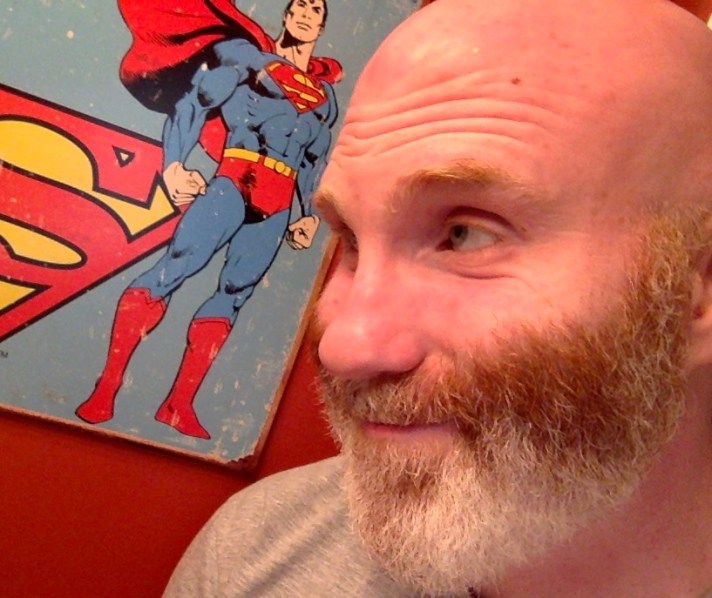
In both of my offices at The Doyle Practice, in Washington DC and Chicago, I have pictures up of iconic heroes. Batman, Superman, Luke Skywalker. I have them up partially because it was these characters who first taught me what it was to be a hero, how important it was to create a life that touched other peoples’ lives, to create work that would live beyond me, like those characters.

But I also have them up because just seeing those characters reminds my patients that they, too, have heroism inside them. They just need to forget, for a moment, that “grown ups” aren’t supposed to use their imaginations, and just…imagine.

You can do this any time of the day. Wherever your body happens to be. In the car; at work; at school. Consciously, intentionally think about a movie, a story, a character, who inspires you. Live in that character’s world for just a moment.

Really imagine it. Come on— you have nothing to lose.

Those characters and places and stories are there to feed you. Let them.

Are ya on the Doc’s wavelength? Then you’ll probably want to like and follow his Facebook page, and maybe even subscribe to his weekly newsletter, which compiles and links to all of the Doc’s blog entries, Facebook posts, and contains information on his upcoming events and projects. He’s also on Twitter at @DrDoyleSays. 

You– and only you– get to choose how to spend your resources.

fullsizeoutput_c06

Our resources, as human beings, are finite. There is only so much time, physical energy, focus, and emotional resilience we have to spend every day.

Some days, we pay more attention to replenishing our personal resources than others, but the fact remains that there are limits to what we can reasonably commit to spending our finite resources on. The fact that we can’t “do it all” is not a commentary on how lazy or weak or powerless we are; it’s simply a fact.

Resources are finite, especially our own personal resources.

A consequence of the fact that resources like time, physical energy, focus, and emotional resilience are finite is that we are necessarily faced with choices about how to expend those resources. Because we can’t do it all.

Let me say that again: we can’t do it all.

How about a third time: we— you— can’t do it all.

So how, then, do we make logical, constructive choices about how to invest our finite resources? How do we make sure we’re not wasting the only currency that we, as human beings, have to offer?

I’ll give you a hint: however we make those choices, other people are 1) always going to have an opinion on how we should be spending our resources, and 2) never going to have our priorities on the top of their list of ways they’d prefer we expend our resources. They’re going to recommend, before anything, that we expend our time, physical energy, focus, and emotional resilience chasing down what they want.

I’m not necessarily saying everybody else is selfish, understand. After all, they’re just like us: they want what they want. They have their priorities. But when it comes to their strongly held opinions on what we should do with our resources, they won’t be particularly up front about that; they’ll likely couch what they want in terms of what you want. It’s tried-and-true salesmanship, and it often works.

Understand, we can take counsel from other people when deciding how to spend our resources. We can listen to their sales pitch, as it were. It may very well be the case that our priorities and their priorities may be aligned in some ways or partially overlap.

The key, however, is to avoid going on autopilot, and simply accepting other peoples’ direction simply because it’s easier than clarifying our own priorities and values. The choices we make, in the end, need to be ours, need to be in the service of us chasing our own priorities and needs and values, rather than spoon-fed to us by others who are really just chasing down their vision of the world.

Reinforcing the fact that we, not anybody else, are in charge of how we spend our time, utilize our physical energy, direct our focus, and call upon our emotional resilience, is essential not only to achieving our goals in life, but to building and maintaining strong self-esteem.

You see, our brains notice whether we’re self-directed, or whether we let other people run the show.

Our brains notice whether our resources get expended as a result of our conscious choices, or as a result of us blithely accepting somebody else’s vision.

Our brains notice how easily influenced we are by other peoples’ “sales pitches,” and what we do when someone is trying to pressure us to spend our resources as they see fit.

Our brains notice all of this, and it all becomes part of our self-concept. We develop a reputation with ourselves either as people who clarify, pursue, and defend our priorities and values, or people who surrender our visions and goals in the service of somebody else’s vision.

One of the most essential building blocks of self-esteem is autonomy. The belief that you are an individual, with your own priorities and values, and someone who is willing and able to pursue and protect those priorities and values. This is why it’s so important to be mindful and purposeful about how we expend our personal resources: our brain notices, and builds those observations into our self-concept.

Our self-esteem fluctuates directly based on how autonomous we feel, and by how consciously and self-directedly we behave.

Sometimes it’s difficult to remember that, no matter how poor we may be financially, no matter how disadvantaged or stressed or traumatized we may be due to things that have happened to us, we still have resources at our disposal. We still have time, physical energy, focus, and emotional resilience. They’re resources that can be depleted and replenished, but we all have them; and as long as we have them, we cannot escape the responsibility that comes with choosing how to use them.

Make choices that build and enhance your self-esteem. Choices that move you closer to your vision of the world. Choices that prioritize what you find important, what you value.

When someone tries to commandeer your resources for their own purposes, remember this blog. Remember these words.

You can do it.


Find value in this? You’d probably find value in liking and following the Doc’s Facebook page, and/or signing up for the Doc’s  weekly email newsletter— no sales pitches, no spam, just links to the Doc’s blog entries, posts, quotes, and upcoming events and publications.

The flip side of the coin: Respecting others’ boundaries.

fullsizeoutput_c4b

Just as we have a responsibility to ourselves to set, enforce, and reinforce our own boundaries, we have a responsibility to respect the boundaries set by others.

It doesn’t matter if we think those boundaries are too rigid or too lax; it doesn’t matter if we think those boundaries are arbitrary; it doesn’t matter if someone else’s boundaries align with our priorities or not. When someone says “no” to us in a domain in which they’re entitled to set a boundary, we owe it to them to respect that “no.”

This is sometimes easier said than done. Because we, just like everybody else, don’t like to hear “no.” Especially not in our close relationships.

Hearing “no” from people we care about, and from whom we crave connection and closeness, can be upsetting.

It can make us feel alienated.

It can make us feel lonely.

It can make us feel unloved.

There’s a particular cognitive distortion called “mind reading” that is responsible for most of the negative feelings we associate with being told “no” in our close relationships. Therapists who practice the form of psychotherapy called cognitive therapy, or cognitive-behavioral therapy, believe that our emotions are created by our habitual patterns of thinking; and that disproportionately negative emotions are created by distorted patterns of thinking. A “mind reading” distortion happens when we assume we know what another person is thinking— when in reality we don’t actually know that. We only have their behavior to go on.

When that behavior is the other person telling us “no”— setting a boundary— we often plunge headfirst into “mind-reading.” We often go down a pretty dark path with it, pretty quickly. Why would this person want to set a boundary with us? Don’t they like us? Do they hate us? ALL I WANT IS TO BE CLOSER TO THIS PERSON, WHY ON EARTH WOULD THEY SET A BOUNDARY?

For many people, it turns into a spiral of negative assumptions and beliefs about ourselves, our relationships, and our basic loveability.

The fact of the matter, however, is that where other people draw boundaries often has little or nothing to do with us specifically. They’ve chosen to set their boundaries according to their priorities and comfort zone; usually this overwhelmingly has to do with them and their past experiences, not with us.

But even beyond that: it doesn’t really matter why the person has chosen to set a boundary where they’ve set it.

It’s not even any of our business, beyond our desire to understand the needs and priorities of the people close to us.

If we truly expect our boundaries to be respected, if we truly believe that everyone has the right to set reasonable boundaries wherever they need to set them, if we truly believe that nobody owes anybody an explanation or justification of why they want or need to say “no” when they do…we have to respect that.

So how do we cope with it when we’re told “no” in our close relationships? How do we keep from plunging headfirst down a “mind reading” wormhole of self-blame and self-doubt, and keep our wits about us so we can truly respect the boundaries of others?

First, we need to recognize when that wormhole is opening up beneath us. We need to pay enough attention to our emotions and reactions to know that we’re heading down that path.

Second, we need to avoid panicking. Hearing “no” from people we care about often awakens a very primitive fear of abandonment in us, and the instinct is to run, flee from those uncomfortable feelings, or otherwise dig, dig, dig until we find the “true” reason we were told “no.”

Third, we need to be on top of our self-talk. We’re talking to ourselves, all day, every day— we usually just aren’t aware of this constant internal monologue. We only become aware of it when it becomes particularly maladaptive— and this is one of those times when we want to take a few steps back, push the pause button, and really critically evaluate what we’re saying to ourselves.

Are we telling ourselves we’re to blame for the other person setting a boundary?

Are we telling ourselves it has something to with our basic loveability, or our basic competence?

Are we telling ourselves things that will only result in feelings of defensiveness and rejection?

No one else can monitor and alter our self-talk for us— that responsibility’s on us.

The good news is, over time, if we really pay attention to how we react when others set boundaries, if we really avoid panicking, if we really stay on top of our self-talk, we can get better at handling it when other people set boundaries with us. It won’t feel personal every time. It won’t feel like a rejection or abandonment.

In time, with practice, we’ll discover that respecting other peoples’ boundaries is an essential part of not only nurturing our relationships— but also building our own self-respect and self-reliance.

It’s not easy. But it’s worth it.

Like this article? Then you’ll probably like the other stuff that will flow into your feed every day when you like the Doc’s Facebook page. Want a weekly summary of the Doc’s blog posts, daily quotes, and updates on the Doc’s events and appearances? Subscribe to the newsletter on the Doc’s Facebook page. Wanna tweet at the Doc? Follow @DrDoyleSays. 

When should I set a boundary, anyway?

fullsizeoutput_c3b

We all know enforcing our boundaries can be difficult.

This last week on the blog and on my Facebook page, I’ve discussed several of the reasons why enforcing boundaries is difficult, especially for those of us who grew up believing we’re not worthy of having or enforcing strong boundaries.

But an issue almost as difficult as enforcing boundaries, is determining what your boundaries should be in the first place.

What is a boundary, really? It’s essentially saying “no” to something. It’s setting a limit. It’s declining to do something, either in thought, word, or deed, that is not in our best interest. Setting boundaries means setting limits that keep us safe and healthy, and not allowing our priorities to get steamrolled by other peoples’ needs or preferences.

But how do we know it’s time to set a boundary? How do we know if we have the “right” to set a boundary we think we may need to set?

Because the truth is: you don’t have the right to set any boundary you feel like.

Not every limit you feel like setting is a legitimate boundary.

There are some situations in life in which we surrender at least some of what would otherwise be our appropriate boundary-setting privileges.

For example: however we feel about our jobs, we can agree that when we agree to work at a place, we’re surrendering our right to say “no” to at least some of what our bosses may ask us to do. If our boss asks us to do something that is clearly in the realm of our job responsibilities, and if we’ve agreed in advance to take on those tasks as part of our job, then we don’t get to suddenly decide to say “no.”

It’s on us to live up to reasonable requests made by legitimate authorities.

That said: many of us have also been in the position where a boss has asked us to do something that we hadn’t previously agreed to; or maybe to do it in a time frame that is unreasonable; or to do a task without the appropriate resources to get that task done.

That’s when it has become a serious boundary issue.

It becomes even more of a boundary issue if the consequences for not meeting an unreasonable demand start to outweigh anything approaching a reasonable consequence. For example, if your boss makes an unreasonable demand, gives you less than adequate resources to fulfill their request, then threatens you with getting fired should you fail.

It’s most certainly a serious boundary issue at that point.

Many people would look at that situation and say, “Well, obviously that’s a boundary issue. Why would anyone consider NOT setting a boundary at that point? Why would anyone feel weird about it, since they’re so obviously being treated unfairly at that point?”

The reason is simple: when we’re inside the bubble like that, when we’ve been conditioned and beaten down and convinced we don’t have the right to set clear, appropriate boundaries, when we’ve been brainwashed into thinking it’s really our fault if we fail to meet others’ expectations, however unreasonable, we lose a great deal of perspective on what is and isn’t fair.

This is why it’s vitally important that we all, very regularly, take the time to step back from our personal and professional lives to take stock.

To look at our lives and projects from a bit of a distance.

To take a deep breath, clear our heads, and look at what we’re doing with fresh eyes— so we can ask ourselves questions like, “Have I been fair with myself about when I choose to speak up and set boundaries? Or have I gotten sucked into caving on my boundaries, ground down, worn down?”

These questions can only be answered from an objective distance.

Understand, many people in your life don’t want you asking those questions.

They would much, much prefer you not question where and when you’ve chosen to set boundaries.

If you begin regularly taking a step back and objectively, cooly, calmly asking whether you’ve been setting reasonable boundaries, and specifically whether you should begin setting more or firmer boundaries? They know that you’re very likely going to conclude that you’ve missed opportunities to set boundaries that are important to you— and inconvenient for them.

As a rule, if there are people in your life who would be irritated that you began stepping back and asking yourself serious questions about your own boundary-setting, then it’s particularly important that you begin doing so— because you have people in your life who are exploiting you.

Seeing where we need to set boundaries can be complex. But if we’re willing to take a few steps back, take a few deep breaths, and be honest and courageous with ourselves— they have a way of becoming crystal clear.

As it turns out, you really can’t please everyone. Who knew?

fullsizeoutput_c27

The reason why trying to please everyone is a bad idea is not just because we’re “supposed” to consider it a bad idea.

I mean, we’ve been told that again and again over the years, right? “You can’t please everyone.” “I don’t know what the secret to success is, but the secret to failure is trying to please everyone.” In our forebrains, at least, we know trying to please everyone is a bad, impractical idea, and we’re “supposed” to reject it as a strategy for dealing with the world.

That said, we secretly indulge a lot of ideas that we’re “supposed” to reject, don’t we?

Let’s face it: while a lot of us will loudly proclaim that we’ve given up the delusion that we can please everyone, we still behave in such a way that suggests we’re still somewhat desperate for the approval and and praise of others.

We say yes when we want to say no.

We spend time with people whose company we don’t enjoy.

We stay silent when we have something to say.

In sum, we still basically try to please everyone— even though we know we’re “supposed” to give up on that project. We just don’t tell everybody that’s what we’re trying to do…even though that’s what we’re obviously trying to do.

Here’s the thing, though: you have every right to hold beliefs or indulge in behaviors you’re not “supposed” to. As long as it’s not hurting someone else, against the law, or otherwise destructive, there are no Thought Police standing guard at the gateway of your brain, making sure you don’t hold any ideas you’re not “supposed” to.

No, the fact that you’re not “supposed” to try to please everyone is not the main reason why striving to please everyone is a bad idea.

The more important reason is more basic: it just doesn’t work.

Really, it doesn’t. People-pleasing, as a long-term interpersonal strategy, pretty much fails every time it’s tried.

There are lots of reasons why people-pleasing generally fails as a strategy. Mostly it fails because we cannot predict with any kind of reliability, what actually will please and displease people. We are not mind-readers. Over time we might be able to form some general hypotheses about what might please or displease people, but in the end, we’re basically guessing. And human beings famously guess imperfectly at the whims and preferences of other human beings.

That is to say, you can try really, really hard to predict the needs and moods of the people around you, and to behave in such a way that will only please them, but you’re probably gonna get it wrong a significant percentage of the time.

And if you’ve built your identity and relationship behavior around the principle of not displeasing other people, when you do get it wrong, it kind of messes up your entire way of being in the world— if we’re no more than our ability to please other people, when we fail at that task, we’re left without a Plan B.

Trust me, if people-pleasing actually worked as a strategy, I’d be the first one to advocate for it. I’m not a fan of making life and relationships harder than they need to be. I WISH there was a way to accurately predict what other people will find pleasing and displeasing, and to perfectly conform to their expectations and preferences. That kind of mind-reading ability would certainly make my job easier, at least.

But, sadly, I, like you, am human. We humans cannot read each other’s minds. And it’s presumptuous and exhausting to try to continually try to do so.

Trying to please everyone is an ineffective strategy that has been reinforced in us time and time again by people who want us focused on their priorities, instead of ours.

Make no mistake, there are plenty of people in the world who want to keep you anxious and insecure, because it then makes you easier to control. There’s no quicker, more efficient way to control somebody than by inducing anxiety in them, and tantalizing them with the idea that that anxiety might be relieved if they only were more responsive to the needs and preferences of the person doing the controlling.

It’s not easy to give up the desire to try to please everyone. The idea of people-pleasing represents a simple, straightforward solution to the messy series of problems and micro-negotiations presented by real-world relationships.

If only people-pleasing worked. If only it were that easy.

Hang on to the idea that trying to please everyone is a workable strategy, if you’d like. I’m not one to tell you that you should surrender a dearly held belief simply because a lot of memes on Facebook say you’re not “supposed” to think that way.

But don’t hang on to it because you think it works. It does not work, 10 out of 10 times.


The Doc is on Facebook and Twitter (@DrDoyleSays). Sign up for the newsletter on the Doc’s Facebook page to receive a weekly compilation of the Doc’s quotes, blog entries, and information on his upcoming events and projects.

The Basics of Boundaries.

fullsizeoutput_c26

Boundary-setting is not a skill we’re born with.

It’s not even an instinct most of us are born with. In fact, most of us are born with kind of the opposite instinct: we want to accommodate and please others, whenever possible. Even at the expense of our priorities, health, or peace of mind.

When we’re young, we learn, either implicitly or explicitly, that many other people in our worlds will treat us well mostly or only to the extent that we can meet their needs. Ideally, as we mature, we learn that relationships are a little more nuanced than that— that while there are some relationships that continue to function on simple reciprocity, there are other relationships that endure beyond you-scratch-my-back, I’ll-scratch-yours transactions.

However, our lizard brains largely retain the belief that, if we want our relationships to endure, if we want to be treated well and thought of fondly, we’d better be in the business of accommodating and pleasing others. Which makes saying “no” incredibly difficult for a lot of us.

Setting boundaries is really just a formalized way of saying “no.”

People don’t like to hear “no.” Especially when they want something from us.

And most of us don’t like to say “no,” either, precisely because we’ve internalized this belief that we’re basically valuable to others based on what we can do for them. Setting boundaries— saying “no”— can feel scary if we truly believe that our relationships are fragile, always on the verge of imploding if we fail to accommodate and please.

Over time, the belief that we will only be treated well if we accommodate and please has a way of calcifying into another insidious belief: that we only have worth to the extent that we are considered worthy or desirable by other people. Our self-esteem gets all wrapped up in the extent to which we’re valued by other people— and the extent to which we’re valued by other people is wrapped up, we think, in the extent to which we please and accommodate them.

That is, we come to believe our self-esteem depends on not saying “no” to very many people, very often.

All of which is nonsense, of course. Our worth as people has nothing to do with the extent to which other people consider us desirable or worthy.

Other peoples’ approval feels nice, and social acceptance makes it easier to connect with people (which itself is an important human need). But our basic worthiness cannot be raised or lowered based on whether we can meet other peoples’ needs in the way they prefer.

We have worth independent of whether other people approve of us, like us, or have use for us.

That said: most people in our lives are not going to be particularly helpful in helping us feel worthy regardless of what we can do for them.

And why would they, really? The fact is, many people have a vested interest in us fervently believing that we absolutely have to avoid setting boundaries with them, avoid saying “no” to them, at all costs. People don’t want us developing the belief system that we have worth independent of their approval.

They’d prefer we be at their emotional beck and call.

They’d prefer we feel guilty if we even THINK about saying “no” to them.

They’d prefer our self-esteem remain fragile, and dependent upon their approval. And of course their approval will be based on— what else?— the extent to which we are disinclined to say “no” to them.

So how, then, do we develop the skill of boundary setting, when both our early conditioning and the people around us are so effortfully working against us, making it inherently uncomfortable to say such a simple word— “no?”

You’re not going to like the answer.

The only way to get good at setting boundaries is to get practice at it.

And practicing setting boundaries is going to entail feeling mighty uncomfortable for a bit.

The good news? You can start small. You don’t have to get all your practice in high-stakes situations, such as your close personal or work relationships. Nobody’s expecting your education in setting boundaries to be perfect or easy.

Start with the little stuff.

Call the restaurant when they screw up your order.

Ask for a refund.

Unfollow somebody on Facebook whose posts make you mad or sad.

Tell a telemarketer to put your number on their do not contact list.

Remember this: it took you years to develop your aversion to say “no.” Nobody is expecting you to become a champion at setting boundaries overnight.

Remember this as well: the biggest hurdle you’re going to encounter is not, actually, going to be in other peoples’ reactions, especially in these low-stakes situations. It’s going to be dealing with the anxiety and guilt that saying “no” stirs up inside you— that anxiety and guilt that we work so hard to avoid by trying to please everyone, all the time.

Setting boundaries is not a skill we’re born with. But like many skills that are of essential importance to our emotional health, it can be nurtured.

You’re not alone in this.


Like it? Like the Doc’s Facebook page, where you’ll get blog updates on Tuesdays and Thursdays, quotes and messages from the Doc, and information on his upcoming appearances and events. You can also follow the Doc on Twitter @DrDoyleSays, and sign up for the Doc’s weekly newsletter.

Attention seeking? Yeah. Right.

fullsizeoutput_c15

It’s okay to be tired.

It’s okay to be anxious.

It’s even okay to be depressed.

I know, I know. That’s not what our culture tells us. We’re not supposed to feel negative things— or if we do feel them, we’re definitely not supposed to express them, right?

After all, people who express experiencing negative things MUST be looking for attention.

They MUST be looking for charity.

They MUST be trying to make excuses for not trying hard enough.

It’s really extraordinary, how much our culture tries to shame us for feeling certain things. It frequently gets to a point where we end up choosing to not express ourselves authentically, ever, because we don’t want to end up being judged by our Facebook friends as being too whiny.

What the hell is that about, anyway?

Spoiler alert: people who express feeling tired, anxious, or depressed usually aren’t looking for attention. In fact, attention is frequently the very last thing they want. It’s the comparatively rare individual who wants their psychological pain to be a topic of conversation among their friends and acquaintances.

Most people, in fact, who are tired, anxious, and depressed go to great lengths to hide what they’re going through from just about everyone. Most people will never know how much energy a sad person invests in hiding from the world.

The thing is, we’re all born with an urge to connect, to share our authentic selves with other people. People who are tired, anxious, and depressed often feel this need even more acutely than most, precisely because their conditions have caused them to isolate.

Which is what makes it so heartbreaking when they are then judged for what they’re experiencing. As if they somehow invited fatigue, anxiety, and depression in to ruin their lives.

It seems I very often read that we live in a culture of entitlement. That we feel it’s our birthright to be somehow free of pain or inconvenience, and that we get whiny when confronted with negative feelings or experiences. That social media has become a platform for people to complain about their issues, without making any real attempt to work on them.

People who think this aren’t in my line of work.

If they were, they’d know what I know: that, contrary to popular belief, people who are in psychological pain often believe they are less worthy, not more, of compassion, expression, and relief.

Don’t get me wrong: I do think social media creates some unique opportunities for people to avoid and amplify their problems instead of solving them. There is definitely a subset of social media posts I see and fervently wish the poster would take their struggles to a therapist, rather than to their Facebook audience.

However, it is overwhelmingly untrue that most people who are struggling express their pain in order to gain attention or sympathy. In fact, I rather consider it a breakthrough when many patients get to the point of actually believing they are worthy of attention or sympathy.

It’s hard enough to be in emotional pain without the added pain of the judgment of other people.

If you feel you’re being judged for your pain, I’m not in a position to say that you’re not. It very well may be the case that you are. People in general don’t respond well to expressions of negativity. It stirs up their own issues around vulnerability and feeling helpless.

(As it turns out, people don’t enjoy those issues getting stirred up.)

But know this, without a doubt: you are not a lesser person for what you’re feeling or going through.

You didn’t ask for this.

You didn’t expect this.

You’re just trying to make it through this.

I hear you.


Like it? You’d probably like the Doc’s official Facebook page, where you’ll get blog updates on Tuesday and Thursday, quotes and notes from the Doc, and where you can sign up for emails and updates on the Doc’s events and appearances. 

You are not your successes. You are not your failures.

fullsizeoutput_c0c

One of the most painful experiences many people endure is having their worth as a person confused with the success of their life projects.

I even saw a reasonably well-known personal growth writer spell it out explicitly in an online post: “Your results are a reflection of you. If your business is a mess, it’s because you’re a mess.”

I get the point he was trying to make, though I might have framed it somewhat differently. I might have said, it’s almost impossible to compartmentalize your life projects from your overall health and functionality as a person. That it’s unlikely for your business to succeed when you’re a mess.

But the way he put it suggests that there is no difference between us, as people, and the things we do in our lives— which just isn’t true. There is a relationship that exists between us and our projects, to be sure, but we are not our projects.

In your life, you’re going to have lots of projects. Careers. Romantic relationships. Platonic relationships. Pet ownership. Home ownership. Skill acquisition. Hobbies. Performances.

Some of those projects are going to go very well. You’ll have times when your job or career is going well. You’ll have romantic relationships that are full of fun, sex, and good vibes. You’ll have friendships that are supportive and sturdy. Dogs and cats who you’ll love, and who will love you back. Places to live that you feel comfortable and safe in. Skills that you pick up and which are useful and satisfying. Hobbies that are interesting and fulfilling. Performances that will impress others and edify you.

And…there will be times when those projects don’t go so well.

You will lose a job at some point. You will be broken up with. Some friendships will drift apart. Pets don’t live forever. You won’t love every place you live. Skills you value at some point will deteriorate. Hobbies will lose their luster. And not every performance you give will lead to a standing ovation.

If you’re a human being who lives under the fat part of the bell curve with the rest of us normal human beings, it’s not a question of if, but when those things happen. Both the good and the bad.

The success, or lack thereof, of your life projects will definitely impact your level of happiness and level of functionality in the world. No question.

And it will mean absolutely zero in terms of whether you are worthwhile human being or not.

A lot of people fall into this trap of only feeling worthy when their life projects are going well. It’s a bummer, but it’s understandable: we get rewarded, in our culture, for doing those tasks well. We get admired. We get financially compensated. We get the rewards that come with being close to people— sex, intimacy, companionship.

We like those rewards.

We spend much of our time working toward those rewards, trying to do our life projects well. And when we get those rewards, we reward ourselves internally, psychologically: we’re proud. We figure, “I must’ve done something right, to get these rewards.”

This is where the problem starts.

Don’t get me wrong, if you’ve succeeded at your life projects, hooray! You’ve done exactly what that sentence implies: you’ve done exactly what you need to do to succeed at those projects. Good for you.

But if you’re not reaping those rewards; if your life projects for whatever reason, aren’t going well, that statement we tell ourselves when life’s going well— “I must’ve done something right, to get these rewards”— turns into a blade that we often turn against ourselves. You know, in the form of “I must’ve done something bad, because I’m not getting rewarded.”

No.

You haven’t done something bad.

You are not bad.

You simply haven’t, for whatever reason, been in the right place, at the right time, doing the right thing, to succeed at that particular project. No more; no less.

The person who happens to have been in the right place, at the right time, doing the right thing, is not more worthy of love, respect, compassion than the person who happens to not have been in that position.

Circumstances change. Levels of success change. Occupations change, relationship statuses change, seasons change, people and lives change. It’s just what they do. And while there are definitely habits and behaviors we can develop that will enhance our chances of succeeding in our life projects, it’s essential to keep in mind: WE ARE NOT OUR PROJECTS.

If you only allow yourself to feel good when you’ve succeeded at a life project, you’re being unfair to yourself.

If you insist on torturing yourself because you’ve not succeeded at a life project, you’re being cruel to yourself.

Over time, we do not develop and sustain positive relationships with people who are habitually unfair and cruel to us.

Including ourselves.

Take your life projects seriously. They’re important to you; otherwise they wouldn’t be your life projects. But when you start to feel your self-esteem rising and falling based on how your life projects are going? Stop.

Take a step back.

Take a deep breath, and remember: you are a human being, worthy of dignity, kindness, and respect.

Literally no life project outcome can possibly change that.


Like it? How about liking and following the Doc’s official Facebook page, where you’ll get blog updates on Tuesday and Thursday, quotes and posts from the Doc, news on his appearances and seminars, and other stuff to make your Facebook feed awesome. 

Be tough enough for a little compassion.

fullsizeoutput_c06

Showing compassion, either toward yourself or others, is not “weakness.”

It is not the case that the range of behaviors we can exhibit, either toward ourselves or others, exists on a simple continuum from “ruthless” to “compassionate.” And even if that was the case, it wold not the be case that “ruthlessness” requires more strength than “compassion.”

Compassion isn’t the “easy” road. In fact, experiencing and expressing compassion takes much more nuance, restraint, intelligence, and fundamental strength than mindless aggression.

Which makes it all the more curious to me that so many people take perverse pride in how hard they are on themselves. As if it takes some sort of special gumption to be ruthless toward ourselves, rather than compassionate.

I’ll spoil the surprise for you: there’s no fundamental virtue in being hard on yourself, at least not for the sake of being hard on yourself.

I’ll spoil the surprise further: there’s no fundamental weakness to being compassionate toward yourself.

When we say “compassion,” what do we really mean?

It has nothing to do with lowering our standards. Some people seem to think that “compassion” is code for “letting someone get away with subpar performance.” Nope.

It has nothing to do with making excuses, either. Some people seem to think that “compassion” means “letting someone off the hook with a lame explanation, because we don’t want them to feel bad.” Nuh uh.

When we’re compassionate toward someone, it’s not that we hold them to a lower standard or make excuses for them. Though I do suppose some people do those things in the name of compassion, because they either misunderstand the concept, or are looking for an easy way to explain their own choices.

Compassion means taking the time to understand someone’s story.

It means taking the time to understand someone’s experience.

It means extending to someone the benefit of the doubt.

It means affirming respecting and affirming someone’s right to exist— including their right to be imperfect.

We can do all of those things and STILL hold people to high standards, as well as refuse to let them make excuses. (In fact, I’d say lowering standards and/or accepting excuses aren’t particularly compassionate things to do, insofar as they set someone up for failure down the road.)

It means approaching someone from a position of fundamental kindness.

It seems, we hear a lot about the need to be “compassionate” toward our fellow human beings. From childhood on, we get messages from our culture, from our religions, from our elders, and from our media that we’re at least supposed to be compassionate toward others. Those who lack compassion for others get branded as “selfish,” “sociopathic,” or worse, depending on the context. (Though it’s also the case that we’re often presented with the case for being uncompassionate toward certain groups of humans, too— again, context seems to matter greatly when we’re being told how to feel about other people.)

But what about compassion toward ourselves?

Do we take the time to really understand our own story?

Do we make the effort to understand our own experience?

Do we affirm and respect our own right to exist— including our right to be imperfect?

Not often, it seems.

In fact, it often seems to be the case that, in our deification of “self discipline” (which, may I add, is an essential tool for personal growth— I have absolutely nothing bad to say about self-discipline in and of itself), we overlook the fact that, just as we would be considered monsters if we failed to show compassion toward our fellow human beings, we are also, ourselves, human beings, in desperate need of compassion in order to function, grow, and thrive.

Just as parents who fail to show compassion toward their children as they’re growing up, making mistakes, and learning to exist end up raising wounded people, we wound ourselves when we fail to approach ourselves from a position of fundamental kindness.

It is not weak to be kind.

It is not selfish to be self-compassionate.

If your goal is to thrive; to grow; to become a resilient human being who can function, laugh, emote, connect with others, and achieve…then self-compassion is more than a luxury.

It is a fundamental need.

Are you strong enough to meet that need?


Digging the Doc? How about liking and following the Dr. Glenn Doyle Facebook page, where you’ll get blog updates on Tuesday and Thursday, quotes and messages from the Doc, and more. Like this post? Share the hell out of it on social media– I write ’em to be read. Thanks, and I love you guys.