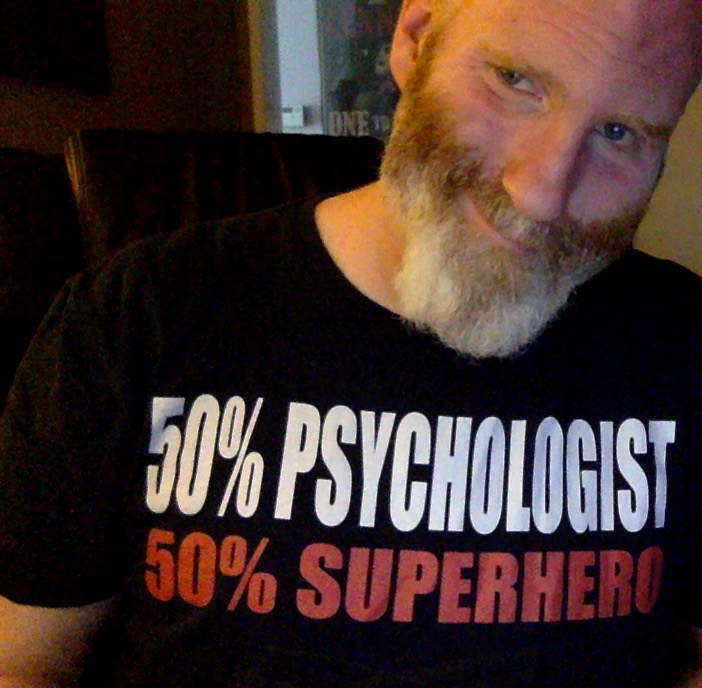
You are the ONLY expert on you.

fullsizeoutput_d94

No one can accurately tell you what you want. But that won’t stop plenty of people from trying.

These people are usually selling something.

Who is anybody else to tell you you “should” want something? Either a product, or an experience, or a goal?

I have an acquaintance in the personal development industry who spends a great deal of time and energy attempting to sell potential customers on his vision of what they “should” want. He’s big on telling them that if they want want “most” people want, they’ll wind up unfulfilled; and that, if they’re truly interested in going to the “next level,” they should want the kinds of things and experiences he is selling.

I’m not passing judgment on his vision, understand. I give this guy the benefit of the doubt that he’s coming from a place of seeing many people misled into unfulfilling existences by wanting the “wrong” stuff, and he’s only trying to spread the “truth” as he understands it. My issue with his teaching is, there is literally no way he can know what will make for a fulfilling life for all the people reading his words.

Only you are the expert on you.

Lots of people will try to make you doubt your expertise. Sometimes these are even people with degrees and credentials, which makes their judgments kind of intimidating. After all, if these “experts” say I should want something, who am I to say I don’t?

I repeat: you are the expert on you.

Part of building, or rebuilding, self-esteem is about reclaiming your right to assert what you want and who you are, even if it contradicts the wishes or assertions of those considered “experts.”

Why is this important? It’s important because people frequently come to a place of wounded or deficient self-esteem after years of being told who they “should” be, what they “should” want, what are and are not acceptable goals and aspirations for their lives.

Sometimes they fulfill others’ expectations of their lives, sometimes they don’t; but in the end, they usually wind up feeling unsure of themselves, anxious, unconfident. And the reason for this is, they’ve been living a life someone else designed for them. They’ve not been taught the importance of living an authentic life of their own design and momentum.

The people who try to tell us who we are and what we “should” want are usually well-intentioned. I’ve seen plenty of personal growth writers do it. I’ve seen therapists do it. I’ve definitely seem well-meaning family and friends do it. Almost never, in my experience, have these people done so with ulterior motives: they usually want the best for us, and they feel that by pressuring us into a life THEY approve of is, well, the best for us.

Again, it doesn’t have to do with whether they are right or right about what kind of life would make us happy. The issue involved is one of autonomy and choice. It is impossible to life a life of high self-esteem if you’re not living a life you chose— thoughtfully, purposefully, and consistent with your values.

Therapists, teachers, guides, mentors, sponsors— they can all show us alternatives for our lives, help us develop our visions, provide modeling, support us in developing the knowledge and skills necessary to construct our own unique life visions. In an advisory capacity, our teachers are irreplaceable resources. But in order to really utilize them as the valuable resources they are, we must keep their roles in our lives very clear: advisors and guides.

They can be our navigators, in other words. But we must be the captain and command the helm of our own ship.

Be mindful when you consider the input of a therapist, guide, teacher, mentor, or sponsor. Are they asking you questions, encouraging you to develop your own vision of what is real and important, based upon your own values and experiences? Or are they hard-selling their own vision of what you “should” want (which, not coincidentally, is often only available through their exclusive mentorship)?

I realize I might sound like a broken record to some readers of my blog, insofar as I link so many issues back to the central importance of self-esteem. However, there simply is no escaping the fact that unless we establish and nurture a sense of ourselves that is stable, reality-based, and worthy, it simply doesn’t matter what else we do with our lives.

Without self-esteem, it doesn’t matter what techniques we master, what philosophies we employ, what deities we pray to. We will always undercut ourselves, sabotage ourselves, sell ourselves short.

In case there is any doubt, let me remind of you something that you maybe haven’t been told for a few years, if ever:

YOUR vision is important.

YOUR goals are important.

What provides YOU with pleasure and meaning is important.

All the tools that psychology and the personal growth field have to offer you should be at the service of YOUR vision for your life.

You. Are. Important.


Subscribe to Dr. Doyle’s free weekly email newsletter

Like and follow Dr. Doyle’s official Facebook page

What’s black and white and distorted all over?

fullsizeoutput_d89

Black and white thinking is not just a distorted pattern of cognition that contributes to anxiety and depression. It’s a killer of dreams.

When we think in black and white terms, we’re going the “all or nothing” route. We assume that if a situation is bad, it must be all bad, and nothing can salvage it. Or we assume a situation that is good is all good, and there are no shortcomings or challenges that we have to deal with.

Sometimes we fall into black and white thinking because a situation has been so challenging to us, that we can’t possibly see any opportunities or upsides in it. It’s a defense mechanism that we use to shield ourselves from further disappointment and pain by limiting our awareness of nuance. When a situation has been consistently challenging or painful for a long enough time, it becomes hurtful to hope or to keep looking for opportunities to change things, thus slapping a black and white “filter” on the situation seems like a logical thing for our brains to do.

However, black and white thinking most often robs us of any chance we might have to actually change a painful situation.

Black and white thinking leads us down a fatalistic rabbit hole where all our defeats are final and fatal.

Black and white thinking leads us to a place where, even when presented with a potential course of action, we kind of shrug our shoulders and say, “Easier said than done.”

It’s true that many, if not most, things are “easier said than done.” If personal development and emotional growth were easy, there’d be no point in writing or talking about it.

But when we fall into the “easier said than done” pattern of thinking, it’s as if we’re proclaiming to the universe, “Because this thing is hard, it’s impossible to do.” It’s a form of black and white thinking: “all hard things are too hard.”

The truth of personal development and emotional growth is even more complex: yes, it’s hard, and often complicated.

Yes, our pasts often leave us with debris that we have to clear away en route to a more empowered life.

Yes, those are very real and non-trivial obstacles.

However…because personal growth is often hard, that doesn’t mean it’s as hard as it seems.

Because personal growth is hard, that doesn’t mean it’s as hard as some people make it out to be.

The fact of the matter is, personal growth is just like anything: when you understand the principles of behavioral psychology involved and get practice chopping big tasks into smaller tasks, and smaller tasks into even smaller tasks, all the way down to the point where all that’s in front of you is one teeny tiny step that you truly feel is doable…that’s when it becomes realistic.

That’s when progress is made.

In getting to that place where all we’re focused on is the next teeny, tiny little step, it’s essential to remember that each new moment is an opportunity to start over. No matter how many times we’ve “screwed up” in the past. No matter how we’ve been abused or neglected. No matter what messages we’ve received about our worth and skills. The bottom line is that everybody reading these words has the ability to chop big goals down into littler goals, and little goals down into realistic, achievable steps.

Nobody can take your ability to take baby steps away.

Black and white thinking is insidious. It discourages us from trying to take baby steps. It says that if one thing feels overwhelming, then all things must feel overwhelming. If one thing feels undaoble, then all of the little tasks that comprise the thing must also be undoable. If you failed at one thing, that means you’ve failed at everything.

It’s baloney. Black and white thinking is one way of looking at problems…and very infrequently the most helpful.

How can you move away from black and white thinking? The same way we move away from any pattern of thinking that’s unhelpful…one little bit at a time.

The first step is just noticing when you’re feeling overwhelmed. That’s almost always a surefire sign that you’re thinking in black and white terms. When you do feel overwhelmed, take a few steps back, and examine the thoughts that are going through your head.

Are you trying to bite off more than you can chew?

Are you mentally trying to make a huge hurdle all at once, instead of chopping the obstacle down into smaller, more manageable hurdles?

Are you overlooking the nuances of a situation, and instead making a black and white pronouncement about the situation as a whole?

Thinking in shades of grey isn’t sexy. Chopping big goals down into littler and littler chunks isn’t fun. It’s often more fun to think about being able to leap tall buildings in a singe bound.

But…that’s how progress is made in the real world. That’s how goals are achieved in the real world.

One little bit at a time.

Narcissism is the opposite of self-esteem.

IMG_3690

There are a variety of misconceptions that float around out there about self-esteem.

A common one is that self-esteem is the same thing as “ego” or “narcissism.” That people who have unearned, unrealistic perceptions of themselves and who behave in an entitled, arrogant way suffer from an excess of “self-esteem.”

Nothing could be further from the truth.

The fact of the matter is, people who demonstrate narcissistic characteristics have trouble truly “esteeming” anyone or anything, including themselves.

The essence of self-esteem is honesty and respect. When we have genuinely high, healthy self-esteem, we respect ourselves (and treat ourselves with respect), and this respect is borne out of honesty and genuineness. One of the essential characteristics of genuine self-esteem is that it is borne out of unrelenting, uncompromising honesty; that is, the esteem in which we hold ourselves is derived from a genuine, uncompromising appraisal of ourselves and the world in which we live.

That is to say, dodging and overlooking the facts of reality, as we perceive an understand them, is fundamentally inimical to self-esteem. To develop real self-esteem is to make a firm, no-questions asked approach to honesty with one’s self and others.

Narcissists, by contrast, do not approach the appraisal of self and world with uncompromising commitment to honesty.

If you’ve ever known any narcissists, you know that no one can hold a candle to their uncanny ability to twist and mold facts to reflect their warped, self-serving version of reality.

At the core of narcissism is a sense of entitlement. In fact, the diagnostic criteria for narcissism specifies that narcissists experience a sense of entitlement that is disproportionate to any objective achievements or earned accomplishments.

Narcissists like to pretend they have expertise. When you try to pin them down on the limits of their expertise, they tend to get annoyed. “How dare you question my authority?” Or, in the more charming variants of the narcissistic disease, it becomes, “If you dare to question my authority, it’s evidence of your own lack of faith.”

Let me be very clear: questioning things is a sign of high, healthy self-esteem.

Questioning is a mark of healthy self-esteem because it indicates that you are not willing to subvert the functioning of your magnificent mind to the passive influence of someone else— that is, you’re unwilling to go on autopilot. Thinking for yourself is one of the fundamental traits of people who maintain high self-esteem, whereas going on autopilot is something that tends to be incredibly damaging to self-esteem over the long term.

Questioning things is not a sign of “lacking faith.” In fact, it is the sign of someone looking to form a more intelligent, durable sense of faith, because concepts worth having faith in can withstand some skepticism.

If you want high, healthy self-esteem, I’m telling you: question things at every turn. Question qualifications. Question processes. Question conclusions.

(Yes, even with things I write…especially with things I write!)

If your goal is to develop high, healthy self-esteem, and if you do your due diligence and learn with self-esteem actually is, you’ll realize that there is little danger with conflating egotism and narcissism on the one hand with true self-esteem on the other. In fact, doing the things you need to do to develop high, healthy self-esteem almost guarantees you’ll stay away from the fundamental characteristics of the narcissistic disease.

Narcissists tend to discredit and mock the accomplishments of others. The accomplishments and credentials of others are endlessly threatening to narcissists. Whereas people with genuinely high self-esteem acknowledge and celebrate the expertise and accomplishments of others, because they represent not threat to them— genuine self-esteem is secure and confident in its own value.

Narcissists tend to offer vague justifications for their opinions and pronouncements. They don’t want you thinking too deeply about how they know what they know. Genuine self-esteem welcomes scrutiny, debate, and questioning, because it is committed to honesty, examination and reflection.

Genuine self-esteem only exists in an environment in which reality is respected, truth is valued, and scrutiny is the norm. Narcissists often do everything they can to keep things hazy, vague, and superficial.

The good news is, narcissists can only function as long as people stay ignorant of what all is involved in the development and maintenance of genuine self-esteem.

Once people understand that self-esteem is all about living consciously, treating oneself with respect and compassion, respecting the boundaries of oneself and others…they realize that they have little room in their lives for the bullying of narcissists.

They realize narcissists really don’t have much to offer them.

They realize narcissism only flourishes in environments of obfuscation and codependence.

They realize they can be free of narcissists— and they don’t need anyone’s permission to liberate themselves.

Self-discipline 101.

IMG_3424

How do we create self-discipline? It’d be convenient if we were just born with it— but, sadly, self-discipline is the kind of thing that can only be learned and conditioned.

Our culture has an interesting relationship with self-discipline. We’re led to consider self-discipline a mark of “character,” evidence of “good upbringing,” an admirable trait. What’s interesting about this is that self-discipline is pretty much the same as any other trait that exists in human beings— it exists on a continuum, is pretty much normally distributed in the population, and some people are born with a greater capacity for it than others.

Despite its glorification in our culture, there’s not much evidence that “good” people are more self-disciplined than others. There are plenty of people who have done plenty of atrocious things that have demonstrated a great deal of self-discipline (for that matter, the most successful criminals and con artists tend to demonstrate a great deal of self-discipline— they have to, in order to avoid being caught). And there are plenty of people who struggle with self-discipline who are otherwise benevolent, caring, and well-intentioned.

It’s true that people who have a lot of self-discipline tend to be more successful in achieving long-term goals, which makes sense: long-term goal achievement often requires prioritizing tasks that are less gratifying over choices that are more fun or interesting in the moment. But there is little evidence that the choice of which goals to pursue— “good” or “bad” goals— is correlated with a person’s level of self-discipline.

Self-discipline is not an inherent signaler of virtue. It is a tool. An approach to solving problems.

What is the essence of self-discipline? It is the ability to say “no” to oneself in the moment, in the service of a chosen long-term goal.

Not every time a person says “no” to themselves is an example of self-discipline. We say “no” to ourselves all the time, for various reasons. Many of these instances have nothing to do with long term goals; many times, we say “no” to ourselves out of fear, feelings of obligation, or the absence of any other realistic choice. For example, the choice to eat healthfully is not a particular feat of self-discipline if no unhealthy alternatives are available, and/or if it’s not part and parcel of a larger commitment to achieving a greater state of health.

The presence and visibility of other choices is a key element of developing self-discipline. The service of a long-term goal is a key element of self-discipline.

What makes self-discipline so tough for so many people?

In order to be self-disciplined, we must believe 1) choices other than the immediately gratifying choice we’re trying to resist actually, realistically exist for us in the moment; and 2) there is an upside to choosing the “less sexy” choice in the moment that will be more gratifying in the long run— that will make up for missing out on the pleasure of the choice we’re passing up.

Many people struggle with that second thing above. They have difficulty convincing their brain that giving up the pleasure of an immediately gratifying choice will be worth it, because the “pleasure” of achieving a long-term goal seems abstract and unsure.

Put another way, we often figure that immediate gratification is a sure thing, a sure shot of pleasure for us in a world frequently short on pleasure. We figure the long-term goal may or may not happen, and we’d feel silly if we gave up a sure shot of short-term pleasure betting on it. And, in fairness, our brains aren’t wrong about that: nothing in the future is guaranteed. The long-term goal may or may not come to pass, and may or may not be as ultimately gratifying as the immediate gratification.

Our brains aren’t dumb. They know there are no guarantees in life. And they know the pain of missed opportunities for pleasure. They’re often unwilling to play the odds on achieving long-term gratification at the expense of short-term pleasure, because they also do the math and realize that achieving that long-term goal is dependent on you delaying gratification again, and again, and again.

Our brains prefer sure things to iffy things. And if we haven’t worked hard to develop healthy self-esteem and a great deal of self-trust, our brains have no reason to put stock in our ability to make good decisions time after time instead of taking the immediate shot of “feel-good.”

The good news is, self-discipline can be learned. Every scrap of research we have suggests that it can.

The even better news is, it can be learned in small increments. You don’t have to “learn” self-discipline by resisting huge, overwhelming temptations. You can start with small things.

Start as small as possible. Do some thinking, and come up with the smallest possible example of how you could say “no” to yourself in the service of a larger goal.

Maybe it’s getting up in the morning five minutes earlier  than you do. Maybe it’s going to bed twenty minutes earlier than you do. Maybe it’s turning off your screens at a certain time every night. Maybe it’s passing up one soft drink a day for a glass of water. Think about one adjustment you can make that is tied to a larger goal— then resist that temptation once, and check in with yourself. See how it feels.

In particular, take note of the thoughts and feelings that come up as you try to resist your inclination toward immediate gratification. Those are your real culprits when it comes to sabotaging your decisions.

Developing the self-esteem necessary to trust yourself to follow through on good decisions time and time again is not easy. We don’t come “wired” for it, any more than we come “wired” for self-discipline in the first place. But research and practical experience all point to the fact that developing the skill of saying “no” to ourselves in the moment pays off.

Even if it is in the long run.

Staying manipulator-proof in our decision making.

fullsizeoutput_cbc

One of the most insidious techniques manipulators use to gain control of your time and attention is trying to pressure you into making decisions before you’re ready, before you have adequate information, or before you’ve put thought and reflection into your decisions.

It makes sense, as a strategy for the manipulator. If you’re forced to make a decision before you’re ready, you’re more likely to go on half-formed impressions and emotional arguments than you are to stick with your own values, long-term priorities, and individual needs.

Of course there are some decisions that need to be made within certain time frames. We live in a world of deadlines, and we frequently must adjust our behavior to meet other peoples’ timetables (especially when we have a responsibility toward specific others, such as our employers or our family). Taking all the time we need to make any given decision is not an option many of us have available all the time.

This fact simply makes it more important than ever that we do take the time to make good, well-thought out decisions that are congruent with our values and priorities whenever we do have the opportunity to take our time and really consider our alternatives.

I have an acquaintance in the personal growth field whose latest shtick is that “leaders” make decisions quickly, often with limited information, and remain committed to correcting errors made in this process later rather than avoiding them in the first place. He sells this approach as part of a larger spiel he does about the characteristics of “leaders,” and what “real leadership looks like” (yes, I was thinking of him when I wrote the Facebook post about “leadership” earlier this week).

Look at our national leadership in Washington DC, a jurisdiction in which I am licensed as a psychologist, where I still have an office and an active consulting practice, and in which I practiced for years at the start of my career. Whether you’re a Republican, a Democrat, or any other political affiliation: do you really think that we need MORE impulsive, emotional, half-baked decisions coming from our leaders?

A problem many people run into in their lives is that the direction their heart, instinct, or “gut” tells them to take seems to clash with the direction their intellect, analytical brain, or common sense seems to recommend. Instead of taking the time to sort through these conflicts, and use our magnificent, multifaceted brains in the complementary way those brains are designed to work, many people cave to the pressure of the moment and go with what “feels” the most right— usually, what their “gut” recommends. The problem being, our “guts” weren’t designed for decision-making— they were designed to save us from evolutionary threats via fear and promote reproduction via arousal. Any decision made exclusively from our “gut” will thus be tinged with fear and/or arousal…and will be an incomplete, imprecise use of our magnificent minds.

Decisions made in haste, in other words, tend to be poor decisions.

Is this what we want from our “leaders?”

We live in a world that induces an awful lot of fear and anxiety every day. These complicated emotions are often magnified by the echo chambers of social media, which tend to prioritize aspects of reality that induce the greatest emotional response from us— i.e., the stuff that is the most enraging, the most fear-inducing, the most stimulating.

We don’t need more decisions made in the haste of the moment, with limited information. We get enough of that already, on both the national level and in our individual lives. Most of us are unfortunately very good at making quick decisions with limited information, and those who would manipulate us know this fact very well.

What we need practice with, rather, is tolerating anxiety long enough to make good, considered decisions.

We need practice with resisting the pressure put on us to decide quickly among alternatives that we may not even realize are purposefully limited.

We need practice remembering that, in many transactions, we’re the ones with the power— even if a salesman is trying to force us into an impulsive decision based on emotion.

It’s not a sign of “weakness” to take your time making a decision. It’s true that delay and procrastination can sometimes turn into habits that impair our ability to meet our goals, but there’s a significant difference between procrastination and asserting your right to take your time to make an intelligent decision. Choosing to “sleep on” a decision is often the most intelligent thing to do when you’re unsure— giving yourself the time and space to really reflect on your priorities can make the difference between an impulsive decision that is harmful and an intelligent decision that works in the long run.

Don’t let manipulators pressure you into decisions you’re not ready to make. Remember that you’re the one with the power to decide what’s right for you— and you have the right and responsibility to make those decisions when you’re ready to do so intelligently.

What does creating “meaning,” like, mean?

Photo on 9-1-17 at 1.18 PM

You don’t have to find your “dream job” in order to be happy.

You don’t have to find your “dream mate.”

You don’t have to own a particular kind of car; you don’t have to gain anybody in particular’s approval; you don’t have to acquire a particular skill.

Many people make the mistake of assuming that the reason they are unhappy is because they don’t yet have something. They hypothesize a world in which their perceived “lack” is adequately addressed, and this leads to happiness. They assume life is a kind of competitive game— that the objective is to cross a finish line, or a number of finish lines. They imagine that once they cross these finish lines, they’ll feel better about themselves. Accomplished. Secure.

It’s an understandable assumption, given our cultural conditioning. These aren’t stupid people. In fact, these are often people who have contributed an awful lot to our world, as byproducts of their assorted quests.

Unfortunately, the idea of life-as-competition-with-finish-lines doesn’t pan out in the long run.

People often achieve what they assumed would make them happy— and find themselves still feeling empty.

Every scrap of research, and every bit of practical experience I have, points to one conclusion about a happy life: it’s about creating meaning, not about achieving stuff.

This…doesn’t sit well with a lot of people. After all, the notion of “creating meaning” feels much more complex, much more involved, and much less straightforward than the “accomplish stuff, feel good” formula we were conditioned to believe growing up.

What does “creating meaning” even mean?

This was a question asked by the Jewish psychiatrist Viktor Frankl in the 1940’s. He became obsessed with the question of “how do people create meaning in their lives?” when he had the unbelievably unfortunate experience of being imprisoned in Nazi concentration camps in 1944 and 1945.

In order to endure the experience, Frankl decided he was going to approach it like a scientist. He was going to pay attention to the variables that seemed to bear on the question of whether his fellow inmates survived, or perished in the camps.

What Dr. Frankl discovered as he observed his fellow prisoners was telling. He realized that a commonality prisoners who survived seem to share was the fact that they were determined to survive, because they decided that even this horrific experience was going to have meaning for them.

Dr. Frankl tells of one prisoner who decided that the “meaning” associated with his experience was that he needed to survive, in order to make sure that this never happened again on the planet earth.

Dr. Frankl recounts another prisoner who decided the “meaning” associated with his imprisonment was going to be, he needed to survive in order to ensure his family’s safety and escape.

After his own liberation from captivity in 1945, Dr. Frankl decided that the “meaning” associated with his own experience was, he was going to take the essential role of creating meaning into his field of psychiatry, and impress upon his colleagues how important it was that we help our patients find “meaning” in their own experience. Consequently, Dr. Frankl went on to develop a technique of psychotherapy called “logotherapy,” which emphasizes the quest for meaning (in fact, the book in which Dr. Frankl recounts his experiences and the development of logotherapy, he ended up titling, “Man’s Search for Meaning”).

Your day to day experience doesn’t have to be as dramatic as surviving a concentration camp in order to take advantage of the insight that we get to choose what our experience means to us. That we can chase after shiny objects all day long, but unless we devote some serious thought to what meaning our experience has, we will still likely be unfulfilled.

What meaning could your experiences, even your painful ones, serve in your life?

What good can come out of what you’re struggling with right now?

What purpose could your suffering serve?

Understand, I’m not suggesting that our lives and experiences have inherent meaning. Some people believe that, and some religious paths teach that; as I’ve said many times in the past, issues of existential meaning are above my pay grade. I can’t speak to the “ultimate” meaning of our lives in the Grand Scheme of Things.

I’m talking about the day to day, practical level. I’m talking about shifting away from the idea of life as a race with a finish line— and toward the idea of every day as an opportunity to create meaning.

It’s actually less complicated and intimidating then it seems.

For example, part of how I, personally create meaning out of the experiences I have, is to write about things and post them on the Internet— thus my day has meaning in that I have the opportunity to connect with people who might benefit from my words.

That’s what I’m talking about. Practical meaning.

Meaning that speaks to you.

Meaning that motivates you.

Meaning that transcends stuff.

Meaning that you choose.


Like and follow Dr. Doyle’s Facebook page

Subscribe to Dr. Doyle’s weekly email newsletter

Goal-setting 101.

fullsizeoutput_c9d

I’ll be the first to concede: setting goals is a pain in the neck.

It’d be far easier if we could just glide through life and have pleasant, meaningful experiences just happen to us. If we were just born to experience pleasure and fulfillment, and it came to us effortlessly.

Many people harbor this fantasy, even as adults: that good things will just happen to us. That a fulfilling life shouldn’t be this thing that takes effort and focus to create. Many people believe we “shouldn’t” HAVE to set goals in order for good thing to happen to us.

It’s kind of fascinating, all the “shoulds” and “shouldn’ts” to which people steadfastly cling when it comes to life.

Life “should” be this. Life “shouldn’t” be that. The rules for happiness “should” be this. That “shouldn’t” happen.

The reality is that life rarely, if ever, cares about our arbitrary “shoulds” and “shoudln’ts.” Especially when it comes to being happy.

Yes, it’s inconvenient that goal-setting seems to be necessary in order for us to live happy, fulfilled lives. I wish it was as easy as the universe just taking care of us, and delivering to us experiences that we enjoy and value. It’s kind of a harsh awakening when we figure out that, sadly, life doesn’t work like that. Choosing goals that align with our values and figuring out steps to fulfill those goals are, as it turns out, completely necessary steps to creating a life worth living.

Why do so many of us find setting and pursuing goals so onerous? Why do we keep retreating to this fantasy of not having to bother, of having good things just happen to us?

Setting goals is unexpectedly tough for a few reasons.

The process of setting goals is intimidating. It requires us to take responsibility for our values and happiness— meaning, if we achieve our goals and find ourselves not happy, then we’ve opened ourselves up to admitting we’ve somehow screwed up, somehow failed. Taking responsibility for our lives by setting goals gives us the opportunity to succeed, yes— but it also gives us the opportunity to fail. This freaks a lot of people out.

The wish that life would just deliver good experiences to us, without goal-setting or proactive effort— part of that wish is a fantasy of easing back into a life place of not having to take responsibility for our happiness.

It’s very similar to the fantasy that we are “born to” do or be certain things. If we are “born to” be a success or failure, “born to” have good or bad things happen to us, “born to “ be a certain person with certain characteristics and proclivities, then we don’t have to take responsibility for how our lives turn out.

Not having to take responsibility for our lives is a seductive, and ultimately very destructive, fantasy for a lot of people.

Setting goals is also though because it forces us to clarify our values.

Many people are so intimidated by getting clear on what they value that they spend entire lifetimes avoiding it. They cruise along, pretending that the values they were handed by their parents, or their religion, or their culture, are their own personal values, without ever pausing to consider whether this is actually the case.

In fairness, there are institutions in the world that actively discourage people from clarifying their own personal values, for the very reason that sometimes when people get to thinking about values, they really do discover that they hold disparate values from those they’ve been taught over the years.

We’re not exactly taught that clarifying our own values “should” be something that we prioritize; to the contrary, we’re often taught that we “shouldn’t” question authority or tradition. Many of us grow up with an instinctive, conditioned disinclination to clarify our values; thus the process of setting values-based goals is not something that comes naturally to many people.

The good news is, goal-setting is not as hard as we imagine it to be.

The even better news is, goal-setting is a discrete skill that gets better with practice.

To set an effective goal, you don’t have to think about the big picture all the time. You don’t have to be thinking “major life goals” with every goal. It doesn’t have to be “what am I committed to accomplishing in this next year?” It doesn’t even have to be “what are my goals for this next week?”

Start small. Set a goal for these next ten minutes.

“My goal for these next ten minutes is to sit down with my journal and write about how Dr. Doyle’s blog post today made me feel.”

“My goal for the next ten minutes is to begin getting dressed to go outside.”

“My goal for the next ten minutes is to set a few more goals for the rest of the day.”

See? Every time interval, no matter how small, can have a goal attached to it. And having a goal attached to a time interval overwhelmingly increases the chances you’ll feel good about how you spent that time interval; and this, in turn, builds your self-esteem.

“My goal for the next minute is to abstain from having a drink.”

“My goal for the next minute is to simply visualize feeling good.”

“My goal for the next minute is to be kind to myself in one concrete way.”

You’ve probably been sold a bill of goods about what it means to set goals, and why you’re not up to the challenge. Perhaps it’s time to more closely examine that bill of goods. Perhaps it’s at the point where your self-esteem is demanding you start setting goals— because, as it turns out, you weren’t “born” to do anything.

You weren’t “born” to set goals. But you have the opportunity to.


Like and follow the Doc’s official Facebook page

Subscribe to the Doc’s free weekly email newsletter

Creating your inner world with your magnificent mind.

fullsizeoutput_d49

The one place where no one else can control us, dictate to us, or dominate us is in our magnificent mind. But we often forget this fact, simply because it’s the case that we are controlled in so many other contexts.

Often times, as a practical matter, other people have a fair amount of say about how we spend our time and how we expend our resources. That is to say, we agree to trade a certain amount of control over our time and resources to other people (such as employers and relationship partners) in exchange for certain benefits (such as a paycheck or participation in a relationship).

As a result, we get used to the idea that we’re not fully in control of our time and resources.

Sometimes this isn’t such a big deal, insofar as we accept that we’ve “signed up” for that particular exchange. Sometimes it’s an inconvenience that we’d prefer not to endure. Sometimes it’s considerably painful, and we expend a lot of energy trying to figure out how to escape unfair onerous tradeoffs.

It’s true that we often don’t have practical control over our external circumstances.

But we do have complete sovereignty over what happens in our minds.

There are times when this doesn’t FEEL true. When we battle depression; when we’re fatigued; when we struggle with the programming of years past. There are times when it feels as if we have no more control over what goes in inside our minds than we do over our external circumstances.

But the fact remains that we, and we alone, create our worlds within.

We decide what images get to linger on our mental screens.

We decide what soundtrack to provide.

We decide what narratives, what stories, endure in our mental worlds.

We decide which characters are more important and less important than others.

So if this is true— that we alone have control over the mental universe we carry around in our magnificent minds— then why does it feel so often as if our mental landscapes are dominated by people, places, and things that we did not choose?

Mostly because other people have programmed us to believe that we have far less power over our mental lives than we actually do.

The entire process of therapy— as far as I’m concerned, anyway— is training ourselves to take back both the power and the responsibility of creating and living in our mental worlds. Getting our magnificent minds to work for us, rather than against us.

Getting on our own damn side.

How do we harness our magnificent minds to begin creating our mental worlds, instead of being left at the mercy of other people, who would strongly prefer that our mental worlds reflect THEIR priorities, wishes, and models of reality?

First thing’s first: we need to fully accept that we do create our worlds within. We need to get past how intimidating that sounds. We need to get past the extent to which we’ve been conditioned to believe it’s not true. We need to open ourselves up to the possibility that, no matter how much others would prefer that our magnificent minds be at their beck and call, that our minds are our own, private domains, and only we exercise dominion over that landscape within.

Yeah. Sounds easier than it is. It’s one of those tasks that is simple— but not easy.

The next step is we have to make some choices, and do a little bit of research. We need to make choices about what images we want populating our mental “screens.” We need to make choices about what characters we want to be part of our story within. We need to make choices about what that story is— what our journey is all about. We need to make choices about what music is appropriate to that journey.

It’s a lot like writing your own script, producing your own movie. Which is daunting, given that a lot of us never even knew before that producing our own movie was even possible, let alone that we have to assume complete responsibility for it.

But, like conquering most daunting things— the key is to practice.

To be willing to let yourself be bad at it at first.

Then to practice, practice, practice. Visualize, visualize, visualize. Journal, journal, journal.

A good starting place is to sit down with your notebook and write at the top of a sheet of paper: “What do I want my mental world to look like?”

Then, set a timer for five minutes, and just let yourself write— write down anything and everything that comes into your mind. Don’t censor yourself. Just let whatever thoughts happen, happen, and write them down. Even if the first thoughts that pop into your mind are something like, “How should I know? I guess…”

Your brain knows what it needs out of your mental world, your mental movie. It might have “stuffed” this information, but when you give it permission to let it out…it will let it out. It may be slow at first, it may be a trickle… but it will come.

You can create your mental world.

You do create your mental world.

Now let’s get to it.

Trying to get our self-esteem from others makes it…well…weird.

fullsizeoutput_cb3

One of the consequences of failing to realistically nurture our self-esteem every day is that we become unnecessarily dependent upon other people.

Make no mistake, we need other people.

While we human beings exist on a spectrum from extremely introverted to extremely extroverted, most of us find that we don’t function particularly well in a total vacuum. The human beings in our evolutionary history who could form functional connections with other human beings were selected for; thus mot of us are wired, on a neuropsychological level, to want to connect on some level with other people.

The things we need from other people are diverse, but they’re not always inscrutable or complex. We want to be seen and acknowledged by other people. We want to be understood, at least to some extent. Sometimes we just want the company of other people. Our affinity for connecting with other people is so hardwired into us that one of the main symptoms of psychopathology therapists keep an eye out for is a diminished inclination or capacity to connect with others.

When we’re suffering a signifiant deficit in self-esteem, however, this hardwired need can get twisted.

Self-esteem is created when we establish a firm pattern in our lives of behaving toward ourselves with respect, dignity, and attention. We nurture our self-esteem when we treat ourselves like, well, someone we esteem.

It’s the phenomenon I frequently sum up by “getting on our own side.”

When we’ve created healthy self-esteem, we don’t need to reach outside of ourselves for basic human needs such as assurance that we are worthy. We know we are worthy, because we have made the decision that we are worthy and we treat ourselves as worthy.

When we’ve created healthy self-esteem, we don’t need to reach outside of ourselves for the assurance that we are competent. We trust our own judgment about whether we are up to life’s challenges, and we accept the reality of the feedback we get from the world about how we are handling life’s challenges.

As regular readers of my work know, one of the biggest mistakes most people make is looking outside of themselves for sources of “self-esteem.” As I’ve stressed over and over again, true self-esteem is not to be found outside of ourselves; it is created by the decisions we make, particularly the decisions we make about how we perceive and behave toward ourselves.

When our self-esteem is shaky, it’s usually because we’ve not been great at making decisions and behaving toward ourselves in ways that affirm our worth and equip us to deal realistically with the challenges of living.

So, when that inner core of self-esteem is missing…where do you suppose we turn for what we instinctively perceive is missing?

That’s right— other people.

The thing is, our connections with other people aren’t designed to withstand the stress placed on them when we try to make them our primary source of self-esteem.

Relationships with others are designed to provide us with company, support, feedback— but not to become our main avenue of assurance that we are worthy and competent as human beings.

When we try to make other people our primary sources of self-esteem, not only does it not work very well— because self-esteem is generated from inside, not outside— but it ends up frustrating, confusing, and burning out the people around us.

This, in turn, leads us to feeling unlovable, high-maintenance, and unworthy— because we don’t register that other people are backing off because we’ve asked things from them that they’re simply not equipped to provide. We simply register that they’re backing away from us. Our brains kind of panic, and we figure that we must not be worthy of esteem— or else why would they be backing up?

It becomes a vicious circle.

After awhile, many people come to believe that depending on other people is a setup for disappointment and pain. Which is a shame, because it is absolutely the case that we need other people…but we need to be realistic and grounded about what they can and cannot provide for us.

When we’re very young, we want other people (notably, our parents and caretakers) to fulfill all of our needs. Part of the painful process of growing up is learning that other people cannot be our be-all, end-all of need fulfillment— and we don’t need them to be.

We need other people for what we need other people for.

But that which we need to do for ourselves— generating real self-esteem from within, self-esteem that prepares us to relate to other people and cope with the world’s demands— we truly can only do ourselves.


Like and follow Dr. Doyle’s official Facebook page

Subscribe to Dr. Doyle’s weekly email newsletter 

Choose the Voices in Your Head.

fullsizeoutput_d36

We all have voices in our heads.

I don’t necessarily mean the actual auditory hallucinations experienced by people diagnosed with psychotic disorders like schizophrenia. Nor do I mean the voices of dissociative alters, formed in the aftermath of trauma.

I mean that we all have programs running in our heads. Think of them like old tapes, running in the background. They’ve been running in the background of our heads for so long, most of us have learned to tune them out, consciously. They’re just always there, always have been. Few of us pay a lot of attention to what they say— at least, with our conscious minds.

They’re the voices of parents. The voices of teachers. The voices of peers. Sometimes it’s what we imagine the voices of God or angels might sound like. They’re the voices of historical figures. The voices of fictional characters, who we’ve heard in movies and read about in books and internalized as part of our inner tape collection.

Hundreds and hundreds of voices, playing on a loop in our heads, making sense of the world and its events for us. Telling us what life is all about, what we’re all about, what the possibilities of our world are, what we should do.

Over the course of our lives, we’ve internalized hours and hours and hours of programming about what things mean, and this programming plays on a loop in our head, twenty four hours a day, seven days a week. Chatter, chatter, chatter, chatter.

Sometimes the voices we’ve internalized tell us helpful, constructive things. One of the prominent voices inside my head is Alec Guinness as Obi-Wan Kenobi, as he tells Luke Skywalker about The Force in the movie Star Wars: “It’s an energy field that surrounds us, it penetrates us; it binds the galaxy together.”

You’ll be amazed, when you stop and really look at the voices that make up your internal programming, how many of those voices come from pop culture.

Movies, books, stories, songs. The things we’re exposed to every day on television and in movie theaters and on the radio get far more opportunities to bore themselves into your unconscious than most people even start to realize.

Which, frankly, is part of the problem.

Because some of the voices in our heads aren’t so helpful.

Just as an exercise, look at the lyrics of any five love songs that might spring into your head.

Set aside the fact that they may be pretty songs, and look at the story being told by their lyrics. While there are some very appealing love songs out there, the overwhelming majority of them tell stories of people who are desperate for love, who feel empty without it, cannot imagine a world without their beloved— not, in other words, the inner monologue of adults who feel secure and confident in their self-esteem, regardless of what happens in their love lives.

Likewise, look at the great romantic movies many of us enjoy so much. I mean, I totally get it, I’m a sucker for a good love story. But the anguish experienced by characters when they are apart from their beloved in so many of these stories speaks to a lack of fulfillment that, unfortunately, romantic love is not going to fix— I guarantee characters who feel empty before getting into a relationship are going to feel probably even emptier once they get into one.

Now, I fully understand that this is entertainment, pop culture, we’re talking about. OF COURSE stories are going to be simplified and emotions exaggerated for the sake of a good narrative arc. My quibble is not with the artistic liberties creators take in order to make art that moves us.

My issue is, over the course of decades, we allow the voices of these desperate characters to sink deeply into our minds, to the point where they form many fundamental ideas we have about ourselves, the world, relationships, and the future.

More to the point, when we’re lonely, when we’re discouraged, when we really need some voices whispering into our ear to give us some guidance…a lot of the time the voices we get back are the voices of pop culture that have created the problem in the first place.

The good news is, we can pick and choose our voices.

We can break way from the default setting of just letting all of that programming sink into our heads, and use our magnificent minds to do some thinking: “Is this a premise about relationships I want to accept? Does it reflect my values? Does it reflect my goals? Does it reflect the life I’m trying to create?”

Part of developing high, heathy self-esteem is developing your own philosophy of life, one that reflects your values, your goals, and reality as you understand it. A big part of developing our own life philosophies is in becoming aware of the programing that has informed our default life philosophy up until now— and deciding if we really wanna keep it.

Luckily, you’ve been given the perfect tool for this task— your magnificent mind.

Listen for the voices in your head. Just quiet your mind, and listen for them.

Listen to them for awhile.

Then ask yourself if maybe it’s time to switch up the old tapes.


Like and follow Dr. Doyle’s official Facebook page

Subscribe to the Doc’s weekly email newsletter