
You don’t have to hate yourself.
I know, that sounds obvious, right?
Not to CPTSD survivors it’s not.
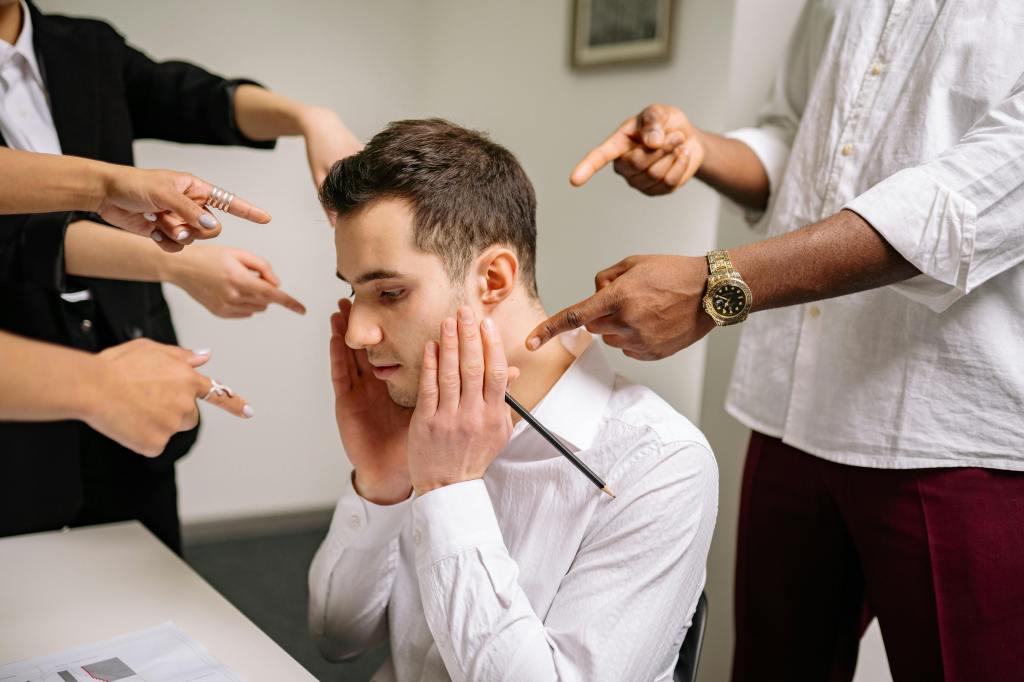
We are very often conditioned to hate ourselves.
And distrust ourselves.
And hurt ourselves.
When I say we are “conditioned,” what I mean is, we are not making a “choice.”
We have been programmed. Trained.
Most of us don’t even realize what’s happening inside our head and heart— all we know is, we f*cking hate ourselves.
We wouldn’t hold anyone else to the standards we hold ourselves to.
We wouldn’t talk to anyone else like we talk to ourselves in our own head.
We wouldn’t punish anyone else for simply existing and breathing and taking up space, he way we punish ourselves.
Why do we hate ourselves so much?
Because the experiences that evoke CPTSD often leave us feeling like it was our fault.
And, not for nothing, we’re often TOLD it was our fault.
We walk away from those experiences believing we are unworthy.
We walk away from those experiences feeling incompetent.
Abuse, neglect, and coercive control— the experiences most often associated with CPTSD— often just shred our self-esteem beyond anything recognizable by non-survivors.
Sexual abuse in childhood— the experience most often associated with DID— often leaves us feeling fundamentally “gross” and unlovable and complicit.
We don’t “ask” for any of those feelings. None of those feelings has anything to do with reality.
But all we know is, we arrive in adulthood just seething at ourselves.
Sometimes it’s so bad we can’t even look at ourselves in the mirror or stand to hear our voice on a recording.
That’s where we are. It’s not where we “should” be; but it’s where many survivors reading this start.
Changing that— learning to not hate ourselves— starts with just introducing the simple idea: it doesn’t have to be this way.
We don’t hate ourselves because we “have” to. We hate ourselves because we’ve been trained to.
We can unlearn what we once learned.
Don’t get me wrong: it will take time. And patience. And persistence. And commitment. Just like every meaningful shift in realistic trauma recovery.
Oh, it’s a massive pain in the ass.
And but also: it’s a pain in the ass that’s worth it.
You deserve to be on your own side. To have your own back.
You deserve the most realistic shot at meaningful trauma recovery possible.
And that includes not waking up and f*cking hating yourself.
Because you don’t have to. Nothing bad will happen if you don’t.
I promise.

 Use Your Damn Skills