
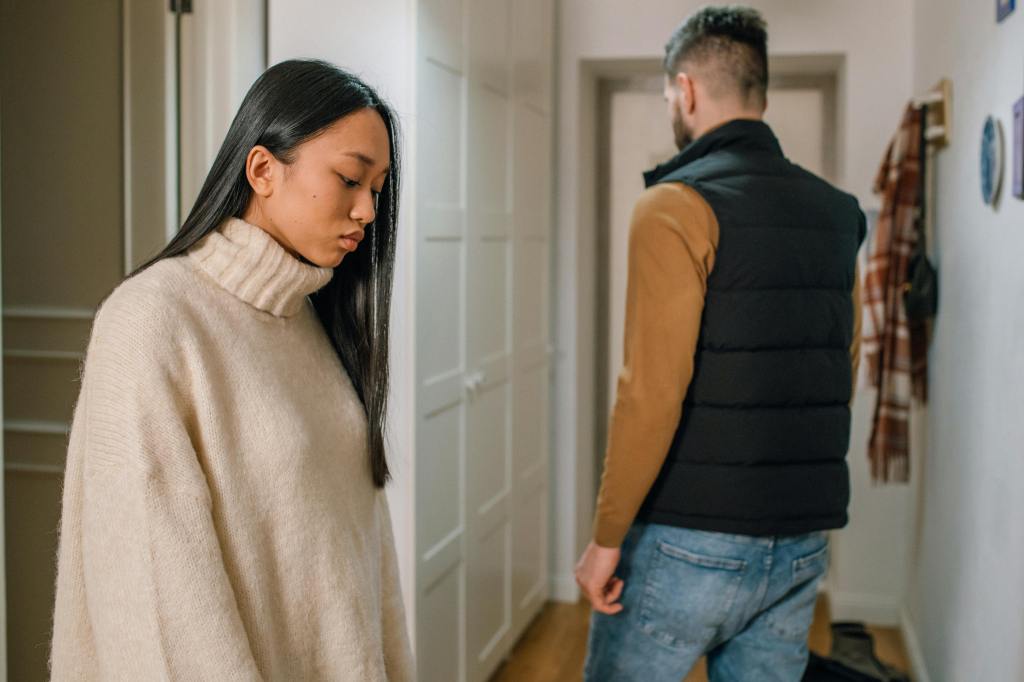
Sometimes we’ve gotta give up on certain relationships, personal or professional.
It sucks, but it’s a fact.
Some relationships just do not meet our needs— any need we have.
Some relationships we entered into when we have different needs than we have now.
Some relationships we entered into not quite knowing what we were in for.
Some relationships we entered into under false pretenses— that is, we were deceived about what would be expected and asked of us in the relationship.
I’m not talking only, or even mainly, about romantic relationships.
All of us have dozens of relationships we engage with daily. Our job is a relationship. Services we use are a relationship. If and how we engage with our church is a relationship.
Our very identity is a relationship— with ourselves.
We even have relationships with “parts” of ourselves that determine many aspects of how we feel and function that we’re often not even all that aware of.
And sometimes we need to reevaluate if or how we engage in those relationships.
Now, the relationships with “parts” of ourselves, we can’t opt out of. We need those relationships to be positive and trustworthy.
But, other relationships, personal and professional? Well— sometimes they need to significantly change, or even end, if our trauma recovery is to be realistic and sustainable.
Sometimes we outgrow relationships.
Sometimes we heal, and a relationship we entered into when we were wounded no longer fits.
Sometimes a relationship that once upon a time served a need for us, just doesn’t anymore.
I wish I could tell you we could work our CPTSD recovery and never have to confront leaving a job or limiting contact with a person or going no contact with a person or leaving a church or breaking up with a toxic partner.
I wish I could tell you that we can do all of this without making significant changes to our beliefs about who we are.
But that’s not reality.
Turns out CPTSD recovery is full of realities that are going to make us uncomfortable, at least in the short term.
And the fact is, many of the relationships that have been a part of our world have also maintained and depend our trauma. And we have to be uncompromisingly real about that.
It is okay to have mixed feelings about giving up on some relationships. Especially if they’ve been part of our world for a long time.
It can be bittersweet. And it’s often anything but “easy.”
(Yes, “easier said than done.” Let me say it first.)
But what we’re building in CPTSD recovery is too important.
Our recovery has to come first.




 Use Your Damn Skills