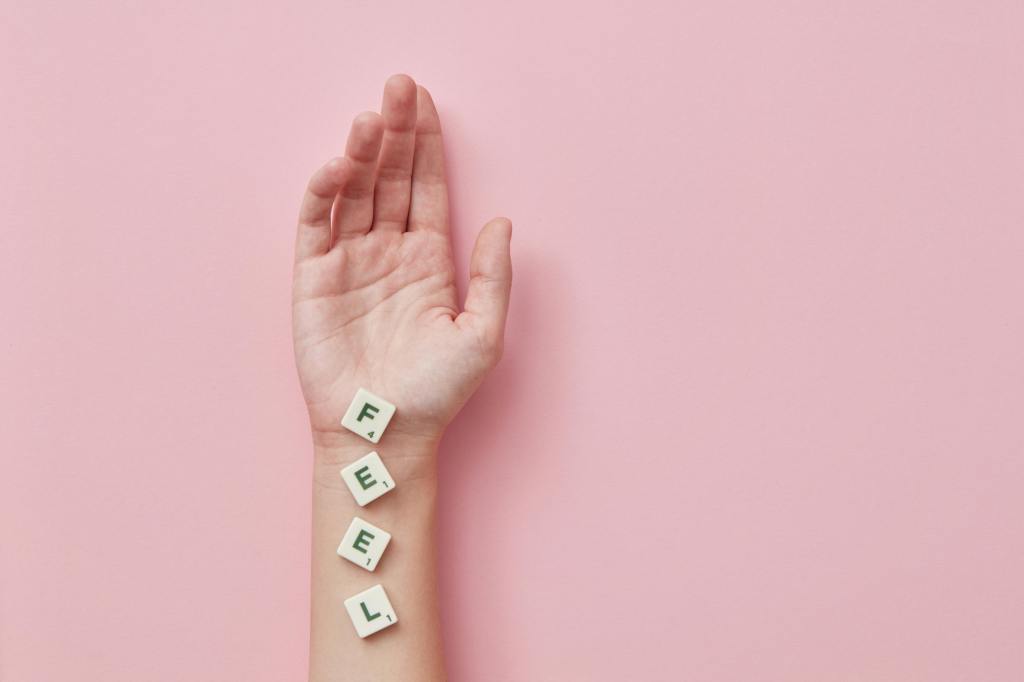
F*ck judging our thoughts and feelings.

Judging the sh*t out of ourselves is going to make every “sticky” thought or feeling we have, “stickier.” 

Trauma survivors are very often conditioned to show ourselves no mercy when it comes to what we “should” and “shouldn’t” think or feel. 

Barely a thought crosses our mind without us passing a harsh judgment on it. 

Barely a feeling touches our heart without us excoriating ourselves for feeing things, or feeling things more intensely, than we “should.” 

The truth is, there are no “shoulds” when it comes to thoughts or feelings— we think what we think and we feel what we feel. We like some thoughts and feelings more than others— but none of them are “evidence” that we’re doing this whole “being a human” thing “wrong.” 

But that’s not what Trauma Brain is going to tell us. 

Trauma Brain, what I call the internalized voices of our bullies and abusers that we play on repeat for decades, will tell us we “have” to judge and obsess over what we think and feel. 

Trauma Brain especially likes to tell us that we’re feeling “too much.” That we’re “too sensitive.” That the intensity with which we feel things is evidence we’re “weak” or “broken.” 

That is straight Trauma Brain BS (Belief Systems— but also, you know, the other kind of “BS”). 

Here’s the thing: those thoughts and feelings that we don’t love? Judging ourselves for them is going to make them hang out in our brain and body for much longer than they otherwise would. 

Judgment makes “sticky” thoughts and feelings much “stickier.” 

Nobody reading this judges their thoughts and feelings for the hell of it. We are responding to conditioning. We were programmed to relate to ourselves harshly. 

We do need to decide that we’re tong to change how we relate to ourselves— but changing that pattern requires more than a “decision.” 

It requires us to catch ourselves when we’re doing it, push pause, and choose to talk to ourselves differently. 

To scratch that old record— again, and again, and again. 

Not easy. Worth the effort— but not easy. 

Remember, when you’re tempted to beat the sh*t out of yourself for something you’re thinking or feeling, “this is only going to prolong my relationship with this thought or feeling I hate.” 

Then I recommend inserting this well-validated, very clinical turn of phrase into your self-talk: “F*ck that.” 

Because f*ck judging your thoughts and feelings, you know? 

Gratitude.

You’re going to meet people in this trauma recovery process who will try to convince you that “gratitude” is kind of a “cheat code” to recovery. 

I’ve never believed that. 

Especially on days like today, you’re going to hear a lot about gratitude. 

On days like today, the culture is not particularly sensitive to people whose life experiences, especially their family experiences, have been painful or complicated. 

You may or may not feel like you have a lot to be “thankful” for today— and that’s okay. 

Acknowledging how painful or complicated your life has been does not make you “ungrateful.” 

My father, a narcissistic addict, frequently weaponized the word “gratitude” against me. 

To this day my trauma conditioning comes at me, telling me that I am not sufficiently “grateful.” 

I’ll tell you right now that I am overwhelming grateful— but maybe not for the things the culture tells me I “should” be. 

I am grateful I survived— though I wasn’t always. 

Some days I was quite ambivalent about the fact that I was still alive. 

Today I am grateful for recovery— but that has nothing to do with my family of origin. 

I am overwhelmingly grateful for some of the books and music I stumbled across that saved my life. 

I am overwhelmingly grateful for the Siamese cat that overwhelmingly enhanced my life for thirteen years— and that her passing last April was as peaceful as I could have asked for. 

I am overwhelmingly grateful for a little orange kitten who has held my grieving heart as tenderly as I could ever hope for, and for the life saving songwriters who are his namesake. 

I am overwhelmingly grateful for the humans whose voices I am listening to as I am writing this. A writer and an artist and a dancer and an adventurer who allow me the privilege of being in their lives. 

I am grateful to be sober today. 

I am grateful I did not believe trauma’s lies about whether I deserve to live. 

I am grateful I can write. That I have this platform. That my words reach even one person, let alone as many as they do. 

Believe me, I’m plenty grateful. 

But I don’t tell anyone the “have” to be grateful— or anything else, for that matter. 

Gratitude might be a tool in your recovery— or it might not. You get to decide that. 

No one gets to tell you you “have’ to be grateful, or anything else, to “deserve” recovery. 

Your mileage will vary when it comes to how useful a tool gratitude is or isn’t in your recovery. 

Don’t get up in your head about it. Really. 

Today is a day in recovery. No more; no less. 

If you are reading this, I am grateful for you. 

Yes, you. Person reading this who thinks I’m not talking about you. 

I am. 

How not to get hijacked by the “fawn” reflex.

Many trauma survivors, every day, are vulnerable to interactions with people who will, purposefully or not, hijack our focus. 

We’ve all experienced this— entering into a conversation or other interaction with someone, and suddenly feeling yanked away from who we are and what we’re all about. 

This can happen when somebody’s vibe or behavior triggers us; or it can happen when the content of the conversation or interaction is distressing or distracting to us; or it can happen for reasons we may not be able to identify in the moment. 

All we know is: we don’t feel like ourselves when we’re interacting with this person— and, often, we don’t like how we feel. 

Sometimes this “hijacking” happens unpredictably— that is, we find ourselves quite unexpectedly off our game when we engage with a person. 

Other times, however, we know from past experience with a person that they’re highly likely going to trigger us, or that interacting with them is likely to evoke feelings and responses in us that we do not love (or 100% choose, for that matter). 

There’s no shame to any of this, by the way. It happens to everyone. 

I DEFINITELY have interactions with people that yank me quite away from who I am and what I’m all about. 

I DEFINITELY find myself responding in ways I don’t love to dynamics I didn’t anticipate in certain conversations or interactions. 

Very often what’s happening to us in these moments is a form of flashback and/or dissociation. Somebody’s vibe or behavior has triggered us, because it’s punched a “replay” button installed in us from the past. 

We may not fully realize that’s what’s happening, because we think of flashbacks as fully immersive sensory experiences, or dissociation as “switching” between “parts”— but the truth is, both flashbacks and dissociation occur along a spectrum, and many survivors hang out in the mild-to-moderate range of that spectrum every day without being aware of it. 

It’s real important, when we can, that we prepare ourselves for conversations or interactions that are highly likely to trigger us. 

Remember that managing trauma responses always involves a combination of three basic tools: self-talk, mental focus, and physiology. 

When we know we’re headed into a potentially triggering conversation or interaction, we can leverage all three of those tools in order to minimize the chances we’ll get “hijacked.” 

We can remind ourselves, via our self-talk, of who we are, what we’re all about, what our goal is in the interaction, and what to pay attention to. 

We can use our mental focus to reinforce our identity, our own vibe, and our interactional goal with this person, so we don’t get caught up in their personalty or their goals. 

We can utilize our breathing and physiology to stay grounded and somatically present in thee conversation, instead of letting the anxiety or other emotions of the moment jack up our sympathetic nervous system and make it harder for us to be ourselves. 

The reason I feel it’s important that you know about these kinds of vulnerabilities and these kinds of tools is, these are exactly the kinds of things I wish someone had told me as a teenager. 

I remember, vividly, feeling at the complete mercy of every situation I was in— especially social situations. 

I felt like my identity as basically malleable, depending on who I was interacting with and what they wanted from me— and it was hell on my self-esteem. 

Taking a few minutes to utilize our recovery tools to affirm our identity, our values, and our goals for the interaction can help us stay grounded in and focused on who we are and what we need. 

That is: it can help us manage our vulnerability to the “fawn” response— and give us valuable experience in wrangling flashbacks and dissociation that aren’t obvious or overwhelming. 

It’s never the wrong call to leverage self-talk, mental focus, and physiology to remind ourselves who we are and what we’re all about. 

And it’s never the wrong time to do whatever we need to do to not accidentally lose ourselves in someone else’s vibe. 

The quality of our recovery is the quality of our relationship with ourselves.

The quality of our trauma recovery is the quality of our relationship and communication with ourselves. 

If we’re struggling with recovery, it’s almost always because that relationship and communication has broken down somehow. 

We’ve lost touch with ourselves. 

We’re not checking in. 

We’re not listening. 

We’re not open to whatever our body and our parts are trying to tell us. 

There can be lots of reasons why our relationship and communication with ourselves can get blocked, and many of them aren’t our fault. It’s almost never the case that we struggle with recovery because we’re “not trying hard enough.” 

Usually, we’ve gotten scared or overwhelmed. 

We’ve gotten distracted by all the noise. All the chaos— inside and out. 

When we are overwhelmed, it’s hard to relate to ourselves with compassion and patience— and it’s especially hard when for years we’ve been conditioned by trauma to dislike and distrust ourselves.

During times of fear or overwhelm, we tend to regress. 

We fall back into our default patterns of relating and communicating to ourselves. 

That’s one of the main reasons why, when we’re badly triggered, we can feel like we’re back at Square One: we’re aware of having regressed. 

It can FEEL like we’ve lost all our progress— but we haven’t. 

It can FEEL like all the tools and skills we’ve ever developed have abandoned us— but they haven’t. 

When we’re scared and overwhelmed, it can take a minute to remember that recovery is about how we relate and communicate to ourselves. 

Sometimes it takes even longer to remember, because we feel embarrassed or ashamed that we’re struggling. 

Fear, overwhelm, embarrassment, shame, dissociation— they all make it hard to get back on track with relating and communicating with ourselves in recovery supporting ways. 

But we can get back on track. 

We can plug back in to our experiences and our needs with compassion and patience. 

We can start reaching out and listening to our parts again. 

We can remember and remind ourselves who we are, and what we’re all about. 

The trick is staying out of shame and self-blame. 

Not assuming that because we’re struggling, we’ve lost the fight. 

Not telling ourselves a story, over and over again, about how we suck, how we’re hopeless, how we can’t recover, how it’s not worth even trying. 

Trauma robs us of many choices— but there are some choices we do have, even in moments of fear and overwhelm. 

The most important of those choices is how we relate and communicate to ourselves. 

The quality of our recovery is the quality of that relationship and that communication. 

And it’s never too late— never the wrong moment— to pay attention to it with acceptance and love. 

Just noticing is a recovery skill.

Trauma recovery begins with just noticing. 

Just noticing how we feel. 

Just noticing what we need. 

Just noticing whose voice it is echoing in our head. 

Just noticing what emotions and memories are scraped up by certain people or situations. 

It may feel to us that we are noticing all the f*cking time— that our problem, in point of fact, is that we notice way too much, actually. 

Here’s the thing, though: when we’ve been coping with trauma symptoms for years, we’re very often not all that great at JUST noticing. 

We’re really good at judging. 

We’re really good at compartmentalizing. 

But just noticing, without judgement, without feeling the urge to “stuff” our emotions or memories somewhere? We don’t have a lot of practice with that. 

It’s not our fault. We haven’t been taught much about just noticing. 

When we were noticed by the people around us growing up, it very often led to judgment, scorn, or even punishment. 

Many of us developed the BS (Belief System) that just noticing or being noticed was dangerous. 

We couldn’t just notice what we were thinking or feeling, because to do so would make us feel shame or panic. 

Over time, trauma tends to mangle our ability to just notice. 

Many trauma survivors know very well the paradoxical feeling of being hyperaware of every goddamn physical or emotional sensation happening in or around our body— and yet, somehow, being completely unaware or completely numb to all of it. 

Healing that starts with just noticing. 

Make no mistake: just noticing is a skill. We’re not going to be great at it at first. We’re not used to it. 

Many of us have even invested lots of time and effort into explicitly NOT noticing what’s happen to or in or around us. In our experience, it’s safer and less scary to NOT notice. 

How do we begin just noticing? 

We start out by making the agreement with ourselves that whatever we do or don’t just notice in our head, heart, or body, we will not attack or abandon ourselves. 

If we really want to develop the skill of just noticing, we have to clear and firm with ourselves: we will not us the skill of just noticing against our “parts” or our inner child. 

If we really want to change how we feel and function— if we really intend to work our trauma recovery with honesty and humility— we need to start out by just noticing. 

Not judging. Not overcompensating. Not hiding. Not cringing. 

Just noticing— with curiosity, with compassion, with patience, and with a willingness to radically accept whatever we just notice. 

We don’t have to always LIKE what we just notice. 

But we do have to accept it as exactly where we are. Exactly what we’re up against. 

As long as our ability and willingness to just notice is compromised or overwhelmed by trauma symptoms, we’re going to stay in neutral in our recovery. 

Leaning into the recovery skill of just noticing is never the wrong choice. 

And it’s a recovery skill we can begin cultivating today. This moment. 

What are you just noticing right now? 

See? You’re on your way. 

Our difficulties with emotional regulation are not our fault– but learning emotional regulation is our responsibility.

We’re not born knowing how to regulate our emotions. 

We have to be taught. Trained. Supported.

When it comes to what most of us were taught about how to manage our feelings, many of us are left at kind of a loss. 

We were told versions of “suck it up” a lot. 

We were told, directly and indirectly, that crying was certainly NOT an acceptable way to manage any feeling. 

We were told that “managing” feelings meant, basically, not being reactive to them. That not showing our feelings was tantamount to being “mature.” 

Mind you: we were given precious, precious little guidance or support in actually managing our feelings. 

We were, essentially, told to “figure it out.” 

Some of us were told “figure it out— or else.” 

Or else what? We’d be shamed. We’d be punished. We’d be abandoned, maybe.

“Suck it up” isn’t actually an emotional management strategy. 

What does “suck it up” entail, exactly? No one seems to know. We just know when we’ve failed to “suck it up”— usually because we’re crying. 

It’s not your fault that no one taught you how to regulate your feelings. 

Those humans who did learn to successfully regulate their emotions are usually those humans who had kind, supportive adults around them who took care to talk them through tough moments. 

When we have kind, supportive adults around us who are willing to talk us through tough moments, with presence and realism, that’s what we internalize. We learn to model them. We build a skill. 

When we do not have those kind, patient, emotionally intelligent adults around us to talk us through tough moments, what do we internalize? 

Impatience. Shame. The inclination to belittle ourselves when we struggle with something we’re not familiar with or that we find overwhelming. 

What we need to understand and accept is that struggling to regulate our emotions, when we didn’t have the guidance, support, and safety to learn and practice that skillset, is normal. 

It’s not our “weakness.” 

It’s not our “brokenness.” 

It’s not our “immaturity.” 

How were we supposed to learn how to do something we never saw done? 

How were we we supposed to get good at something we never had the safety to practice? 

Emotional regulation is one of the most complex tasks human beings face— and it’s a particularly complex task when we’re dealing with the particularly intense, particularly painful feelings experienced by trauma survivors. 

I’ll say it again: we’re not born knowing how to do that. 

When we fail to receive training and support in learning how to do that— when our experiences TRYING to do that are met with scorn— not only do we NOT learn how to regulate our emotions…but we DO learn that the entire project of emotional regulation is fraught. 

We develop anxiety around it. 

Eventually we get in the habit of avoiding emotional regulation altogether— that is to say, we get in the habit of dissociating. 

Yeah. That’s how that happens. 

Realistic emotional regulation starts with refusing to beat ourselves up for not being great at it. 

It starts with accepting emotional regulation as something we need to, and can, learn as adults. 

It starts with meeting our struggles with emotional regulation with compassion and patience— because poor emotional regulation is a symptom of complex trauma, and the rule in trauma recovery is that we meet symptoms with compassion and patience. 

Actually, make that “radical compassion” and “infinite patience.” 

Our difficulties with emotional regulation are not our fault. 

Learning effective emotional regulation IS our responsibility— which is why we can’t afford to waste time with shaming and punishing ourselves. 

Easy does it.