
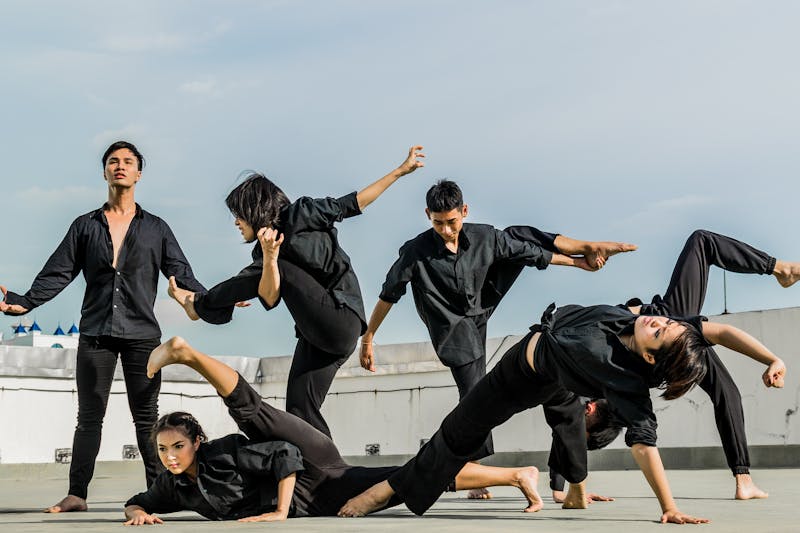
Trauma recovery is improv.
Improv is a form of performance art in which the performers are given broad prompts, and they come up with scenarios, skits, and stores around what they are given.
Improv obviously requires creativity. It requires focus. It can seem to require a fair amount of confidence, although it’s my experience that many introverts are surprisingly good at improv.
People who don’t have experience with improv can find it intimidating.
They can get it in their head that improv is a form of performance art that you’re either good at or you’re not— and if you’re not good at it, you may as well not bother trying.
It’s true that some people tend to be naturally better at improv than others— though, in fairness, that’s true about literally any activity.
The real truth is, as freewheeling and instinctive as improv can appear, there are principles that make for successful improv performances.
It’s not just pure creativity or talent. It’s not all about confidence.
The ability to perform improv is a skillset— one at which most people get demonstrably better as they work at it.
Yes, there is a lot of room for potential flexibility within the principles and skills that make for good improv— but there’s no question that performers who know how improv works, what tends to make for successful improv performances, consistently do better at the art form.
People who don’t think they can do improv very often surprise themselves as they learn the skills and principles of the art— and they increasingly find that they can weave their own personality and creativity into their improv skills.
All of this can be said of trauma recovery as well.
Many people assume they can’t “do” recovery because they’re not naturally good at the skills and tools recovery requires us to develop— but those skills and tools can be learned and developed.
Just like no two improv performances are the same, because different performers have different strengths and styles, no two trauma recoveries look exactly the same— because different survivors have different strengths, needs, and supports.
My trauma recovery may not look like your trauma recovery, any more than my improv performances may look like yours— but there will be principles and structure that will be common to both.
The reason I don’t get ultra specific with recovery tools and skills on the internet is the same reason improv coaches can’t get super specific with advice on how to do improv— because each survivor and performer has different strengths, styles, and needs.
Perhaps most importantly, the success of an improv performance depends upon accepting the implications and limitations of the prompt. In improv this process is known as meeting the prompt with a “yes, and” attitude.
Performers who do not accept the implications and limitations of the prompt (think Michael Scott in the episode of “The Office” where he continually tries to redirect his improv scene to his own “secret agent” storyline, which had nothing to do with the prompt) can’t explore the possibilities of the potential performance.
They can’t bring their tools or skills as performers to bear, because they refuse to accept the realty of the prompt— the baseline requirement of the performance.
This is analogous to the necessity of trauma survivors’ accepting the realty of what happened to us— and the reality and severity of our symptoms.
If we refuse to accept these basics of our situation— our “prompt”— we cannot bring our skills, tools, or philosophies to bear. None of it will matter, because we’ll be too busy staying in denial, instead of crafting our recovery.
Designing a trauma recovery is like crafting an improv scene.
Does it require creativity? Yes. Does it require individuality? Yes.
But is it more likely to be successful if it follows the principles and involves the tools and skills known to support recovery? Yes.
Everyone in trauma recovery could stand to learn about the skills and structure of improv.
 Use Your Damn Skills