
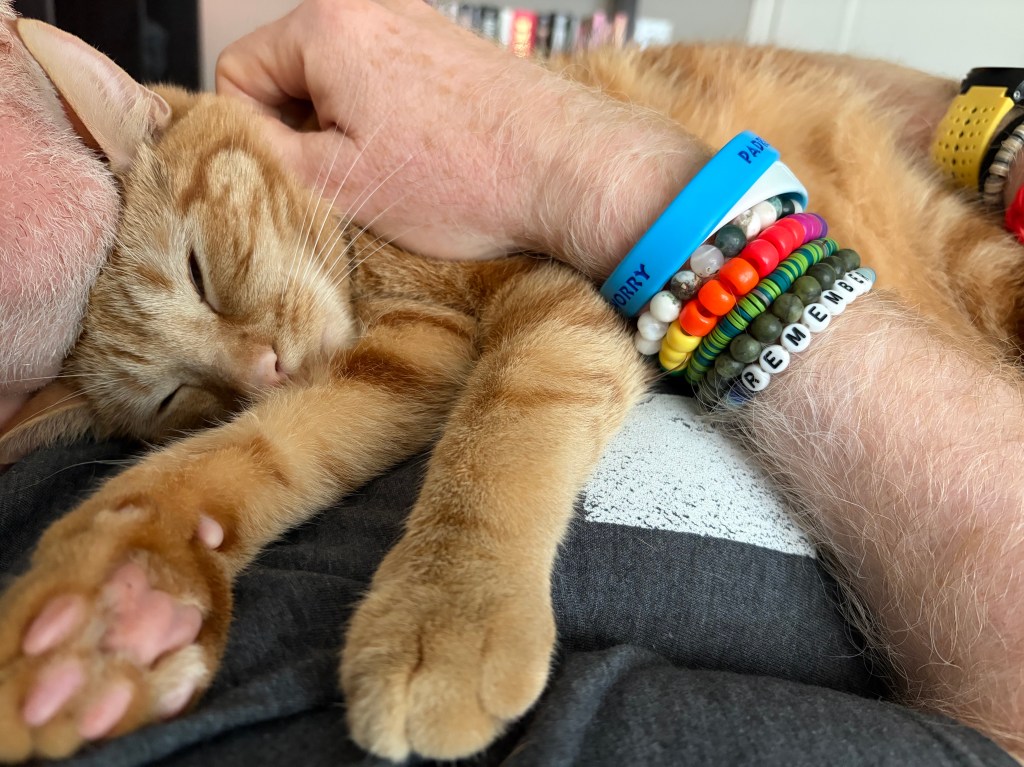
Trauma survivors can be a lot like cats.
We can be easily startled— often by things that “shouldn’t” startle us.
We can sometimes get spooked by things other people can’t see.
We can be slow to trust.
If someone wants to get close to us, they’re going to need patience. And consistency. And the ability not to take our skepticism personally.
A lot of people don’t understand trauma survivors— in much the same way a lot of people don’t understand cats.
Sometimes cats hiss, even at people who they love.
And then sometimes they cuddle up to people they just hissed at.
Cats can be really good at hiding.
And sometimes cats come when they’re called— but just as often, calling a cat makes it get even more elusive.
All true of trauma survivors, too.
We can be famously prickly.
Like cats, we don’t respond well to people coming at us.
Like cats, we do not respond well to feeling trapped. Or controlled. Or in trouble.
Seriously, have you ever tried to reprimand a cat? It’s a surefire way to make it defiant. Cats tend to double down when they’re “in trouble.”
Many trauma survivors reading this know exactly what this feels like.
Here’s the thing, though: cats are wildly misunderstood. Much like trauma survivors.
Does it take time and patience and a little bit of knowledge about how we work to get close to either a cat or a trauma survivor? Absolutely.
But: like cats, trauma survivors, once you put in that effort, are some of the most loyal, most loving, and dare I say some of the fiercest creatures on the planet.
Yes, loving cats— or trauma survivors— can be complicated.
And yes, loving cats— and trauma survivors— is 100% worth the effort.
(That includes the effort required for us trauma survivors to love ourselves, by the way.)

