Families and cults.

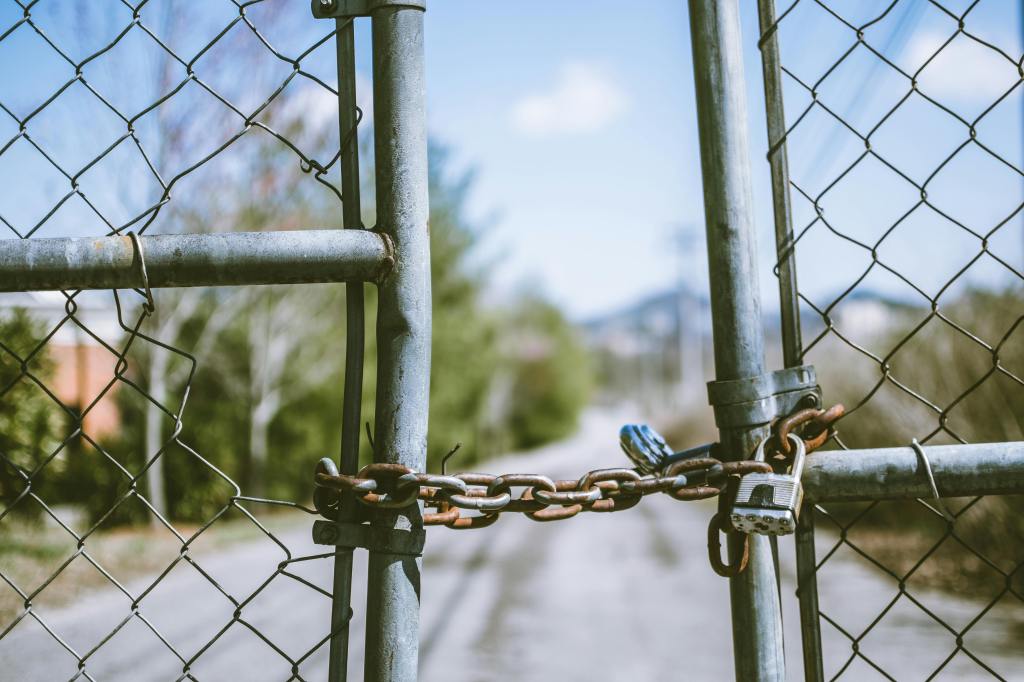
Abusive families resemble cults in many respects— and evoke many of the same symptoms and struggles in their victims. 

Complex trauma is trauma that unfolds over time, is entwined with our important relationships, and is functionally inescapable— and those criteria absolutely apply to abusive families as readily as they apply to cults. 

In many abusive families, individual needs are subordinated to a functionally authoritarian head of the household— in much the same way cult acolytes are expected to subordinate their individuality to the will of an authoritarian leader. 

In abusive families, there is often a “code of silence” that is expected to be maintained by family members to protect the families’ secrets and hide the behavior of abusive family members— much like there is a “code of silence” that is expected of cult followers to protect their leaders. 

Abusive family members, especially adults, often exploit younger family members’ vulnerability in order to gain sexual or other access to them— tactics identical to abusive cult leaders who prey on their followers. 

Abusive families can “brainwash” vulnerable family members just as surely as abusive cults can, and through many the same tactics, even— including the deprivation of basic needs in order to gain compliance and adherence. 

Both abusive families and abusive cults exploit “in group” and “out group” psychological tactics to create fear in family members or followers, to minimize the chances that someone will “tell” on the family or cult to outside authorities.

The pain inflicted by abusive families is rarely limited to one domain, but most often includes a combination of physical, emotional, and sexual abuse; and this is also true of abusive cults, which also frequently mix in spiritual and financial abuse on top of those. 

Victims of familial abuse often feel shame for staying in their family’s orbit for as long as they did— much like cult followers frequently belittle themselves afterward for not recognizing what was going on sooner. 

Both abusive families and cults often cite religious principles or authority as justification for controlling family members’ or followers’ lives—which very often head f*cks family members’ or followers’ attempts to detach from them. 

Family members who have been abused very often struggle to imagine that their attempts to leave the system will be successful— they very often believe that, even if they try to leave their families, they’ll never “really” be able to leave, in much the same way cult leaders convince their followers that there is no salvation or peace outside of the group. 

It can be hard for many people to accept that their family was abusive— but it might help to step back and look at their family’s behavior and dynamics from the perspective of, “would this check out if we were talking about a cult, instead of a family?” 

Taking that step back and seeing those similarities can be a real eye opener. 

Victims of abusive families and victims of abusive cults often experience similar CPTSD symptoms upon leaving they respective situations. 

Both abusive families and cults infiltrate survivors’ beliefs about themselves, the world, and the future. 

Both abusive families and cults do everything in their power to gaslight their victims into silence and complacency, even after they’ve left. 

The culture often thinks of both abusive families and cults as relatively rare phenomena, but victims know: there are far more abusive families and cult-like groups out there than many people realize. 

Both victims of abusive families and cults need to know what CPTSD is and what CPTSD recovery entails. 

And neither victims of abusive families nor abusive cults are to blame for their experience. 

No contact, no shade.

No one goes “no contact” for the hell of it. 

I’ve never met a survivor who went “no contact” with family “impulsively.” 

The vast majority of survivors know perfectly well how profound a step going “no contact” is. 

We are not oblivious or callous. We know what a big deal it is. 

Which is what makes it so frustrating when people insist on reminding us what a big step going “no contact” is— and suggesting that we take time to think about it. 

Believe me: few humans think about anything as often or as deeply as trauma survivors who are considering going “no contact” with family members or others with whom they have established relationships. 

If someone is going “no contact,” that is not evidence that they are letting their emotions get the bette of them. 

To the contrary: it’s usually evidence that a relationship has become intolerable. 

Many people cannot imagine the level of pain or unsafety that would make going “no contact” a viable option for them— so they assume such a level must not exist. 

They then assume that if someone else has set a “no contact” limit, that person must be mistaken or exaggerating. 

Trauma survivors, as a group, are not prone to exaggeration. 

And almost always, when someone is thinking about going “no contact,” they’ve already tolerated a painful, unsafe relationship for for longer than they should have.

That is to say: they are not “mistaken.” 

Nobody gets to decide for you what appropriate boundaries in any given relationship “should” look like. 

Nobody but you knows what it’s like to be you in a relationship. 

Nobody but you knows what being in a particular relationship does to your safety and stability. 

Nobody but you knows the specific challenges engaging with particular people evoke for your nervous system. 

That is to say: nobody else’s opinion on how you “should” handle particular relationships is valid— and that doesn’t change even when somebody has very strong feelings about the subject. 

If you need to set a strong limit in a relationship that is putting your recovery at risk, you get to do that. 

You don’t have to explain. 

You don’t have to justify. 

You don’t have to defend. 

You can choose to do any or all of these— but you don’t HAVE to. 

Going “no contact” with family members or others who compromise your safety, stability, or recovery isn’t “breaking up a family.” 

Their behavior did that. Their choices did that. Your self-protective, recovery supporting response did not. 

Nobody goes “no contact” for the hell of it. 

And nobody should be made to feel the incredibly difficult, culturally stigmatized step of going “no contact” is impulsive, immature, or a bigger problem than an abuser’s behavior. 

Trauma & “drama.”

There are many ways the culture tries, effortfully, to deny and disown the experiences of trauma survivors. 

One of the most frustrating of these ways is to refer to survivors expressing ourselves as “drama.” 

“Drama” is a radioactive word in our culture when referring to interpersonal dynamics. 

We all want to avoid being that “dramatic” person. 

We hear the word “drama,” and we are immediately exhausted and annoyed. 

There is this cultural narrative that some people are just “dramatic.” They make too big a deal out of things. They’re “oversensitive.” Everything is a a “thing” with them. 

Is it any wonder that the word “drama” gets flung at trauma survivors, if the goal is to silence or shame us? 

Here’s the thing: many trauma survivors have been through things that most of the world doesn’t believe actually happen. 

Many survivors have endured situations that most people assume only happen in movies. 

The actual, true stories of many survivors are, objectively, “dramatic”— not in the sense that they are overblown or pretentious, but in the realty that they involve stores of literal survival against daunting odds. 

It’s also the case that many survivors want absolutely nothing to do with being acknowledge for the courage, grit, or resilience they had to possess to just make it through. 

That is: we don’t want to be associated with the objective, heroic “drama” of our story. 

Thus, we are particularly sensitive to being associated with “drama.” 

Are trauma survivors sometimes highly sensitive or reactive? Absolutely. You would be too, if you were fielding the powerful fight, fight, freeze, fawn, or flop trauma responses that jack up our nervous systems 24/7. 

But people who don’t understand what trauma does to the human nervous system aren’t going to see that reactivity for what it is: an expression of injury, not a draw toward interpersonal drama. 

In addition to all this, trauma survivors often experience deep ambivalence about seeking support. We’ve often conditioned to conflate support seeking with manipulative attention seeking— usually by people who want us seeking neither support nor attention. 

Our abusers and bullies have often worked hard to keep us quiet about our experiences and our needs— thus they’ve quite purposefully tried to make us feel gross about seeking any kind of support. 

They know the very last thing we want is to be seen as manipulating or seeking attention— and they’re right. Thus, this conflation between support seeking and manipulative attention seeking is an extremely effective tactic to keep us from seeking any kind of visibility around our needs. 

All of which is to say: when people roll their eyes at the “drama” supposedly engendered by trauma survivors seeking support, they’re reinforcing a shame-based trope that keeps many, many survivors from reaching out for resources they deserve and need. 

I’ve never been fond of “they’re just dramatic” as a way of dismissing another person. 

Are there people out there who create interpersonal chaos for their own purposes? Sure. But if we’re going to call them out on that behavior, we can just call them out— we don’t have to feed into the cultural trope of the “drama queen” who shouldn’t be taken seriously. 

The more we stigmatize “drama,” the less accessible support and safety is for trauma survivors. 

Shaming “drama” plays right into the hands of bullies and abusers who count on our disdain of “drama” to keep us from listening to and supporting victims. 

Abuse survivors are less likely to come forward if they believe their experiences are going to be met with skepticism about whether they’re just “being dramatic.” 

If we really want to create a trauma informed culture, we should reconsider the use of “dramatic” as a pejorative. 

Tell me a tale– something with fire, to break from the sorrows.

Question the stories that make you miserable. The ones that you’ve been conditioned to tell yourself— and to believe. 

It’s not your fault that you were conditioned to tell and retell those stories to yourself, all day, every day, in you head. That’s how conditioning works. 

It’s not your fault that you were conditioned to believe stories that make you feel miserable. That’s how conditioning works. 

Nobody reading this is miserable because they’ve made a “choice” to be. 

We struggle and suffer because we’ve been conditioned to think, feel, and do certain things— and to tell ourselves stories about why we “have” to think, feel and do those things. 

That’s what so many people don’t understand about trauma responses: they are not “choices.” 

Conditioning, programming, brainwashing— they all act upon us without our consent, often without our knowledge, even. 

Many of the “decisions” we think we’ve made over the years have been far less “free” than we realize— because many of us have been subject to heavy conditioning. 

Life conditions everybody to think, feel, and do certain things— but when we’ve experienced trauma, that conditioning tends to be particularly insidious. 

Trauma conditioning tends to get us believing stories about how we’re not good enough. 

Trauma conditioning tends to get us believing stories about how our abuse was our fault. 

Trauma conditioning tends to get us believing stories about how the fact we were neglected is evidence that we weren’t, or aren’t, deserving of positive attention or getting our basic needs met. 

Trauma conditioning tends to get us believing stories about what is or isn’t possible for our life. 

Trauma conditioning tends to get us believing stories about whether we can form or sustain relationships. 

Trauma conditioning tends to get us believing stories about what will absolutely, definitely, without question, happen next, in our life and in the world. 

Mind you: those stories are just that. Stories. 

Some of them may contain kernels of truth— but almost never in the way our trauma conditioning is presenting the “facts.” 

Trauma recovery necessarily involves questioning the stories our trauma conditioning is telling us— and make no mistake, that is absolutely easier said than done. 

In addition to getting us telling and believing stories about how much we suck, our trauma conditioning is also real good at getting us to believe that we’ll be “in trouble” if we question or challenge the stories its telling us. 

We wind up in this position where we have stories, on repeat, inside our head, telling us how much we suck and how hopeless we are— and also, stories about how if we question or challenge those stories, we’re going to get yelled at or punished. 

That “in trouble” feeling is a potent scarecrow for many trauma survivors of all ages. So our stories remain unquestioned, usually for years. 

Questioning and challenging the stories trauma tells us about ourselves takes courage. 

It takes a willingness to sit with discomfort and uncertainty— which is hard, when one of the main storylines trauma has told us over the years is that we “can’t” or “shouldn’t have to” sit with discomfort or uncertainty. 

The truth is, of course we can. 

The truth is, we are far more capable and resourceful and deserving than we have ever given ourselves credit for. 

The truth is, the way we were hurt and made to feel growing up does not have to dictate the timbre of our emotional world for the rest of our life. 

Realistic trauma recovery requires the courage and willingness to interrupt our stories. 

It requires us to have the creativity and curiosity necessary to consider revising, editing, or rewriting altogether our stories about who we are and what we’re all about. 

As any writer can tell you, that can be an intimidating process. 

Which is why we take it one page, one paragraph, one sentence at a time. 

You’re up to this. Breathe; blink; focus. 

You are not “stupid.”

You are not “stupid.” 

The fact you are struggling has noting to do with intelligence. Or “character,” for that matter. 

No amount of intelligence or character makes us immune to the impact of trauma. 

But: there are many survivors reading this right now who have been convinced they’re “stupid.” 

They’ve been convinced that if only they were “smarter,” they would suffer less. 

I hate to tell you this, but the absolute smartest people I’ve ever met have been absolutely tortured by their trauma symptoms. 

In fact, trauma conditioning has this way of actually turning our intelligence against us. Nobody overthinks like a trauma survivor who is being used to logic their way out of a jam. 

Especially when our trauma involved abuse or neglect growing up, it’s very easy to believe those things happen dot us because we were “stupid.” 

Growing up, people may have talked to us as if we were “stupid.” 

A primary tool in the arsenal of many mental and emotional abusers is the implication or accusation that we are unintelligent— that if we were only smarter, we should understand that the way they related to us was fine. 

That we would “get the joke.” 

Survivors of narcissistic abuse in particular may have been subjected to constant messaging about how smart we are not— because pathological narcissists actually do believe that everyone with whom they interact is significantly less intelligent than they are. 

Our beliefs about ourselves very often echo what we were told about ourselves most often growing up, and how we were consistently treated growing up. So you can imagine what growing up with a pathological narcissist does to our self-esteem. 

(Many of us, myself included, don’t have to “imagine” that, actually.) 

Even if we wanted to take a stand and declare that we are not, in point of fact, “stupid,” many of us have been conditioned to believe that standing up for ourselves is “arrogant’ or “prideful.” 

Yes, abusers would very much prefer if we just shut up and took their abuse without question or protest, thank you very much. 

For many of us, embracing our intelligence is daunting, because even if we know we may be smarter man average, we’ve been conditioned to doubt and distrust ourselves. 

It is almost impossible to build realistic, sustainable self-esteem when we are constantly doubting and distrusting our own judgment and instincts— and abusers know this. 

Hence why gaslighting is such a common, and effective, tool for them. 

You are not “stupid.” 

I’m repeating it for a reason. Because you are not “stupid.” 

I don’t care what kind of grades you got. 

I don’t care what messages you received from any teacher or parent or peer. 

I don’t even care what any IQ test you’ve ever taken says. 

(Sometime when I’m not publicly ranting about trauma, I’ll tell  y’all the truth about IQ tests. It’s not petty.)

The messaging you received from your bullies and abusers about your lack of intelligence was fake news. It had nothing to do with reality— and everything to do with their desire to make you feel a certain kind of way. 

There are many kinds of intelligence— and as we work our trauma recovery, we reacquaint ourselves with the many ways we are, in fact, f*cking brilliant. 

I will die on the hill of: trauma survivors who have survived the sh*t we’ve survived are very often secret geniuses. 

It’s time to stop denying and disowning our genius. 

It’s time to start making our intelligence work for us— one day at a time.