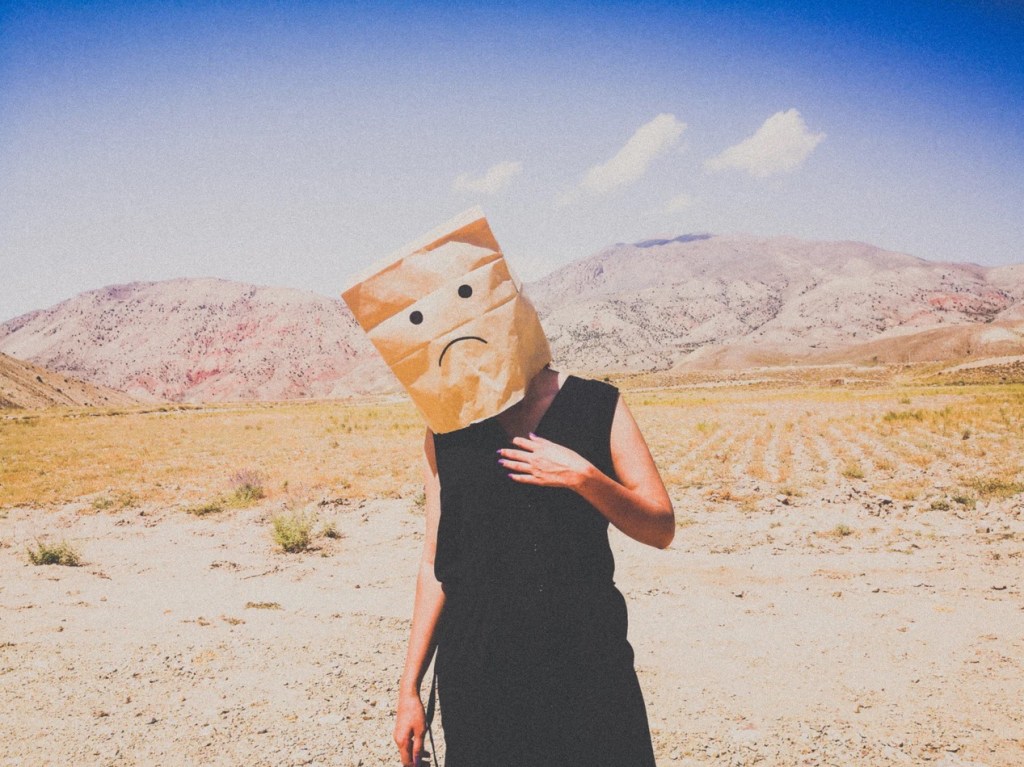
Hidden Everyday Struggles.

There are absolutely people reading this who struggle with everyday tasks because of their emotional and behavioral symptoms— but who don’t advertise the fact, because they don’t want to appear “screwed up.” 

I’m talking about things like going going grocery shopping. Taking their car in for maintenance. Making phone calls. Taking their pets in to vet appointments. 

There’s this myth in our culture that if you struggle with everyday tasks, you MUST be in severe crisis— but that’s not true. 

You wouldn’t know by looking at a lot of people that their anxiety or depression very often holds them back from doing things many people don’t think twice about. 

Many, many people keep their everyday struggle hidden. 

The truth is, you don’t have to be in severe crisis to struggle with something like running errands or making phone calls. 

There are many levels of anxiety— and not all of them are what we think of as debilitating. 

I guarantee there is someone you think of as “high functioning,” who struggles with something you wouldn’t IMAGINE someone “like them” struggling with. 

So many people keep their struggles under wraps because they’re embarrassed. 

They don’t want to be thought of as “that person,” who can’t easily go, say, grocery shopping. 

Our culture tends to think in very black and white terms when it comes to level of impairment, especially impairment due to emotional or behavioral issues. 

If you’re reading this and you struggle with everyday tasks of living, you should know you’re not alone— and you should know that it doesn’t mean you’re hopeless or helpless. 

There are PLENTY of smart people, people who have made progress in their recovery, people who are resilient and high functioning in lots of ways, who have a hard time getting out of the house (or, for that matter, have a hard time keeping their house clean). 

It’s such a drag that we think of impairment in terms of “how sick” a person is. 

You don’t have to be debilitatingly ill, mentally or otherwise, to struggle with the anxiety that comes with being out of the house. 

Depression very often robs people of the energy and focus necessary to run certain errands. 

Anxiety very often hijacks our physiology in such unpredictable ways, that we’re never quite sure whether it’s safe or practical to leave the house. 

You don’t have to be a train wreck to struggle with activities of daily living. 

It’s really important, as we heal, that we confront shame. 

Lots of us really struggle to distinguish between “because I can’t do this thing right now, I’m helpless, hopeless, and useless.”

What you can or can’t do right now isn’t a function of who or what you are— it’s a function of what you can or don’t do right now. 

No more; no less. 

Don’t get down on yourself because you struggle with everyday tasks. 

It’s not about how smart you are. It’s not about how resilient you are. It’s not about whether or not you’re working hard enough in recovery. 

It’s not about whether therapy is “working” or not. 

It’s about what’s going on with you right now. 

Some days are going to be better; some days, not so much. 

The name of the game is identifying what activities and routines are meaningful for your life— and what, specifically, gets in the way of being able to carry those routines out. 

We work on realistic ways around each obstacle as we identify each obstacle. 

It’s slow going sometimes— but the truth is, EVERYBODY has obstacles to feeling and functioning the way they’d prefer. 

You’re on your way to identifying and overcoming YOUR obstacles. 

Don’t let shame trip you up. 

Just identify and work on the next thing. 

Then the next— then the next. 

You’ve got this. 

In recovery, the little things ARE the big things.

Our baby steps and little victories are the key to our recovery. 

We often want to think about recovery as involving these quantum leaps forward in our ability to cope and function— and, sure, sometimes those big leaps do happen. 

But when big leaps in our recovery happen, it’s usually because we’ve set the stage for them with our little, consistent, daily steps. 

It’s extremely UNLIKELY we’ll make big leaps in our recovery if we HAVEN’T been taking those baby steps every day. 

What do those little, incremental, baby steps in recovery look like? 

They’re often a little (or a lot) different than what we assume. 

A baby step might look like, going to bed and getting up at consistent times every day. 

A baby step might look like, sticking to a schedule— not letting your day be determined by what you do or don’t feel like doing at any given moment. 

A baby step might look like, carving out time every day for reading and journaling— even if it’s just a few minutes. 

A baby step might look like, doing your internal communication and self-talk exercises every day— even if you don’t want to. 

A baby step might look like, curating your social media feed with mutes and blocks, so you’re not exposed to the online presence of people who trigger or otherwise destabilize you. 

There are dozens of baby steps that might be applicable to the specific work you’re doing in your therapy or recovery work— but the commonality is that we’re talking things that aren’t overwhelming, and that you can do every day. 

Very often we skip the baby steps, ironically because they FEEL too small. 

Sometimes we think we don’t have to do that baby step today, because we can just make up for it tomorrow. 

The thing is, the entire point of these little incremental steps is to build momentum. 

The entire point of having them be NOT overwhelming is to be able to do them regularly, daily, without fail. 

A lot of the time, we’re going to have to just do the thing, even if we don’t feel like doing it, even if it doesn’t feel like it’ll make a difference, even if we’re bored or frustrated by the thing. 

I can assure you, a LOT of the routines and rituals that make the difference in recovery are boring and kind of frustrating. 

We WANT recovery to be this dramatic shift. I would prefer that, anyway. That way my brain would be more interested in it. My brain loves the drama. 

But recovery is rarely about drama. 

It’s mostly about consistency. 

It’s about life becoming LESS dramatic and tumultuous. 

If we’re doing recovery right, our lives actually become MORE predictable— and, consequently, more manageable. 

When I try to get my brain to follow a routine, my brain often pushes back. It tries to convince me that if I stick to a schedule, if I go to bed early, if I get up at the same time every day, I’m going to become a robot, with no spontaneity or fun or passion in my world. 

Nothing could be further from the truth. 

If we really want a life we can enjoy, if we really want a life that includes adventure and fun and passion, we first have to establish safety and stability. 

We don’t want the kind of adventure that arises out of instability and chaos. 

Focus in on routines. Focus in on habits. Focus in on rituals. The smaller and more consistent, the better. 

The little things we do, over and over and over again, without fail— those really are the big things in our recovery. 

What if you DON’T check that social media account you hate?

Ever have trouble STOPPING yourself from checking the social media accounts of people who drive you absolutely CRAZY? I have. 

Lots of people do have trouble with that. Even if we don’t want to admit it. 

There just seems to be a part of us that REALLY, REALLY wants to know what those people are saying. 

Sometimes it’s because they might be saying personal about us, either directly or indirectly. 

Sometimes its’s because they might be saying things that our brain tells us HAVE to be responded to or debunked. 

Sometimes we just check the social media of people we hate just to remind ourselves of what NOT to be, think, or do. 

Either way: the time and emotional energy we spend checking the social media of people we hate, is time and energy we’re NOT getting back. 

Very rarely is it time and energy we’re GLAD we invested. 

It’s absolutely the case that sometimes people post defamatory or untrue things on social media, and sometimes it’s necessary to monitor and either report or rebut them. 

But it’s also the case that, often, it doesn’t particularly matter what we say in rebuttal, or whether we report them— it won’t affect their behavior. 

(In fact, it’s sometimes the case that when we DO respond heatedly to someone’s posts, they consider that a victory of sorts— they’ve coerced a reaction out of us.) 

Believe me, I know: it’s really, really hard to let someone be wrong or mean on the internet. 

Even if we make the resolution that we’re not going to provide them with the satisfaction of a response, we very often continue to struggle with not checking their social media to see what untrue, unfair thing they’ve said THIS time. 

Checking and rechecking the social media of people we hate can consume HUGE chunks of our time and attention in a day— more than many of us appreciate. 

And I can tell you from personal experience that purposefully exposing ourselves to the posts of people who have NOTHING constructive to contribute to our lives is absolute POISON for our recovery from depression, anxiety, addiction, and trauma. 

Learning to leave certain social media accounts alone is a major, very necessary, steppingstone goal for many of us in recovery. 

But, like all habits we’re trying to quit, it doesn’t work just to tell ourselves, “don’t do that.” 

We need a plan. 

We need to identify when we’re most at risk for checking the social media of people we hate. 

We need to identify what thoughts, feelings, and events make us more likely to check their social media. 

And we need a plan for what to do INSTEAD of checking those social media accounts— even when we really WANT to scratch that itch. 

We need to figure out what support we need in order to keep us from checking those accounts. Who can we call or text or message instead? Who will remind us of our commitment to stay “clean?” 

We need to set realistic goals for ourselves in reducing the behavior. If we check those toxic social media accounts twenty times a day, maybe our first goal is to check them fifteen times today. Or maybe only check three of the five we usually check. Or maybe only check them at certain times, for a certain amount of time— that we subsequently start reducing, day by day. 

Social media can be an extraordinary tool. 

But, much like any other tool— much like a hammer— it can either help us build something, or it can injure us. 

Anyone reading this, probably found me on social media. I like social media. It think it has way more upside than downside. 

Which is why we have to take REALLY seriously the impact it has on our emotional and behavioral health. 

Your reality is not dependent upon their validation.

Everybody reading this either knows of or has experienced a situation in which systems have failed to hold people accountable for hurting someone. 

Many of us know of or have experienced situations in which the people hurt were the people who ended up being blamed and/or shamed. 

It’s often asked why someone would bother coming forward to share their experience, if this is the predicable, consistent outcome. 

You don’t have to be a legal scholar to see that systems of accountability and justice seem to be broken. 

I don’t know what to do about those systems. My training and experience isn’t in making laws of prosecuting criminals. 

What I do know is that the fact that systems often fail survivors often ricochets back on survivors, emotionally. 

You, the survivor reading this, need to know that your experience was real and is valid, no matter what the system does or doesn’t do. 

The reality of your experience is not determined by whether anybody believes it. 

What happened, happened— and it had exactly the impact it had. 

The fallout is real. You’re not imagining it. You’re not attention seeking. You’re not trying to “ruin someone’s life” by speaking out. 

I need you to know that, because you are GOING to get ALL kinds of messages about not only why you’re doing what you’re doing, but why you’re even experiencing what you’re experiencing. 

People will project ALL kinds of motivations onto you. 

When survivors come forward and describe what they’ve been through, it triggers feelings of vulnerability and shame for a LOT of people— and unfortunately, a LOT of people respond to those feelings by questioning the reality of what they’re being told. 

We don’t LIKE to think that we’re vulnerable. 

We WANT to think that, if we’re just smart and strong enough, we can avoid being victimized.

You need to understand that, in their minds, your story isn’t about you— it’s about what COULD have happened to them. And it terrifies them. 

So: they’ll turn to denial to help them feel better. 

The situation couldn’t have been THAT bad, they’ll say. SURELY there’s more to the story. SURELY you’re not THAT affected. What’s your REAL motivation here? 

Don’t let it get in your head. 

I’ve worked with hundreds of survivors who have doubted their own life experience for a number of reasons. The memories aren’t all there, the memories are incomplete, the memories don’t seem to make any sense; the family is pushing back; the legal system’s let them down. 

You’ll be able to find dozens of reasons what you went through just didn’t happen, if you really want to look for ‘em. 

But none of those reasons negates the impact what you went through had on your body and mind. 

The fallout is still real, whether you or anybody else believes your experience. 

PTSD doesn’t care whether the court or your family or public opinion acknowledges what happened to you. 

We have to deal with what we have to deal with, whether to not anyone EVER validates us. 

Your worth exists independent of anyone else’s acceptance. 

Your experience exists independent of anyone else’s corroboration. 

Your pain is real, whether or not anyone else wants to believe you. 

I need you to know that. Really, really know that. 

Subscribe to the Doc’s free email newsletter!

Maybe it’s not about you. Or me.

One of my biggest struggles in recovery is to convince myself that every ambiguous thing I hear, isn’t secretly a negative thing being said about me. 

My brain likes to tell me EVERYTHING is about me. 

My brain likes to interpret everything as an attack on me, or a secret (or not so secret) insult, or otherwise evidence that people dislike me or are plotting against me. 

Understand, part of me KNOWS that’s unlikely. Not impossible, but unlikely. 

But this is how attachment trauma affects the way we see the world. 

Many people reading this are familiar with the hypervigilance that goes along with trauma— how we get tense and suspicious about everything around us. 

An example that is frequently cited as an example of PTSD symptomatology is how we can be ultra sensitive to sounds in the environment or physical touch. 

But hypervigilance definitely extends to our perception of others’ motives. 

What’s maddening is, we might KNOW that it’s unlikely that others are constantly talking about us or plotting against us.

And even if other people ARE talking about us behind our backs, we KNOW it frequently doesn’t matter. 

Others’ opinion of us is usually none of our business. Much of the time, other people talking trash has zero impact on our lives, unless we go out of our way to see or read them doing it. 

But tell our attachment trauma that. 

Tell our attachment trauma that we DON’T have to know if someone else is talking trash about us, especially if that person isn’t involved in our day to day lives. 

Our attachment trauma will respond that we HAVE to know what others are saying…and if they don’t like us, if they make fun of us, even if it’s not to our face, then it’s terrible. 

But even BEFORE we hit that point, our hypervigilant brain will try to tell us that LOTS of things are about us…that may not be. 

Understand, our brain is tying to do something good. 

It thinks if it can get out ahead of a threat, it can manage that threat. And it thinks that if it’s gonna err, it’s better to err on the side of thinking something’s a threat than not. 

So our brain is likely to hear trash talking where there may not be any. 

And our brain is likely to interpret trash talking or mockery that MAY be happening as more threatening or relevant to us than it actually is. 

I find that, in order to manage my own sanity, I have to make a conscious effort to not seek out what my brain is telling me might be someone trashing me. 

It’s hard. 

My own trauma “fight” response is somewhat overdeveloped, and that part of me instinctively wants to go to war with someone who’s looking to pick a fight. 

But I have to be real: I don’t have the bandwidth for all the battles that the “fight” instinct in me wants to wage. 

I have to pick and choose my battles. 

And people who may or may not be talking trash about me is usually not a battle that is worth fighting, even if I “win,” whatever that means. 

Every single day in recovery means making choices about our focus and energy. 

Our depression, anxiety, addiction, and trauma will try to yank our focus and energy toward battles we don’t have to fight— battles that largely exist in our heads. 

I have imagined SO many battles in my own head that simply didn’t exist outside of my own desire to fight or blame someone or something. 

Making progress in recovery means successfully restraining ourselves from stressing ourselves out, taking bait we don’t need to take, and picking fights we don’t need to pick. 

Physically quitting my substance of addiction was easier than trying not to care what someone may or may not be saying about me behind my back. 

But reeling that in is essential to creating a life worth living. 

Don’t spin out about what people MIGHT be saying or thinking about you. 

You have a life to live that doesn’t depend on what they do or don’t do. 

Subscribe to the Doc’s free email newsletter!

Turns out: even badass warriors want to be held sometimes.

It’s very possible to be both very independent, by conscious, intentional choice— and also be lonely. 

When we’ve had complicated or painful experiences with other people throughout our lifetimes, we very often spend a LOT of time and energy trying to become as self-sufficient as possible. 

It makes perfect sense that we’d highly value independence, given what a lot of us grew up with. 

The more independent we are, the less opportunities there might be for others to disappoint or exploit us. 

A lot of us learned early on that even well-intended others can very often let us down. 

Many of the people reading this are quite proud of how far they’ve come in not NEEDING other people. 

Cultivating independence, for a lot of people, has reduced their anxiety and enhanced their self-esteem. 

And for a lot of people reading this, cultivating independence wasn’t easy, either— they had to fight, tooth and nail, to extract themselves from codependent or exploitative relationships, some of which they’d been trapped in for years. 

I think there are a lot of great tings that can be said about becoming more and more confident about our ability to survive and thrive without depending on others. 

The thing is: even if independence has been good for us in many ways…many of us still feel lonely. 

In some ways, connecting with others is about survival and logistical support, and we can largely lean to survive and take care of ourselves on our own if we choose. 

But in other ways, connecting with other people is about certain experiences that we CAN’T have solely on our own. 

There is something special that happens when we are truly seen or understood by someone else. 

There is something special that happens when we are held by someone we trust. 

There is something special that happens when someone else emotionally invests in our life and journey. 

These aren’t issues of survival, per se— at least, not physical survival. 

Even if we’ve spent a GREAT DEAL of time, energy, and focus becoming as independent as we possibly can…we can still miss and yearn for those experiences of closeness and visibility that come from connecting with others. 

Being lonely doesn’t mean you can’t survive or thrive on your own. 

Craving safe, chosen physical touch from someone you trust doesn’t mean you’re longing for codependency. 

We can make room for our emotional wants and needs. They are, as it turns out, as real and important as our physical wants and needs. 

Wanting to be seen, understood, and cared about doesn’t make you any less strong or independent. 

It means you’re human, with normal human wiring. 

We don’t do ourselves any favors when we deny or disown what we want and need— even if it’s not entirely congruent with the life we’ve built. 

We’re complex. We can let ourselves be complex. We can let ourselves have competing, even sometimes seemingly contradictory, wants. 

Yup, you’re strong, independent, badass. 

And, yup, you’re lonely sometimes. You want to be seen. Held. 

Both can be true. 

Subscribe to the Doc’s free email newsletter!

Maybe you ARE “more intense” than “normal.” And maybe that’s “awesome.”

Our anxiety doesn’t care if we think it’s “stupid.” 

Our anxiety doesn’t care if we think we “should’t” be anxious. 

We need to manage the anxiety we have— not the anxiety we wish we had (or didn’t have). 

Lots of us grow up learning to call our anxiety names. “Stupid.” “Excessive.” “Silly.” 

It’s not very nice, when you think about it— because our anxiety’s not out to torture us, even if its effects can FEEL like torture sometimes. 

Our anxiety stems from a part of us trying to keep us safe or perform well. 

We get anxious partly because we care about things. We care about how we’re perceived, how we perform, what will happen next. 

Calling our anxiety stupid is like saying it’s stupid to care. Which it’s not. 

I KNOW there’s a subset of people who read that last sentence and immediately said, “BUT IT’S STUPID TO CARE THIS MUCH!” 

Says who? 

I’m personally not a fan of shaming ourselves for our own passion or intensity. 

Many people who are highly anxious are also incredibly passionate, invested, and focused. Their anxiety is an almost inevitable byproduct of their intensity. 

I don’t think intensity is a bad thing. I sure hope it’s not, because I’m plenty intense. 

It’s not wrong or foolish to care about things— even intensely. 

We do have to be realistic about managing the feelings that COME with intensity— including anxiety— but intensity and passion can be extremely useful in creating a life worth living. 

Lots of people reading this have probably been shamed for their intensity. 

They’ve been told they go “overboard.” They’ve been called “high strung.” They’ve been made to feel their passion is “childish.” 

I hate when people are shamed for their intensity (even when it’s themselves who are doing the shaming). 

I’ve met so many people who think they’re “too much.” 

I’ve met so many people who think they need to “reel it in” or hide parts of themselves to be acceptable to other people. 

I’ve met people who are blazing comets who were made to streak across the sky— but who have been made to feel like they have to pretend they’re low-watt, energy efficient bulbs. 

If I’m describing you, I’m so sorry you’ve been made to feel that way. 

The truth is, your intensity is a virtue. 

It has to be realistically handled so you don’t burn yourself out or burn the people who come into your gravitational field— which is a lesson I had to learn the hard way— but you can LEARN to manage your intensity and passion. 

I did. And if I can, anyone can. 

It’s ironic that so many people have been conditioned to hate those things hat make them unique— because things that make us unique also make us different. And people around us don’t always handle “different” all that well, do they? 

Coming back to anxiety, though: your anxiety is not “stupid.” 

It may be the byproduct of how you perceive and process the world, and you may need to make some adjustments on what you focus on and how you talk to yourself to manage your anxiety in every day situations— but that’s a habit, a skill. You can learn that. 

You can learn to manage your intensity and passion so they work FOR you, not against you. 

Don’t listen to those who want to call you immature for being intense, passionate, or even anxious. 

And don’t get on your own case about your “stupid” anxiety. 

Your anxiety may actually be a reflection of one of your very best qualities. 

Everybody I’ve ever loved has been more-intense-than-normal. 

Subscribe to the Doc’s free email newsletter!

Boundary setting in the real world.

In the real world, what does setting boundaries look like? 

It’s often less dramatic than you think. 

Most often, setting boundaries in the real world is some version of, “don’t talk to me/treat me like that.” 

There are things we can and can’t tolerate in relationships, and still maintain a reasonable sense of personal safety and self-respect. 

One of the reasons boundaries exist is to keep some distance between us and people or behaviors that could potentially harm us. 

If there is a person in your life who is habitually reckless and dismissive of your personal safety, for example, someone who drives distracted or intoxicated, a realistic safety-focused boundary might be, you’re not getting into a car with them. 

If there is a person in your life who becomes unpredictable or unstable under the influence of substances, a realistic safety-focused boundary might be that you’re not spending time around them when they’re using. 

Self-respect centered boundaries focus on respectful and appropriate interpersonal behavior. 

If you have a person in your life who typically treats you with withering sarcasm or mockery, a self-respect-centered boundary might be to communicate to them that they are not to talk to you that way. 

If you have a person indoor life who typically disregards your needs and preferences in decisions that affect you, a self-respect-centered boundary might be, they need to solicit your input and take it seriously if they want to continue in whatever relationship they have with you. 

When you set a boundary, the other person always has a choice: to respect that boundary or not. 

When somebody else chooses not to respect your boundary, you then have a choice: whether to continue in the relationship or not. 

I don’t at all mean to be cavalier about the ending of relationships. Often the boundary-setting situations with which we most struggle involve people with whom we have longstanding, entrenched, complicated relationships that are not easily changed or ended. 

I also don’t mean to suggest that every boundary violation is an automatic dealbreaker when it comes to continuing a relationship with somebody. It’s up to you how many chances to give somebody, or how seriously to take their violation of your boundary. 

Here’s the thing, though: if there are no consequences to violating a boundary, there’s no reason for somebody prone to violating your boundaries to change their behavior. 

In the end, it’s up to us to decide that our boundaries are important enough to enforce. 

Enforcing boundaries is often anxiety-provoking, messy, and awkward. 

We can often feel guilty when enforcing a boundary. 

You don’t need to feel guilty for setting boundaries that help protect your personal safety or your self-respect. 

Both your personal safety and your self-respect are worth protecting. 

Both your personal safety and your self-respect are more important than somebody else’s hurt feelings. 

There will ABSOLUTELY be people whose feelings will be hurt that we feel we need to set boundaries. 

That bad driver doesn’t want to think they’re a bad driver or they make you feel unsafe. That substance abuser doesn’t want to think their problem is that bad. That person who is “fluent in sarcasm” thinks they’re just being themselves, and they’re probably annoyed with you for not rolling with it. 

But constantly sacrificing our boundaries to other peoples’ preferences and comfort zones will quickly decimate our self-esteem. 

And it’s really, really hard to build a life worth living when we’re constantly punking out on ourselves, giving up our boundaries, treating our personal safety and self-respect as unimportant. 

Setting boundaries gets easier with practice. 

Tolerating the guilt and anxiety that goes with setting boundaries will get easier. 

And as you get and stay in the habit of setting appropriate boundaries, your self-esteem will rise— which will make a whole LOT of self-care behaviors a whole LOT easier. 

Subscribe to the Doc’s free email newsletter!

Feeling bad doesn’t make you “bad.”

Sometimes it can be really hard to separate “I feel bad” from “I am bad.” 

Our culture often has very specific feelings about people who struggle emotionally or behaviorally. 

Emotional pain is seen by some as a sign of weakness. 

Struggling to manage our behavior is seen by some as lack of character. 

Often there is a superficial acknowledgment that emotional or behavioral struggles are “not your fault,” and people are encouraged to seek help when they need help…but just under the surface, it’s hard for many people to shake their belief that peoples’ emotional pain or behavioral problems are largely self-inflicted. 

People are often told to “choose’ to be happier. 

People are often told to “choose” to be more productive. 

And if people struggle to be happy or productive, it’s often assumed that they’ve been somehow doing life “wrong.” 

These attitudes are sometimes even held by people who should very much know better. 

And very often these attitudes sink into our own head and heart— leaving us with the conviction that we, ourselves, are “bad” because we struggle to be happy and productive. 

You are not “weak” because your brain isn’t wired to hang on to states of focus or happiness. 

You don’t lack “character” if you struggle to manage your behavior. 

The truth is, emotional and behavioral problems are usually complex and multi determined. 

That is: there are a LOT of things that feed into our difficulty getting and staying happy, and our difficulty managing or changing behavior— and many of those things are out of our control or awareness. 

It’s true that, in therapy and recovery, we can learn how to make personal happiness and productivity more likely for us— and because we can do things to be happier and more effective, some people leap to the conclusion that the only reason we WEREN’T those things in the first place is because we were making poor choices. 

It’s just not that simple. 

Genetics plays a big role. Our early home environment and our relationships with our early caretakers play a big role. Our peer group growing up plays a big role. A LOT of that is out of our hands. 

You are not “bad” just because you feel bad. 

We are not defined by things that happen TO us. 

It’s really important, in the course of therapy and recovery, that we constantly remember that we are not how we feel. 

Many of us experience mental and behavioral symptoms that can be overwhelming at times. 

But we are more than our symptoms. 

We’re more than the diagnosis that DESCRIBES our symptoms. 

Our most important characteristics, as people, are things we freely choose— not things that are handed to us by our genetics or early environment, and not choices where we feel we don’t have true options. 

There are AMAZING people who have struggled with their feelings and behavior. 

Kind people. Smart people. People who have made profound, lasting contributions to the world. People who have made the lives of the people around them significantly better. 

Don’t get sucked into thinking that you are broken or “bad” because you feel bad. 

In addition to the fact that it’s not true, the observation simply isn’t very useful. It doesn’t help anything. It doesn’t explain anything. 

Recovery isn’t about becoming a “better person.” 

It’s about learning and strengthening certain skills, gathering certain tools, and accessing certain supports. 

You are a perfectly good person just as you are. You, there, reading this. 

Don’t let anyone convince you otherwise. 

Subscribe to the Doc’s free email newsletter!

Kids are not adults. Even “old souls.”

Lots of people reading this were told they were “old souls” when they were kids. 

They were told they didn’t ACT like children. They were so much more mature. 

For a lot of us, it made us feel special. After all, when we’re kids, we really WANT to be more grown up, don’t we? A lot of us do, anyway. 

When we’re kids, we’re often reinforced for acting like grown ups. For reining in our big reactions. For using big words. For attempting to interact with adults like we, ourselves, were adults. 

Sometimes the adults around us thought it was cute or endearing. 

But some of the adults around us kind of let themselves forget that, no matter how grown up we acted or seemed, we were still kids. 

Some adults used the fact that we did’t seem like kids as an invitation or an excuse to relate to us in ways that adults shouldn’t relate to kids. 

No matter how mature a child is, kids are not wired to relate to adults in ways that adults should only relate to other adults. 

Kids are not psychologically or physiologically wired to engage with adults romantically or sexually. 

Kids are not wired to replace adults in family constellations. 

Kids are not wired to take on the emotional or relational burdens that adults take on in relationships. 

Kids cannot consent to adult roles and responsibilities in relationships with adults— even if a precocious kid says they can or they want to. 

There is a subset of adults who don’t understand or agree with this. 

They truly think that if a kid seems okay with something, or if a kid is resilient enough to endure something, then what’s the problem? 

Because a kid is resilient, because a kid has seemed to “grow up fast,” because a kid seems so much more like an adult than other kids their age, does not mean they’re ready or capable to “be” an adult in relationships. 

You should not have been put in that position. 

And it’s not your fault that you were put in that position— even if you went out of your way to act like an adult. 

Adults are responsible for understanding that kids are not— and cannot be— adults.

Adults are responsible for seeing past what a mature-for-their-age kid looks like or how a kid with an “old soul” acts— and remembering that children are children. 

It was not on you to remind the adults around you that you were just a kid. 

It was on them to understand and remember it. 

If the adults around you did not respect the fact that you were a kid, it’s likely you were put in positions you never should have been put in. 

That’s not your fault. 

Now that we’re adults, we have to sort through the ways our childhoods were not respected— and I don’t mean the “magic” of an “ideal” childhood. 

I mean adults around us who understood what kids need and what kids can and cannot do. 

I mean adults who did not push you into adult situations or roles for their own reasons. 

I mean adults who cared about you not being put into situations that you were not psychologically or physically equipped to handle. 

This is not about treating children with kid gloves. 

This is about treating children like children. 

You shouldn’t have had to worry about the adults around you forgetting or not respecting the fact that you were a child. 

It’s not your fault. 

Really. 

Subscribe to the Doc’s free email newsletter!