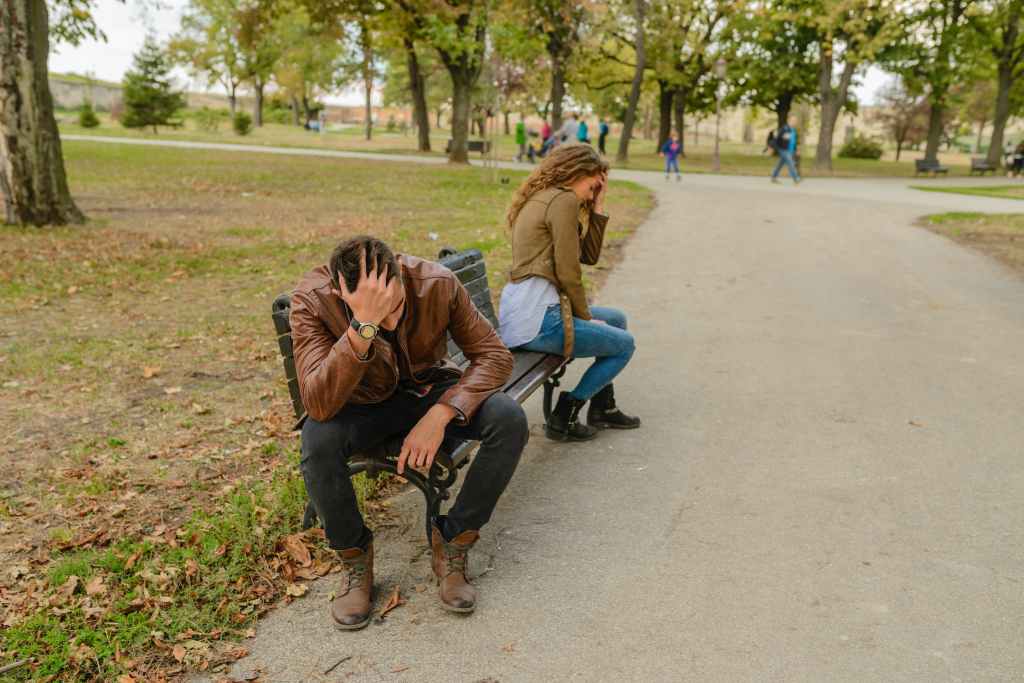
Financial stress is a HELL of a trauma trigger.

Financial stress can be a hell of a trigger for many trauma survivors.

The essence of trauma is worry that we are about to be hurt. Our entire nervous and endocrine systems get hijacked in the service of keeping ourselves away from danger and pain. 

The thing is, access to money in our culture is a HUGE mediator of our chances of being hurt. 

Nothing makes us feel quite as vulnerable as being broke. 

It’s not a crazy fear, either: when we don’t have ready access to money, we often ARE especially vulnerable. 

It’s not just in our heads. 

Many people reading this count on certain resources to live and function. 

Everybody reading this counts on access to safe, accessible, and reasonably comfortable housing. NOT having access to safe, accessible, and comfortable housing is not only a HUGE trauma trigger for many of us— but it often puts us in actual danger. 

Many people reading this literally stay alive because of our pets. NOT having the means to responsibly care for our pets puts us in, without exaggeration, kind of a nightmare scenario. 

Many people reading this count on internet access not only for access to their social supports, but for access to resources that keep them alive and functional. NOT having reliable access to the internet can cut them off from all KINDS of resources they need. 

And, of course, there is one o the most basic considerations when it comes to money: we need to eat. 

It’s true that there are some financial safety nets out there— but almost everybody reading this would probably agree that there aren’t near enough…and accessing those safety nets is often exponentially difficult when we’re already suffering. 

Financial strain is difficult for EVERY human. Money is a problem that EVERY human needs to solve. 

But when our past includes violence; painful, complicated relationships; or other forms of trauma— financial stress can hit a different level entirely. 

Trauma survivors are often ALREADY walking around with a sense of dread or impending doom— and that’s on a day when “nothing” is supposedly “wrong.” 

When you throw in the very real, very pervasive fear of NOT being able to function in the world due to insufficient funds, the anxiety and panic can make it enormously difficult to function at ALL. 

After all, financial problems don’t just go away EVEN IF we get grounded. 

They don’t go away EVEN IF we get our breathing under control. 

They doh’t go away EVEN IF we we can shepherd ourselves out of a flashback. 

To the contrary— it can be enormously depressing to do all the work we need to do to mange our post traumatic symptoms…only to return to a present moment where our very real financial problems are a STILL there, and STILL threatening to ruin our lives. 

What you, as a trauma survivor, need to know about financial stress is that this isn’t just in your head. 

It’s not you being crazy— and it’s not your fault that money is freaking you out this way. 

You also need to know that the skills and tools you’re developing to manage your symptoms WILL help you with all of this. 

They WON’T take away the actual financial stress— but wrangling your emotions and focusing in the present moment WILL help you do the things you might need to do TO manage your financial stress. 

There is no way around the fact that money problems and stress SUCK.

There’s also no way around the fact that we live in a culture that has overwhelmingly conflicted, toxic ideas about what having or “making” money means. 

Thats not your fault, either. 

I’m not a financial advisor, and I’m not particularly great at managing MY money. I have all the problems that people with trauma and ADHD tend to have with money. Money stress has been one of the big drivers in my own suicidal ideation over the years. 

So I don’t have a practical answer for the question of what the hell to do about the money thing. 

What I DO know is this: we are more than our bank balances. 

Whether or not the world appreciates it, we are. 

We HAVE more to live for than being financially solvent. 

And whether we solve the issue of finances or not, we and our pets DESERVE the very best life we’re capable of living, today. 

So reel it in. Deal with today, today. 

As with everything, I’ve found managing financial stress as a trauma survivor is a one day at a time project— often a one MINUTE at a time project. 

Easy does it. 

The most dangerous point in recovery.

There’s a wall that some of us run up against in recovery that can be ENORMOUSLY frustrating. 

We’ve been suffering— often a lot. Often we’ve been self-sabotaging; sometimes we’ve been self-harmful; sometimes we’ve even been suicidal. 

Then we hit a point— sometimes we call it “rock bottom”— where we decide we’re going to start living a different way, no matter how hard it is. 

We start working our recovery. And it’s hard. 

They say we work recovery one day at a time, but the truth is, it’s often one HOUR at a time, especially at first. 

Recovery, especially early recovery, very often sucks. But we work it, hour by hour, day by day…and, eventually, we start to feel and function better. 

It doesn’t happen all at once. It usually happens in teeny, tiny nudges. Teeny, tiny baby steps. But it happens. 

We start to have good— or better, at least— minutes. Then better hours. Then, finally, we have a good day or two. 

Our behavior gets less self-sabotaging, one percent by one percent. We start to glimpse what it might be like to want to live. 

And then, when we’re just starting to feel better, when we’re just starting to function better…something happens. 

The people who might have known how much we were struggling, the people who might have been supporting us, the people who were sympathetic to us…are suddenly less so. 

It’s as if, since we seem to have gotten past the worst of what we were going through, we must be all “better.” 

The support and sympathy dries up— and we’re left feeling very alone. 

Not only are we left feeling very alone…we’re left feeling alone at one of the hardest points in recovery. 

Yes, the very beginning of recovery can be very hard…but I maintain it’s even harder a few weeks or months in, after we’ve just started to make progress. 

At the beginning we’re often driven by desperation…but desperation will only fuel us for so long. 

We find ourselves at this point, still pretty early in our recovery, where the name of the game is consistency, continuing to chip away at our emotional and behavioral struggles…but without the support that might have been there when we were desperate. 

It can feel so lonely. 

I maintain this is one of the most dangerous points in recovery. 

It’s a point at which we have to decide that we’re serious about recovery for OUR reasons— not just because someone else wanted us to do this. 

It’s a point where we come face to face with the fact that recovery is often NOT dramatic or evocative— it’s often boring and repetitive. 

It’s a point where we have to accept that, even though being in recovery might be better than letting our trauma or addiction run roughshod over us, we’re STILL going to have days that hurt…and we might have to face at least some of those days without the support we need. 

I wish everybody around us would understand how essential it is to check in on us, to be supportive and expressive and compassionate, when we’re OUT of crisis…not just when we’re falling apart. 

It’s awful to think that we have to keep being the “squeaky wheel” in order to keep getting the support we need. 

It’s awful to think that we have to be in crisis to get the sympathy and compassion that part of us so desperately craves. 

This point in recovery can feel VERY lonely…but it is CRUCIAL. 

It’s crucial for us to stay on track. 

It’s crucial for us to not give up or relapse. 

It’s crucial for us to remember who we are, what we’re all about, and why we’re doing this. 

I know. I wish this whole thing was easier. I wish the people around us could read our minds and know that the point in recovery where we start feeling and functioning a little bit better can be one of the precarious points of all. 

For what it’s worth: I get it. 

Stay on track. 

As the saying goes, we didn’t come this far just to come this far. 

You bet: self-compassion and self-forgiveness ARE risky.

In trauma recovery you’re going to hear, over and over again, that we should give ourselves a break. 

You’re going to hear that trauma survivors are WAY too harsh on ourselves— that we tend to assume EVERYTHING is our fault, and EVERYTHING is our responsibility. 

If you’re a trauma survivor, you can probably identify with this. 

The problem, especially in complex trauma or neglect, is that growing up we didn’t get the attention and emotional safety we needed to accurately sort out what is and isn’t our fault. 

Sometimes we were explicitly blamed for things that couldn’t POSSIBLY have been our fault— but we weren’t taught how to realistically stand up for ourselves or set boundaries with the people who were telling us these things. 

(Let’s face it, those people were often parents or other authority figures— how COULD we have POSSIBLY been expected to stand up to them or set boundaries with them?)

So we just took it. We took on what they were telling us, implicitly or explicitly. 

We made “it’s my fault, even if I can’t quite explain why” part of our self-concept. 

Fast forward to now, and it makes a lot of sense why reappraising how much responsibility and blame we’ve assumed in our lifetimes has impacted our view of ourselves and the world, let alone our everyday functioning. 

We’re told we need to lighten up. Give ourselves a break. Forgive ourselves. 

Yes— that all sounds very good and self-compassionate and appropriate for realistic trauma recovery. 

So why do so many survivors struggle with it? 

Why is there even a part of MY brain that struggles with it, even as I type this? 

There will DEFINITELY be a part of you that is afraid that if you give yourself a break, as all these well-meaning people out there have advised you to do, that you’ll be in trouble. 

Our brain tells us we’ll miss something if we lighten up. We’ll make a mistake. 

Maybe our brain is telling us that we won’t be driven toward “excellence” if we back off of ourselves, if we DON’T hold ourselves to ruthless, rigid standards. 

Giving ourselves a break feels risky, in other words. 

It feels like an excuse— or a trap. 

As trauma survivors, we’re often looking for the catch. We’re waiting for the other shoe to drop. 

Yes, yes, forgiving ourselves might SOUND appropriate and helpful, hypothetically…but if we truly forgive ourselves, treat ourselves with compassion and realism instead of holding ourselves to high, rigid, often arbitrary standards…what will keep us from slacking off? 

What if we back off ourselves, and everything goes to sh*t? 

I’ll spoil the suspense: everything won’t go to sh*t if we give ourselves a break. And if it does, I assure you, it was going to go to sh*t anyway, ruthless standards or no. 

Your brain is right: forgiving ourselves, behaving toward ourselves with compassion and flexility, IS a risk. 

But if we’re serious about trauma recovery, it is a risk worth taking. 

We MIGHT risk not performing as “well” if we back off of ourselves— but we also MIGHT risk performing BETTER. 

Wouldn’t THAT blow your mind? 

The idea that we might actually perform BETTER if we were compassionate and flexible instead of rigid and ruthless with ourselves presents its own conundrum: we may not want to know we’ve been so wrong about that specific assumption (that high, rigid, ruthless standard will lead to “excellence”) for so long. 

Yeah. It’s a risk. It’s all a risk. 

But we’re not going to realistically recover without taking some risks. 

And, another spoiler: in trauma recovery we are DEFINITELY going to learn that some of the beliefs and attitudes we’ve clung to for years haven’t been serving us…and that MIGHT not feel great. 

We’re going to have to pay that price if we want to realistically, sustainably recover from trauma. 

May I offer one more spoiler, though? 

That price— the real world price of trauma recovery— is worth it. 

It is SO worth it. 

“Strength” and “resilience” have limits.

You’re going to get a lot of people telling you how “strong” and “resilient” you are. 

It’s true– but it’s also not especially news, or especially helpful. to a lot of trauma survivors to hear it. 

People are often trying to be nice when they say it. They’re trying to reassure us. They’re trying to compliment us. They’re trying to affirm us. 

But the thing many survivors hear when someone remarks upon their “strength” or “resilience” is that the “hard” part of their trauma experience must be over. 

If only that were true— or, at least, if only that were the whole story. 

The truth is, painful events don’t just create pain when they happen. 

They very often create pain for years, even decades, afterward, in how they are encoded in our memory and in the very physical cells of our body. 

There are some people who truly don’t understand why trauma survivors continue to suffer— after all, they made it through the thing, right? They’re strong, they’re resilient, and the trauma is behind them…so all that’s left for them to do is heal, right? 

What many don’t understand is the pain of living with trauma reactions, trauma memories, and trauma-fueled thoughts and beliefs is a different kind of pain from the original trauma…but it’s no less real and no less hurtful. 

Many people reading this have had big chunks of their lives defined by post traumatic symptoms and struggles. 

And they’re often reluctant to talk about how hard it’s been to live a life AFTER what happened to them— because there’s always someone there to point out that they are “strong” and “resilient” and the trauma is “in the past.” 

Trauma recovery asks us do certain things every day. 

It asks us to view the world through a certain lens— the lens of recovery habits, rituals, and precautions. 

Trauma recovery asks us to wake up and make the choice to BE in recovery every day— which is different from just waiting for our nervous and endocrine systems to “heal” from what they went through. 

Most everybody reading this knows that we can’t count on our “strength” or “resilience” to heal us. 

We may very well be strong and resilient— but we are also wounded. 

And for as incredible as it undeniably is that we survived, that we were as resilient as we were…it’s also the case that waking up every day and choosing recovery now is incredibly hard for a lot of us. 

No matter how “strong” we are. No matter how “resilient” we were. 

When a project is as complex and exhausting as trauma recovery, even “strong” people are going to have moments when we don’t FEEL particularly strong. 

We’re going to have moments when we don’t FEEL particularly resilient. 

We’re going to have moments when we feel tattered. Beaten down. Defeated. Empty. 

In those moments, people calling us “strong” and “resilient” may just make us feel worse. 

Easy does it. This is all a normal part of recovery. 

I assume everyone who walks through my door is strong and resilient. They wouldn’t be alive, let alone seeking my help, if they weren’t. 

I also assume that they’re seeking my help— they’re looking for a way to frame and buy into trauma recovery— because that strength and resilience that kept them alive for so long is running on fumes. 

No shame. We have ALL been there. I’ve been there. 

There is no doubt in MY mind about your strength or resilience. 

But there’s also no doubt in my mind that you, reading this right here, right now, need more than that to create a life worthy living. 

I am both proud of you— and realistic about the fact that you need more than “strength” and “resilience” to take the next step. 

Trauma recovery means living in multiple worlds at once.

If you, like me, are a survivor of abuse, you probably very much want to be seen and heard…except when you don’t. 

That is, except when the very IDEA of being seen and heard doesn’t scare the bejeezus out of you. 

You may want to be touched, held, physically soothed…except when you don’t. 

That is, except when touching, holding, and physical soothing or stimulation doesn’t trigger the bejeezus out of you. 

That’s what being an abuse survivor often is: living in two worlds. 

In one “mode,” we very much want to draw people close. 

We very much want to have connections. To listen and share. To give and receive. To be a meaningful part of someone else’s experience— maybe a lot of peoples’ experiences. 

In the other “mode,” though, we very much want to be left the hell alone. 

Physical or emotional intimacy actually scares us. We want to prove to ourselves that we don’t need anybody. To get as far away from the hurt we’ve experienced in past relationships as we can. 

Both “modes” are real. 

Both represent something we need from our recovery. Something we need in order to heal. 

Trauma does a lot of things to our habits of mind, but one of the most frustrating is its tendency to cram us into modes of black and white thinking. 

Many people reading this know what I’m talking about. We think in all or nothing terms. 

It very often goes back to a safety thing: to stay safe, we think we need to avoid ambiguity or nuance. We need to be crystal clear about what a situation is, how we feel about it, what to do about it. 

The problem with black and white thinking being, of course, that existing in the world frequently requires nuance. 

Certain things ARE black and white— but a lot of things aren’t. Especially things about ourselves, what we want, and what we need. 

In order to come to a realistic sense of who we are and what we need, we’re going to have to risk thinking in shades of grey sometimes— and that includes thinking in nuanced terms about whether or how visible we want to be, or whether or how connected to anyone we want to be. 

If we try to reduce it all to a black and white “I want to be seen and heard” or “I want to be invisible;” or “I want to be touched and held” or “I want everyone to stay a minimum of five miles away at all times,” we’re going to have problems navigating the real world and real relationships. 

The reality is, both can be true. 

The reality is, every situation and every relationship kind of has to be navigated on its own terms. 

We can’t lay down black and white rules for whether we’re going to let ourselves be seen and heard, or whether we’re going to let ourselves get close to anyone, physically or otherwise— because different relationships are, well, different. 

If we try to cram our needs into black and white, all or nothing “rules” as a response to our post traumatic anxiety, we’re going to necessarily be denying and disowning huge aspects of who we are and what we require to create a life worth living. 

Not to mention: black and white thinking actually doesn’t work so well, if the goal is reeling in our anxiety. 

(Black and white thinking actually tends to exacerbate our anxiety, in that it reinforces avoidance of the thing we’ve rejected, and often results in us getting preoccupied with the unrealistic all or nothing rules” we’ve tried to lay down.) 

That’s trauma recovery: learning to live in multiple worlds, learning to operate in multiple modes, learning to navigate the layers of who we are, what we need, and what is safe. 

Yeah. It can be intimidating. 

Our best shot at realistically figuring it out is to stay grounded, to be as clear as we can be about what we want out of situations and relationships, what’s appropriate and acceptable vs. inappropriate and unacceptable in situations or relationships, and frequently reminding ourselves what the life we’re trying to create looks like. 

Easy does it. We manage this recovery task just like every recovery task: one day at a time. 

You didn’t “fail” to “earn” their love.

You didn’t “fail” to “earn” the love or attention you needed when you were younger. 

You didn’t “fail,” because love and attention from our caregivers isn’t something we should have to “earn” in the first place. 

One of the most exhausting things about childhood abuse and neglect is that it leaves us with this utterly transactional model of how relationships work. 

We grow up believing that the only reason we didn’t get what we needed or wanted from our caregivers was that we didn’t “earn” it. 

We weren’t entertaining enough. 

We weren’t attractive enough. 

We weren’t smart enough. 

We just weren’t…enough. 

The thing is, love and attention shouldn’t be dependent upon how entertaining, attractive, or smart a kid is. 

We should’t have to “perform” to get our basic needs met— especially in childhood. 

When that’s our experience growing up, we carry those ideas over into our adult relationships. 

Sometimes we come out of experiences of childhood abuse or neglect determined to “earn” the approval and affection of everyone around us— no matter what it costs us. 

Other times we come out of experiences of childhood abuse or neglect convinced that we CAN’T “earn” the approval or affection of anyone— no matter what we do. 

Many survivors of childhood abuse and neglect vacillate between these extremes— feeling that they HAVE to “earn” love on the one hand…but feeling that nothing they ever do, or can do, could POSSIBLY be good enough to “earn” anybody’s love. 

It’s not our fault when this is our working model of the world and relationships. 

You didn’t choose your childhood experiences. You didn’t choose your caretakers. 

Our conditioning is our conditioning. Even the choices we DO make now, as adults, are filtered through the beliefs and attitudes that were programmed into us way back when. 

Of all the BS— Belief Systems— we tend to carry out of childhood experiences of abuse and neglect, one of the hardest to shake is “I need to earn love.” 

The belief that we have to “perform” to get our basic needs met— to even DESERVE to get our basic needs met— can poison everything from relationships to our job performance. 

While many practical things in life may be tied to our ability to placate or entertain other people,  our basic worth as human beings is NOT. 

We DESERVE compassion and respect, whether or not we happen to be entertaining, attractive, or otherwise valuable to somebody else in any given moment. 

We DESERVE to take up space, to breathe oxygen, to be seen and heard, whether or not we happen to fulfill somebody’s needs or expectations at a particular moment. 

A big part of recovery is teaching ourselves that our worth is not tied to anyone else’s approval. 

I say we have to “teach ourselves” this, because if we grew up abused or neglected, we damn sure weren’t taught that by our caretakers. 

It’s not the case that anybody reading this will EVER have all of their needs instantaneously or perfectly met— and, in my experience, that is virtually no trauma survivor’s expectation or even their desire. 

But it IS the case that we DON’T have to “earn” the right to take up space. 

We DON’T have to “earn” the right to consume resources necessary for our survival. 

And we DON’T have to live our lives apologizing for not being what the world— including our caregivers growing up— wants, needs, or finds interesting or attractive all the time. 

You have worth even on days when you can’t do anything for anybody. 

You have value even on days when you’re nobody’s idea of sexy. 

You have the right to be treated with compassion and respect even if the people who SHOULD have treated you with compassion and respect once upon a time, didn’t. 

You need to know that wasn’t about you. That was about them. 

You are every bit deserving of recovery— every bit deserving of living a life you like and choose- as anyone who has ever existed on the planet. 

Yeah, you. 

Maybe there’s nothing to forgive yourself for.

You don’t need “forgiveness” for having experienced or survived trauma. 

But— sometimes it’s helpful to use that language with ourselves, because we FEEL like we need forgiveness. 


We might “know” that we weren’t fundamentally “bad” when we were growing up— but we might FEEL like we were bad because we failed to “earn” the love and protection we very much needed. 

When kids don’t get what we need growing up, we tend to blame ourselves. 

When we’re kids, we kind of assume everything’s about us. 

The very process of growing up itself is kind of about learning, often the hard way, that the world DOESN’T revolve around us— that NOT everything is either our fault or our responsibility- and, in the best of all possible worlds, we get the emotional support and attention we need to deal with that fact. 

But what happens when we don’t get that emotional support or attention? 


What happens if, instead of emotional support and attention, we’re ignored or neglected— or physically, verbally,  or otherwise abused? 

Not only do we then have the aftereffects of trauma to deal with— but we never quite learn that lesson that not everything is about us. 

We continue thinking that everything IS about us— including the pain we’ve experienced. 

Unless something big changes, we can often carry that believe into adult life. 

Many survivors reading this know what it’s like to feel that EVERYTHING is our fault— and EVERYTHING is our responsibility. 

Letting ourselves off the hook not only feels wrong— it feels dangerous. 

Being kind and fair to ourselves feels like a trap. 

It’s not that we truly think we’re the center of the universe— most often, in fact, trauma survivors struggle to believe we even exist outside of the perceptions and expectations of other people. 

It’s that we’ve been programmed to believe that if we— or even someone around us (or sometimes even someone we don’t know!) is experiencing pain or inconvenience, it’s probably our fault. 

We’ve also been programmed to believe that, even if we can’t quite identify how or why it’s our fault that something bad is happening or being felt, it’s our responsibility to do something about it…which then runs headlong into our difficulty believing that we truly CAN do ANYTHING about ANYTHING. 

The belief system that trauma stamps on our nervous system is such a scam. 

It can be hard to, in recovery, wrap our mind around the idea that we’re not at fault for or responsible for everything bad that has ever happened in our lives (or in the universe throughout time). 

We can take realistic responsibility for situations to which we contributed. 

We can take action to change our beliefs, feelings, and behaviors. This isn’t about denying and disowning responsibility that IS ours. 

This is about getting real about the fact that we are not fundamentally “bad” because we failed to make everything okay growing up. 

You don’t need forgiveness for that because there’s nothing to forgive. Really. 

But— if the kid inside your head and heart needs to hear it— tell them you forgive them. 

You forgive them for not living up to standards no kid, anywhere, at any time, should have been asked to live up to. 

You forgive them for not being an adult, with an adult’s intellect, perspective, and behavioral options, when you were a kid. 

You can forgive the kid you once were for being the kid you once were. 

All they ever needed to be WAS that kid. 

All you ever needed to be was you. Not the savior or scapegoat of your family.

You weren’t the reason the abuse happened. Not the way you looked; not anything you did. 

If you choose to use the language of self-forgiveness in your recovery, be sure to add to caveat that such forgiveness is your birthright— because there is truly nothing to forgive. 

“Acceptance” is such a lonely word.

Accepting we are where we are right now is hard. 

We don’t want to accept it. 

The word “acceptance” it feels like we’re saying something is okay, that it “should” exist, that it’s “right.” 

That’s not how I think of “acceptance.” 

If we’re going to do anything about a situation we hate, a situation that causes us pain, we first need to accept that the situation is as it is. 


That it is as painful as it is. 

That it is exactly as bad, exactly as f*cked up, as it is. 

There’s a reason why Step One in the Twelve Step model of addiction recovery is all about acceptance— because without accepting a situation is as bad as it is, we are powerless to meaningfully do anything about it. 

You can’t actually change something if you deny it’s even real. 

Meaningful trauma recovery begins with accepting that we have been traumatized. 

Sometimes it means accepting we were abused— sometimes by someone who should have taken care of us, kept us safe, done the OPPOSITE of abuse us. 

Sometimes it means accepting we were neglected— sometimes by the very people who SHOULD have paid attention to our needs, reinforced our personhood, helped us develop into people who could handle life. 

Sometimes it means accepting we were abused in a way OTHER than physically— which, believe it or not, can be a much tougher task than it sounds like. 

After all, many of us can wrap our heads around physical abuse as “abuse.” Physical abuse often leaves marks or scars. Physical abuse can be qualified by how often and how hard we were hit or otherwise physically attacked. 

Non-physical abuse, such as emotional or verbal abuse, can be much harder to accept. 

We often don’t want to call it abuse. 

We often don’t want to concede that it hurt us at all— because, after all, we weren’t hit, right? 

The truth is that emotional or verbal abuse can f*ck us up in even more complex ways than physical abuse— and if we’re going to meaningfully recover from years of such abuse, we have to first accept that it happened, and it exacted the toll that it did. 

Part of us might think that if we refuse to accept our pain is what it is, that it resulted from what it resulted from, then we might not have to deal with its reality now. 

We might be able to just keep brushing it off. 

We might be able to get away with pretending it didn’t hurt as much as it did, and it didn’t wound us like it did. 

The thing is: non-acceptance of something’s impact doesn’t negate that impact. 

It just hamstrings our ability to do anything about it. 

Non-acceptance— that is, denial— that a situation is EXACTLY as bad as it is, in EXACTLY the ways it is, doesn’t make the situation NOT bad. 

It just means we can’t take action to make it better. 

Nobody LIKES embracing the “powerlessness” that is encapsulated by Step One of the Twelve Steps. 

In fact, there are PLENTY of people who walk out of Twelve Step meetings when they hear Step one recited. We HATE thinking of ourselves as powerless. 

But we are. Powerless, that is. In a way, anyway. 

We are powerless to change the fact that the past has led us here. 

We are powerless to deny or disown the exact impact everything in our life has had on us, up to this point. 

We are powerless to ever have a better past. 

We never WILL have a better past. 

But in accepting our powerlessness to change reality in this moment, we paradoxically gain the power to change reality from this point forward. 

If we’re going to proactively write the rest of our story, we need to accept that the story has been EXACTLY what it’s been so far. 

We’re not starting from scratch— even if, in a way, we are. 

Change starts with acceptance. 

Not liking. Not approving of. Not giving up on changing. 

Accepting what is— right now. 

Trauma, “victim mindset,” and “personal responsibility.”

Let’s talk a little about trauma and “personal responsibility.” 

Sometimes I’ll see someone on social media post a hot take about how trauma survivors— or anyone who suffers, really— needs to “take responsibility” for their lives. 

I very often see a specific, moderately well-known therapist post about how indulging trauma survivors’ narratives can be problematic, in that it reinforces the idea that others are responsible for our suffering. 

Another moderately well-known therapist is pretty famous on social media for her posts about how “coddling” is destructive to adults, and more often than not peoples’ REAL problem is they need to take “responsibility” for their lives. 

(If anybody reading recognizes the social media therapists I’m referring to and feels I’m oversimplifying or mischaracterizing their respective worldviews, please let me know— I’m presenting the most straightforward recap of their pet themes as I can.)

It’s a well-worn cultural trope, “personal responsibility.” 

We’re strongly encouraged not to have a “victim mindset.” 

We’re encouraged to “take responsibility” for our happiness and stability— and this often seems to include denying and ignoring ways we were hurt or victimized. 

I’m always struck by how many vocal advocates of “personal responsibility,” in their enthusiasm to reject the “victim mindset,” seem to view all of this as a black and white choice. 

They seem to think that you can acknowledge your trauma— the ways you were, by definition, a victim— OR you can “take responsibility” for how you fee and function…but you can’t do both. 

In my experience as a trauma therapist, that’s just now how trauma recovery unfolds in the real world. 

In the real world, we ONLY recover WHEN we take responsibility for our happiness and stability— and part of taking REALISTIC responsibility means acknowledging our pain. 

It is not reality to pretend we are responsible for our post traumatic pain. 

It is not reality to “accept responsibility” for injuries that resulted from other peoples’ decisions and behavior. 

It is not reality to deny the fact that we are in pain, and there are layers to our pain that we do not control and can not reliably affect. 

It IS reality to see what we see and know what we know about our past and our present functioning— that there were aspects of our past that were painful and terrifying, and there are aspects of our current functioning that aren’t great as a result. 

None of that is “victim mindset.” It is reality mindset. 

When we acknowledge how hurt we are, and we get clear about what caused that hurt— including the truth that we didn’t and don’t control every aspect of every situation that resulted in pain or injury to us— that’s us taking REAL “personal responsibility.” 

Nobody gets into trauma recovery to blame someone else for their pain. 

Very often, the reason we find ourselves NEEDING to be in recovery is because we’ve blamed ourselves for so much for so long…and that strategy hasn’t worked out for us. 

It doesn’t work because it’s not reality. 

Many addicts struggle with Step One of the Twelve Steps because it is the step that speaks to the powerlessness of addiction— it asks us to get real about the fact that addiction is kicking our ass, and we can’t conquer it on our own. 

Trauma survivors experience that same struggle as we try to come to terms with the fact that our conditioning has lied to us— we are NOT responsible for everything that happened to us or every aspect of how we feel and function. 

It’s hard. Nobody reading this loves powerlessness. 

Nobody reading this loves denial, either— but we can get kind of “addicted” to it in that the alternative seems so overwhelming we don’t want to consider it. 

Survivors in trauma recovery know more about real world “personal responsibility” than anyone throwing that word around in a black and white way to score social media points. 

We know the REAL cost of TRUE “personal responsibility.” 

We know that if we’re GOING to take true responsibility for how we feel and function, sometimes we have to admit how powerless we were— or are.

It’s not easy. It very often sucks. 

But don’t let anyone get in your head about “taking responsibility” when their only conception of that is “taking unrealistic responsibility for things you didn’t control and could’t have changed.” 

Recovering who we really are.

When we’re busy living life in survival mode, we don’t have the time or the bandwidth to discover or create who we really are. 

This is one of the reasons why, when we commit to recovery from trauma, addiction, or depression, we often have no idea what the hell to do next. 

We don’t know who WE are. 

Ideally, growing up should be a time of experimenting and exploring. 

We figure out who we really are. 

What we like. What we need. Who we want in our lives. 

But a lot of us didn’t have the luxury of exploring and experimenting, did we? 

A lot of us had to throw a LOT of energy toward just surviving growing up. 

Either surviving dangerous physical environment, such as an abusive or neglectful one, or a psychologically dangerous environment, such as one shot through which verbal or emotional abuse. 

How on earth are we supposed to figure out who the hell WE are, when we’re just trying to keep our head above water? 

Fast forward to now— you’ve decided that you no longer want trauma, addiction, or depressions to define your moods or your choices. 

That’s an extraordinary step and decision to make— but it begs the question of what do we do instead? 

If our entire lives have been more or less a battle to just breathe and exist, either physically or psychologically, what on earth do we even do with our time, focus, and energy when we’ve definitively decided that our lives AREN’T going to be defined by those battles? 

Weirdly, when we get into recovery from trauma, addiction, or depression, we often feel…young. 

Lost. Inexperienced. 

It might be that this moment— the moment we committed to recovery, to continuing to live and living in a different way— is the first moment we’ve ever really had to ask ourselves what we really want. 

Who we really are. 

What really DOES deserve our attention, if NOT the battle against our emotional and behavioral struggles. 

It can be overwhelming. 

indeed, the fact that the the “brand newness” of recovery IS kind of overwhelming is why many people go back to old patterns. 

At least we knew where we stood with those old patterns. 

At least we didn’t have to make so many decisions about what to do with our day and our focus— those decisions were made for us by the fact that trauma, addiction, and depression were so often trying to make us miserable or kill us. 

To really succeed at recovery, we need to be prepared for it to feel unfamiliar. Awkward. Intimidating. 

We need to be prepared to look at the world with fresh eyes. 

We need to forgive ourselves for NOT having explored and experimented when we didn’t have the emotional bandwidth or oxygen to do so growing up. 

And we need to embrace the opportunity to discover, rediscover, or maybe even create for the first time our true selves. 

Our authentic self. 

The “you” you were always meant to be. 

I’ve said it before: part of what we “recover” in recovery is our authentic selves. 

Your authentic self has been waiting for you to remember them.