
Five minutes in the morning; five minutes at night. That’s all I want.

photo-1447015237013-0e80b2786ddc

Remember that the time we spend doing anything accumulates. It adds up— and pretty quickly, at that. 

I know, this sounds obvious. But a lot of times we forget it when we’re trying to change our habits. 

Something I very often remind my patients of, is the fact that if we spend five minutes in the morning and five minutes in the evening doing something— ten minutes a day, total— then, at the end of a week, we’ll have spent OVER AN HOUR doing that thing. 

Think about that. 

Five minutes of meditation in the morning, plus five minutes of meditation in the evening, equals OVER AN HOUR of meditation every single week. 

That’s the kind of time investment that can realistically change and train your brain. 

Now think about the fact that if you spend TEN minutes in meditation in the morning, and TEN minutes in the evening, you’ll have devoted OVER TWO HOURS every week to your meditation discipline. 

That’s some serious, brain-transforming time. No one can argue that anything you spend literally hours doing every week WON’T change your brain. 
But often times we don’t do the five or ten minutes in the morning, and five or ten minutes in the evening, because we become convinced that it doesn’t mater. 

After all, five minutes is so little time, how can it possibly change our brains? 

Through the process of accumulation, that’s how. It’s like anything that you do a little bit at a time— anything at which you chip, chip, chip away at, will eventually yield. 

That five minutes in the morning and five minutes in the evening doesn’t have to be meditation. It can be journaling; it can be goal setting and goal reviewing; it can be writing and repeating self-programming statements. It could even be something as simple as stretching or walking or reading or praying.

Even small chunks of time add up. Any big chunk of time you’ve ever devoted to anything is really just an accumulation of little chunks of time you spent doing that thing. 

Any hour of time you’ve spent doing anything is just a collection of sixty minutes doing that thing. 

Any minute you’ve ever spent doing anything is just an accumulation of sixty second periods of time doing that thing. 

Any period of sixty seconds is an accumulation of twelve five-second increments. That’s all. 

So often we get it in our heads that if we’re going to change our lives, we need to devote hours and hours to the project— and it exhausts us. It strikes us as a marathon that we are just not in any shape to run. It discourages us from even starting, because we don’t have confidence in our ability to finish the race. 

Do not worry about finishing the race. 

Just do five minutes of whatever you’re trying to get in the habit of doing. Morning and night. 

When you start doing this, your brain is probably going to push back at you. Your brain has all sorts of built in mechanisms that will try to thwart your ability and inclination to make dramatic changes in your life. 

Given its druthers, your brain would always prefer to maintain the status quo— there’s a reason why the status quo is, in fact, the status quo. It’s because your brain has determined the status quo to be the path of least resistance at the moment, and it would very much like to continue following the path of least resistance, thank you very much. 

Don’t get into an argument with your brain when it pushes back at you. Just tell your brain, look, don’t freak out, we’re just gong to do five minutes of this thing right now. You can let us do five minutes, can’t you? 

This is how we make realistic, long term change in our lives. 

Not by taking on ambitious projects that overwhelm and discourage and intimidate us. 

We do it by slowly redirecting our thoughts and behavior— consistently over time. 

Commit to trying this for a month. Five minutes in the morning, five minutes in the evening. 

Make it ten minutes if that gets too easy. 

Before you know it, months will have passed, and you will have invested HOURS of training time into your new habit regimen— and none of it will have been more difficult than patiently doing a thing five minutes at a time. 
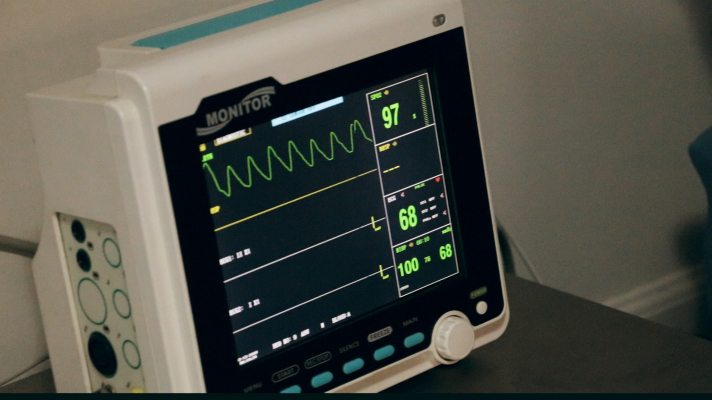
Don’t put mental health on the “back burner,” even in a medical crisis.

photo-1513224502586-d1e602410265

If you happen to be working your way through a physical health crisis or struggle, please, please, please don’t neglect your mental health and emotional well being as part of the process. 

I know, I know. Battling a chronic or acute illness is a project that consumes an enormous amount of focus and energy, both physical and emotional. I wouldn’t suggest that when you’re waging a war against a disease or debilitating condition is the right time to finally buckle down and process those trauma memories or lick that depression problem. 

But the fact really is that when we are engaged in major efforts to heal and improve our physical health, that’s often when we most need to cultivate and support our own mental health. 

Why? Because those battles take their toll on our minds and hearts.

Managing our emotional lives requires that we engage specific tools and skills. It requires us to cultivate effective stress management strategies. It requires us to get good at monitoring our thoughts for distorted thoughts that will drag us down into depression or stoke our anxiety. 

It’s tempting, when we’re battling a physical ailment, to put those tools and skills that we might otherwise use to manage our emotional lives on the back burner. I had one person express to me that he felt he needed all of the energy and focus he had right then to fight his physical disease— so he was pressing “pause” on trying to manage his emotional life. 

Trust me when I tell you, that pushing “pause” on managing your emotional life will not free up the energy you think it will. 

In fact, in pushing “pause” on managing your emotional life, you’ll probably end up with even LESS energy and focus in order to fight your disease. 

The main reason for this is that depression, anxiety, PTSD symptoms, and addictive patterns create energy vortexes of their own. If left unchecked, they really will suck all the available energy and focus you have right on out of you. 

This is one of the main reasons why people who are depressed so often describe feeling exhausted. And anyone who has to cope with PTSD flashbacks or panic attacks can tell you that dealing with these symptoms is basically a full time job in itself. 

When our physical health is in danger, we can lose sight of how dramatic the connection is between how we feel and function physically, and how we think and what we feel emotionally. 

We can become so focused on the facts and hypotheses and tests and treatments involved in our somatic medical care, that we forget there is a whole universe inside our minds and hearts that needs to be tended to…and we are, by definition, the only ones who can really tend to them. 

The good news is, once you get into the groove of identifying and using effective tools, skills, and strategies to manage your moods and behavior, you don’t have to keep relearning them. As you continue using them, they become second nature. 

The better news is that they work. 

The even better news is that if you are managing your emotions, your thinking, and your behavior, your physical health is likely to improve as a result. 

Any medical doctor will tell you that bodies under stress have a hard time healing. 

Any medical doctor will tell you that patients who are depressed have a harder time following through with self-directed treatment options and a more difficult time objectively weighing appropriate treatment decisions with which they are faced. 

Any medical doctor will tell you that chronic anxiety is absolutely destructive to the body’s immune system, making it harder for medications and treatments to do their work. 

Not only is it important to manage your thinking, your emotions, and your behavior during times of intense medical treatment, but it’s also vital you keep using your tools and skills to manage your emotions in the aftermath of even successful medical treatment. 

There is a subset of people who come through successful treatment, and feel absolutely crazy because even though the treatment worked, they are suddenly (or still0 gobsmacked with anxiety and depression. 

For what it’s worth: from a psychological point of view, this isn’t that weird. Medical and health crises can be overwhelmingly stressful. It makes a lot of sense that even after a successful outcome, the cognitive and emotional aftereffects are still there to be dealt with— especially if they’ve been put on the “back burner” during treatment itself. 

Medical and health crises are high stress, high impact, potentially life-altering events. 

In order to cope with them effectively, you really need to keep developing and using your psychoemotional toolbox. 

As it turns out, putting your mental health on the “back burner” during a health crisis isn’t actually an option. 

“Positive”…compared to what?

photo-1546864974-efd4e100ecc3

I completely understand why some people, especially on the Internet, feel pressured to be “positive” in what they post and express. 

It’s absolutely true that many online communities put pressure on the people who engage with them to not post or express things that run counter to that community’s norms and standards. And, in online spaces devoted to self-improvement and personal development, those norms and standards sometimes amount to an edict to stay positive— or else be accused of being a “troll” who spews negativity and isn’t welcome in that space. 

I’ve even seen people express that “positivity culture,” especially online, can lead some people to feel broken or alienated when their reality doesn’t effortlessly match the “positive” expectations of their online community. 

I’ll never advise anyone to be “positive” at the expense of being authentic. Our reality is what it is. Some days we feel positive and optimistic; some days not so much. 

I don’t think it’s helpful for any community to pressure anyone to be positive just for the sake of being positive. 

That said: I also think that when we talk about the value of being “positive,” we need to keep a few things in perspective. First among these things is: “…compared to what?” 

It’s very easy, both on the Internet and in recovery-minded communities generally, to be instinctively negative. 

In communities where the common thread among people is the desire to improve their lives and relieve their pain, there is almost by definition a baseline of discomfort, distress, or struggle. One of the very reasons people seek out spaces and Internet pages devoted to healing and recovery is because they are probably in pain to begin with. 

Furthermore, the Internet makes expressing negativity— sometimes colorfully and at length— much easier and more socially acceptable than “real life” often does. If you take a look at the comments section of many web pages and videos, you can almost always see examples of this. 

Even though “positivity culture” definitely exists on the Internet, I still believe that “reflexive negativity” is the default mode of online communication. 

If we’re talking about whether it’s more useful to err on the side of positivity, as opposed to easy, instinctive negativity…I maintain that yes, it’s preferable to be positive. 

I don’t just mean it’s preferable to be positive because it’s easier to tolerate. There is a well-validated body of psychological research that discusses, at length, the benefits of an optimistic mindset when one is trying to do something difficult. 

Dr. Martin Seligman has made a whole career out of expanding the research on “learned optimism,” and therapists such as Bill O’Hanlon have emphatically shown the benefit of focusing on solutions in therapy as opposed to fixating on problems. 

It’s my own experience, as a therapist, that whether we habitually err on the side of expressing positive, optimistic, or hopeful content online, or whether we err on the side of expressing negative, pessimistic, or hopeless content— whatever we express will tend to be reinforced and work its way into our thoughts, attitudes, and beliefs. 

All of which is to say: I don’t think anyone should be pressured to be positive or punished for being negative. Authenticity is more important than either positivity or negativity, in the long run. 

But if your goal is to change how you think, feel, and behave, then I think it’s an enormously practical skill to develop to nurture and reinforce the positive aspects of your experience and the gains in your recovery— and one of the most effective ways to do that is to make those the focus of your internet posting. 

One of my least favorite things that happens online is when someone simply cannot come up with a positive or constructive comment on anything that is posted. 

Being sarcastic or dismissive when someone posts content is very easy. It takes virtually no imagination or constructive thought. 

And it’s very tempting, especially when we’re feeling negative or discouraged, to try to “share the wealth” of our negative mood by tearing someone down in online posts or comments. 

What I want to strongly communicate to everybody reading this blog is: what you talk about, write about, and otherwise focus on, WILL expand. 

The more thought and emotional energy you focus on being either positive OR negative, the more those thoughts, feelings, and attitudes will become practiced…and easier to reactivate in the brain. 

The more often you feel and express a similar thing— whether it is a thought, a belief, an idea, or an attitude— it becomes much, much easier to think, believe, and otherwise experience that thing in the future. 

What do you want to reinforce? 

What do you want to feel going forward? 

How do you want your online presence to make other people feel? 

You don’t have to like to yourself if you’re not feeling positive— but you don’t have to reinforce and expand negativity you’re feeling, either. 

Mindfulness: useful…except when it’s not.

photo-1541795021-f8b60a1a456d

Therapists lately have been all about “mindfulness.” 

Dialectical Behavior Therapy— one of the few successful treatment modalities for helping people with Borderline Personality Disorder lessen their self-harm behaviors— has made “mindfulness” a popular buzzword within the mental health community in the last twenty years. 

Look at the self-help section of any book store, and you’ll see “mindfulness” prescriptions for most maladies you can think of. There’s mindful eating; mindful anxiety reduction; mindfulness for those suffering depression. 

Mindfulness has become particularly fashionable in the trauma treatment community, possibly because it is almost the literal antithesis to dissociation. 

All “mindfulness” implies, in itself, is allowing yourself to be present in this very moment, without judgment, just experiencing what you’re experiencing. The upshot of mindfulness is supposed to be that, if you remove regret about the past or anxiety about the future, and just focus on what’s happening in the here and now, you can remove much of the extra emotional baggage that makes living so difficult, and bring you resourcefulness to doing whatever is on our plate, right here, right now, with less pressure and more potential enjoyment. 

Don’t get me wrong— I’m all for mindfulness when it’s the tool to use. 

Sometimes it totally is helpful and practical to live in the present moment. To remove expectations and  regret, and just experience can be a productive experience, if we’ve mostly been beating ourselves up about the past or fretting about the future. 

The thing is…sometimes mindfulness isn’t the tool to use. 

In fact, living too emphatically in the present moment can sometimes create more problems than it solves, particularly if the present moment is painful or overwhelming. 

Understand, I kind of come at this from a biased point of view. Most of the people that I work with are, at least initially, experiencing a great deal of pain, right here, right now. They’ve been through traumatic events that have for the moment crippled their ability to function, relate, and experience. For the moment they feel too depressed to breathe. For the moment they’re so anxious they feel like they’re jumping out of their skin with every passing second. 

Advocates of mindfulness would no doubt counsel such patients to approach their pain with an open, curious, non-judgmental attitude. Which, I think, is an elegant, measured way to approach pain, certainly. 

It’s also enormously impractical for many people who are suffering, and who simply don’t at the moment have the psychological bandwidth for openness, curiosity, and non-judgment. They’re in pain and they want to get out of pain. 

I don’t particularly want to tell a person in overwhelming pain to treat this moment like it’s the only reality. 

I want to focus them somewhere else. 

I want their focus to be on a past time when they felt at ease and confident. I want their focus to be on a future time when they’ve overcome their struggles, and they’re feeling good about the work they’ve done. I want their focus to be on an alternate universe in which it’s even POSSIBLE to not feel what they’re currently feeling. 

In short, I think what some people need is not necessarily “mindful” use of their senses to try to sink further into their experience of the current moment. Rather, I think what some people need is use of their imagination, to create a better moment that maybe used to exist or doesn’t yet exist— and, once the brain is heading in THAT direction, we can get about making a practical plan to bring those better moments into reality. 

When I talk about the use of imagination and creating “alternative universes” for us to escape into, I’m not talking about dissociation. 

Dissociation isn’t a use of imagination. 

When you dissociate, you’re still with the pain; you’ve just sent a different part of yourself out to experience the pain. That’s not a creative use of our brains; that’s cruelty to the part of yourself that has been shoved to the forefront to deal with the scary or painful situation. 

What I’m talking about is forming a hypothesis. 

I’m talking about hypothesizing a better moment— what that might look like, what that might feel like, what that might be like. 

When you give the brain something to shoot for, a picture to develop, it’s THEN that the brain starts planning and scheming to get from here to there. Not before. 

Thus if we just stay “mindfully” present in our current, painful moment— the brain isn’t going to get kicked into gear to problem solve or set goals. It’s not going to provide you with a cascade of motivating neurotransmitters and hormones. 

Again, hear me clearly: if mindfulness is a helpful tool for you at times, absolutely use it. I am not, in this blog, making the case that mindfulness is the “wrong” tool to use. If you benefit from a tool, use it. Use the hell out of it. 

I do want you to have on your radar screen, though, the mindfulness is only one tool— and, just like any tool, it’s not the right tool for any and every job, or for any and every patient. 

Don’t forget about your imagination. 

You are not your symptoms and struggles.

photo-1516594905951-96326d2c3de6

It’s super important, if we’re truly interested in recovery and change, that we don’t fetishize or overidentify with our diagnoses and symptoms. 

If you follow my work, you probably don’t struggle with this. I’m probably not speaking directly to anyone who is reading this right now— and I’m not, at all, looking to blame or shame anyone for how they relate to their symptoms. This isn’t an attack. 

There is a subset of people out there who make recovering from their depression, anxiety, PTSD, or addictions much harder than it needs to be— as if it’s not already hard enough— by relating their symptoms in an almost romantic, personalized way. 

It shows up in the way they communicate about their symptoms, and, eventually, the way they present themselves to the world at large. 

We probably all know someone like this— someone for whom mental illness, addiction, or behavioral struggles in their lives have become something other than conditions they are experiencing or trying to overcome. 

Their symptoms and struggles, for them, have seemed to become part of their personal identity. Part of their “brand.” 

One of the reasons this happens is because the world in general is now more aware than perhaps it’s ever been of the destructive consequences of shaming people who are struggling. For a long time— and much of the time still— negative stigmas existed around mental illness and behavioral struggles. 

Only in recent decades has the cultural tide began to shift, such that many people now recognize how harmful and cruel it is to blame and ostracize people who are struggling with their mental health and behavior patterns. 

In the process of reversing this harmful cultural tide, however, some people have rushed to the reverse position of shame and stigma— normalizing and celebrating mental illness and behavioral difficulties in such a way that some people can get confused as to whether experiencing symptoms and struggles are problematic at all, or rather just an expression of diversity the should be accepted and celebrated. 

Some people go even further than that. They fetishize and romanticize symptoms and struggles, to the point where their personal and public identities are wrapped up in their symptomatology. 

I don’t, at all, think mental illness or behavioral difficulties are things to be shamed. I do not believe mental health indicates moral or character failings. 

Further, I truly believe that everybody has to decide for themselves how to relate to all aspects of their health— I’m never going to tell someone they’re doing it “wrong” if they do what I’m describing here. You do you. 

That said, I do know that when someone has made their diagnosis or symptoms part of their personal “brand,” or interwoven their symptoms into their personality, it makes the process of treatment and recovery much, much harder. Because in asking people to give up their symptoms, I’m now asking them to give up part of who they are and how they relate to the world— not just a series of thought and behavior patterns that makes life difficult for them and obscures who they REALLY are. 

I very frequently write about how we are more than our symptoms and struggles. This is one of the reasons why: I want people to know, without a fraction of a doubt, that they are still worthwhile, interesting, entertaining, worthy of help, and worthy of support, even when their identity is not entwined with their diagnosis. 

I’ve worked with patients who were terrified to relinquish their symptoms, because they truly didn’t know who they would be without them. 

How would they relate to the world? What would they even talk about with people? 

I’ve also known patients whose social circle was largely comprised of people who shared similar diagnoses and symptoms. Some of these people have been worried that, to give up the “identity’ of a person with this symptom or diagnosis, they’d literally lose some friends and lose intimacy with other friends. 

I get it. 

These aren’t easily answerable questions. I’m not saying they are. 

What I am saying is this: to become attached to our symptoms, to become attached to our diagnoses, to make them our “calling card” to the world, is to entrench and enshrine those struggles and diagnoses. I’m telling you, as a therapist, it makes the process of finding new, workable ways of being in the world all that much more difficult. 

You don’t need your diagnosis or symptoms to be part of your brand, identity, or personality. 

You’re more than that. 

You have the ability to create a life that is based on more than your struggles. 

Which is why it’s so important that you give yourself the OPPORTUNITY to do so.

Getting real about anxiety.

photo-1536910467852-a6fded0c5c47

It’s useful to keep in mind that anxiety is driven by a reciprocal feedback loop between the body and the mind. 

What that means is, anxiety can be generated from both what you think and what happens in your body— and when one generates anxiety, it’s often picked up on and amplified by the other. 

We know, very well, how our thoughts can cause anxiety. Most cognitive behavioral treatments for anxiety focus on the role distorted thoughts play in creating emotional states. It’s very common that when we think in overgeneralized, catastrophized, black and white terms, anxiety will be the result. 

(I mean, it’s tough to NOT be anxious when we’re thinking things like, “this thing is horrible, which means everything is horrible and nothing exist BUT the horribleness.”) 

Most of us also know, very well, how when we think anxiety-generating thoughts, how that tends to activate our bodies. Our hearts start beating faster. Maybe we sweat. Maybe our hands tremble. Our breathing gets shallow.

That is, all of the physical symptoms we associate with anxiety tend to follow closely on the heels of an anxiety spin getting started in our heads. 

But what many of us don’t usually appreciate is how frequently this process works going the other direction as well. 

What I mean by that is, just like the mind can send anxiety coursing through the body, the body can also fire up anxiety in the mind. 

One of the primary functions of our big, evolved brains is to understand the world, both outside and inside of our skin. We see something, it’s our brains job to figure out what we’re looking at. We smell something, our brain has to figure out if it’s dinner on the grill or if the house is burning down. We feel a draft, and it’s the brain’s job to figure out if a door’s open or if the air conditioning kicked on. 

An important ongoing task of this meaning-making brain of ours is to notice and interpret signals from our body— particularly signals that something is amiss. And when we experience the physiological symptoms of anxiety, it definitely feels like something is amiss. 

The thing is, our brains sometimes don’t, actually, know what exactly is going on…so they kind of fake it. They make up a story. They generate hypotheses. 

So for example, if our heart starts pounding, if we start sweating, if our hands start shaking, if our mouth goes dry…it’s very common for our brains to be like, “Wooooaaahhh, these are anxiety symptoms…what are we to make of this? Is there something to be anxious about here?” 

And, our brains will go searching for things to explain the anxiety symptoms. That is, they will seek until they FIND something for you to be anxious about— because our brain considers it a top priority, as a matter of survival, to have SOME explanation for what is happening to our bodies, rather than none. 

So thoughts can generate anxiety in the body, and the body can generate anxiety in the mind— and when the mind is anxious, the body tends to get anxious, and when the body experiences anxiety symptoms, the mind tends to follow suit. It becomes a self-reinforcing feedback loop that pings back and forth, back and forth. 

Until, that is, it’s interrupted. 

Which is the essence of both psychotherapeutic and medicinal treatment of anxiety— finding an effective point in the loop to halt that pattern in its tracks. 

Medication and some types of psychotherapy interventions seek to interrupt the pattern on the physical side of things. 

Medication, relaxation training, and breathing exercises can do things like slow down that pounding heart and relax those tensing muscles. As your body loosens up, your brain slows down its quest to find things to be anxious about. This literally gives you time to breathe, so you have the opportunity to constructively direct your brain’s activity, rather than being dragged along in its wild ride. 

Therapy largely approaches the issue from the cognitive, or thinking, side of the equation. 

Therapy interrupts the loop at the point of the thoughts, beliefs, and self-statements that are fueling the body reactions. As you learn to talk to yourself in a more realistic, productive way, and drag your thoughts away from the panicky distortions of anxiety, your body will often respond by letting its guard down. Therapy can teach you to send the “stand down” signal to your body before you wind up in a panic attack or act out to try to take some of the pressure off. 

What’s the take home message of all of this? It is simply this: don’t get sucked into trying to figure out whether anxiety lives in the body or the mind. It’s both, and they goad each other. It’s a dynamic system, not a one way street. 

Taming anxiety is all about interrupting the loop. You can interrupt at multiple points in multiple ways— but in the end it’s about scratching that record so it doesn’t play the same way anymore, either forward OR backwards. 

As usual, my core message to you is: focus on the pattern. 

We change as we change our patterns— not just our individual behaviors. 

How to handle it when your brain plays the “why bother” card.

photo-1531415505195-40f140d44392

“Why bother” is a question that sooner or later everybody struggles with in therapy or recovery. 

“I’ve been using for so long. Surely one more day won’t make a difference. Why bother not using today if I’m just going to go back to it tomorrow? 

“I’ve overshot my calorie budget for today anyway. Why bother stopping eating now?” 

“I’m so depressed, it just doesn’t seem like doing one therapy homework exercise will help. If it won’t even make a dent, why bother even trying?” 

“Even if doing the therapy work makes me feel a little better for a little while, the past is still the past, and I’m always going to be someone who experienced trauma. Why bother fighting it today, if it’s always going to be there?” 

The variants of the “why bother” question that your brain can come up with are endless. Your brain will do backflips to invent sneaky versions of the “why bother” question if it thinks it has a chance of getting you to abandon your recovery. 

The thing is: that part of your brain that is always asking “why bother?” is not particularly interested in your recovery. 

It may SOUND logical, at least sort of— but that part of your brain is not interested in logic, either. 

That part of your brain my SOUND like it is trying to spare you effort and pain by giving you an excuse to not go through the hassle of doing all that is required to maintain your recovery, either from addiction or depression or PTSD or whatever it is you’re specifically trying to recover from…but I can absolutely assure you this part of your brain does not care about sparing you pain. 

This part of your brain wants you to do one thing: give up. 

And it doesn’t care what it has to say in order to achieve its goal. 

It will tempt you, it will try to seduce you, it will try to harangue you. Sometimes it may talk to you as if it knows something you don’t; sometimes it may come to you disguised as a friend who just wants you to see reality. 

But the truth is, all it wants is what it wants. It doesn’t care what you want, what’s important to you, or the price your addiction, depression, PTSD, or other challenges have coast you in your life. 

It wants you to give up. Period. 

And it knows “why bother” is a particularly effective tool in getting you to give up. 

If we are to succeed in therapy or recovery, we need to recognize the “why bother” question for what it is, and come prepared to deal with it. 

When I say “deal with it,” I don’t even mean “talk back to it.” 

I don’t want you getting into a conversation with the part of your brain that throws the “why bother” question out there.

Why? Because that part of your brain is not interested in an honest conversation. 

It will lie, it will selectively forget, it will tease, it will manipulate, it will bully. Trying to negotiate with the part of yourself that plays the “why bother” card is like trying to negotiate with a terrorist. 

So no, I don’t want you using those cognitive behavioral therapy skills you’ve worked so hard to develop in trying to rebut or dispute anything that this part of your brain tells you. 

The fact is, you could come up with a million and one very good, very valid answers to the question of “why bother?”…but even if you did, that part of your brain is never going to say, “Oh, I didn’t realize. My bad. Carry on doing the hard work of recovery, sorry I inconvenienced you.” 

So don’t even engage. 

When your brain hits you with the “why bother” tactic (and that’s what it is— it’s a tactic, not a question), I want you doing one thing: rolling your eyes, and going about your recovery. 

Don’t even respond to that part of yourself asking that disingenuous, asinine question. 

Just stay on track. 

Do the therapy homework. 

Cease the food intake. 

As soon as you have the opportunity to not use, don’t use. 

Use the skills and tools you’ve developed with your therapist or sponsor. 

Your brain playing the “why bother” card doesn’t even warrant a response…other than the behavioral response of just carrying on. 

And the good news? Like any important skill, the more you do it, the easier it becomes. 

Get good at ignoring the “why bother” tactic. 

One day at a time. 

This is why I know you– yes, YOU– can succeed in recovery.

photo-1552688400-5e74ea0e494b

Your success in therapy, recovery, and life is dependent upon the development of one essential skill: directing your focus. 

Whenever anyone meaningfully recovers from anything, from addiction to PTSD to depression to any other psychological struggle, the significant thing that has shifted is that they have developed the skill of effectively directing their focus. 

In the end, why do people struggle with addiction? Because they have not yet developed the skill of directing their focus away from their cravings and toward alternative ways of getting their needs met. People recover from addiction when they are able to direct their focus where they want it to go, when they want it to go there. 

In the end, why do people struggle with PTSD? Because their focus is constantly being dragged from the present and the future to the past. They recover when they are able to direct their focus where they want it to go, when they want it to go there. 

In the end, why do people struggle with depression? Because their focus is constantly being dragged to the darkest, least helpful, most distorted thoughts and beliefs their brains can conjure. They recover when they are able to direct their focus where they want it to go, when they want it to go there. 

EVERY type of therapy is about learning to purposefully, voluntarily shift and control focus. 

For a lot of people, this seems like the bad news. 

After all, shifting focus doesn’t seem to be as kill that comes naturally. 

We don’t WANT to have to invest all of that energy into monitoring and intentional shifting our focus. 

It’s a hassle. It’s a pain. 

We’d far, far prefer if our attention just naturally went to things the made us feel good. Just naturally avoided addictive cravings, PTSD flashbacks, and depressive crevices. 

Many people, when they realize how difficult it is to shift their focus, and that they can’t do it naturally or instinctively, get it in their heads that they are somehow “broken.” They think that “normal” people can shift focus easily and automatically, without having to learn how to do it through training or treatment. 

This is something we all desperately need to get over. As soon as we can. 

The fact is, shifting focus doesn’t come “naturally” to most people. 

Some people have had life experiences and have neural wiring that makes shifting focus an easier skill to learn than other people. That’s it. 

Regardless of how easy or difficult we find it, we ALL have to learn it. 

And the sooner we get past being angry or disappointed that we didn’t come “equipped from the factory” with this ability, the sooner we can go about actually taking control of our destinies. 

The good news: we have plenty of experience learning to control our focus.

Think about the fact that if you’ve ever held a job— EVER— you’ve learned to direct your focus, at least a little. 

Think about the fact that if you’ve successfully been potty trained— you’ve learned to direct your focus. 

Think about the fact that if you’re even reading these words— you’ve learned to direct your focus. 

The fact is, you control your focus in lots of ways, and you’ve probably done so for years. Therapy and treatment just teaches you to direct your focus in specific ways that we haven’t yet mastered. 

That’s it. 

So this essential task of therapy? You’ve mastered it. Just not in the specific domain that you need to just now. 

When you enter into therapy, when you get into treatment, as you go about your recovery journey, remember: I KNOW you can do this. And the reason I KNOW you can do this, is because I KNOW you have some practice and skill with the essential skill involved: shifting your focus. 

Don’t give up. 

Just keep drilling the basics.

Master this one skill in the specific domain with which you’re struggling. 

The only surefire way to avoid addiction.

photo-1528671839653-1f8ab2e4bda1

If you’re going to avoid addiction, you need to get good at diversification. 

Addiction happens when we get dependent upon one source to get an important need met. 

Once we become overdependent upon that one source, we lose the ability to deal with that source with realism and perspective. 

Our brains realize that, if something should happen to that source of need fulfillment, we’d be out of luck— and once our brains realize that, they begin to panic. 

Our behavior around that source of need fulfillment becomes compulsive and impulsive. 

A very common example of this phenomenon is how some people relate to food. They make food the main source of stimulation and pleasure in their lives. Once this is the case— that most, if not all, of the enjoyment in their lives comes from food—their relationship with food tends to get toxic. 

They never miss an opportunity to eat, because they don’t know when their next “hit” of eating-related pleasure will arrive. They become defensive about their eating behavior and preferences. They refuse to consider any potential changes to their eating habits, because they’ve gotten it fixed in their minds: IF I WANT ANY PLEASURE IN MY DAY, I HAVE TO EAT LIKE THIS…AND ANY CHANGE TO THIS PATTERN THREATENS MY ABILITY TO FEEL PLEASURE. 

Another example of this is in certain peoples’ patterns around friendships and romantic relationships. When a person gets it in their head that their primary, or even their exclusive, source of self-esteem is a limited number of friendships or romantic relationships, then their behavior around those relationships tends to become toxic. 

They put up with behaviors in those relationships that are disrespectful. They no longer feel free to be “themselves” in those relationships, because they’ve figured out that to be “themselves” is to risk doing something the other person may disapprove of, which would leave them bereft. They become terrified of abandonment, because they’ve gotten it fixed in their minds: IF I WANT TO EXPERIENCE SELF-ESTEEM, I HAVE TO RELATE TO THESE PEOPLE IN THESE SPECIFIC WAYS…AND ANY CHANGE TO THIS PATTERN THREATENS MY ABILITY TO FEEL GOOD ABOUT MYSELF. 

This happens EVERY time we get exclusively dependent upon one or a few sources of important needs. 

Pleasure, self-esteem, money, feelings…it is ENORMOUSLY important that we cultivate numerous sources of all of these in our lives, if we’re going to avoid becoming overdependent and addicted to one or a limited number of sources. 

The main reason many people fail to give up their addictions, even in structured rehab programs, is usually because they have not diversified the sources in their lives that provide them with whatever they were getting from their drug or behavior of abuse. 

The good news is, diversifying our sources of need satisfaction usually isn’t as difficult as it might seem. 

It may be the case that it is very EASY for certain substances or people to get certain needs met in our lives. But if we’re going to diversify, we often need to accept that we’re going to have to take the less-than-easiest road to getting our needs met, at least sometimes. 

For example: it’s very EASY to feel AWESOME when you take, say, an opiate. 

But if an opiate is the ONLY way you’ve developed to feel good in your life, it is almost certain that you’ll become addicted to opiates. 

In order to keep that from happening, you need to develop numerous ways to feel good in your life. You need to diversify. The catch being, the various ways you develop to feel good will probably not be as EASY as popping an opiate. 

They will, however, save you from getting addicted. 

Similarly, it’s enormously EASY to feel good while eating chocolate. 

But if chocolate is the ONLY way you’ve developed to feel good, it’s a certainty your behavior around chocolate will get compulsive and neurotic. You’re going to become addicted. 

In order to keep that from happening, you need to develop a few non-chocolate ways to feel good in your life…but you’ll also need to accept that those ways will probably not be as EASY as chowing down on chocolate. 

Again, though: they’ll save you from getting addicted. 

Understand, diversifying isn’t necessarily a lot of fun. It’s certainly more fun, a lot of the time, to just pop the pill, eat the chocolate, call up the toxic ex, spend the day on Facebook, or whatever, than to cultivate multiple, healthy ways of feeling good. 

You know what’s even more of a drag than developing coping skills, though? 

The end consequences of addiction. 

Diversify. It’ll quite literally save your life. 

Your brain’s “emergency” scam.

photo-1502740479091-635887520276

Be alert: part of you is going to try to use the concept of an “emergency” to trick you into abandoning your goals. 

It’s not a matter of “if” or “maybe” this will happen. It’s GOING to happen. 

This is how our brains work when we try to make significant changes in our lives. Part of us immediately goes to work trying to figure out an end run around the changes we’re trying to make. 

Sometimes part of us does this because, deep down, we’re sorta scared about what those changes may mean in the big picture. 

Other times part of us tries to sabotage us because the changes we’re trying to make call for us to give up immediate gratification, and we’re wired to pursue immediate gratification whenever we get the opportunity. 

Whatever the reason, one of the most effective methods this part of us tries to use to get us to abandon our goals is by shouting, “EMERGENCY!” 

Maybe you’ve put yourself on a caloric budget or changed the types of food you eat in order to improve your health. It’s almost a sure bet that, sooner or later, part of you is going to try to confound this shift by telling you you NEED to eat whatever’s in front of you right now— it’s an EMERGENCY!

“You haven’t eaten anything ALL DAY. You’ve had a really BAD DAY. There’s nothing on your diet in the house. Making those changes would be nice, but we can’t do it right now— this is an EMERGENCY!” 

Maybe you’ve decided to stop communicating with a toxic person in your life. You can bet that part of you is going to try to collapse your resolve by telling you you NEED to contact this person— it’s an EMERGENCY!

“Yeah, yeah, I know, I said I wasn’t going to call them anymore, but there’s something I forgot to ask them. There’s something I need to tell them. I just need to know how they’re doing— it’s an EMERGENCY!” 

Do actual emergencies exist? Sure, of course they do. 

Do actual emergencies usually require us to abandon our goals? Usually they do not. Usually there is a way to respond to an actual emergency while continuing to hold fast to our goals. 

Our brains pull this stunt because we have associated the word “emergency” with the idea that “all rules are suspended.” A state of “emergency” is one in which we don’t have to pay attention to the long term consequences of our behavior— by definition, in an “emergency,” we have to concern ourselves with just surviving for the moment. 

Lots of times, our “emergencies” aren’t real emergencies. Lots of times, we’re just looking for an excuse to suspend the rules we’ve imposed upon ourselves. 

Change is freaking us out, and we’re looking for a way to push the pause button. 

Let’s be clear about the fact that no one is expecting change to be easy. 

Let’s also be clear about the fact that very often we bit off more than we can actually chew when we’re trying to make changes to our lives. We go on a diet that is unreasonably restrictive. We set unreasonable standards for ourselves. We demand that we change without realistically assessing the “how” and “why” of those changes. 

If you need to reassess your goals and rules in order to successfully carry out your change program, do it.

But don’t create an imaginary “emergency” in order to push the pause button on change that’s just freaking you out.

A rise in your anxiety is not an “emergency.” 

It is what it is: an emotional fluctuation that requires regulation and response from you. 

No more, no less. 

You’re GOING to be anxious in the process of change. 

Plan for it. Expect it. Have ideas and lists ahead of time on how to cope with that anxiety when— not “if”— it arises. 

By that same token: plan for, expect, and have contingencies ready for when your brain tries to trick and sabotage you in order to keep you from changing. 

Again, it’s GOING to happen. It happens all the time. 

But your anxiety doesn’t get to choose whether you change. 

Only you do.