Complex trauma, complex medical conditions, complex reactions, complex needs.

I often say trauma survivors live on the tail ends of the bell curve. 

What I mean by that is, trauma survivors are often afflicted with medical and other conditions that are considered “rare.” 

It’s very often the case that trauma survivors struggle with medical conditions that are difficult to diagnose, and which many medical doctors don’t have much experience working with. 

Survivors with complicated medical conditions often have to travel, often at great expense and inconvenience, to get their medical needs met. 

This often mirrors the situation many survivors face with their mental health: they often have to search far and wide, and often travel, to get appropriate mental health care. 

Trauma survivors are more likely to struggle with conditions like CPTSD and/or Dissociative Identity Disorder, which many mental health professionals don’t have a lot of experience or expertise with. 

On top of complicated medical and mental health issues, trauma survivors are often up against medical and/or mental health systems that are skeptical of the validity or prevalence of those complex conditions. 

I wish this weren’t the case, but there are absolutely medial professionals who more or less dismiss certain complicated conditions because of their supposed rarity. 

Similarly, there are absolutely mental health professionals who more or less dismiss certain psychiatric diagnoses because they understand them to be extremely rare and improbable. 

Complex trauma survivors, however, know that certain conditions aren’t as “rare” as the world supposes them to be— and even if they are comparatively rare, there are still people afflicted with them, who need competent treatment. 

In my role as a trauma specialist, I’m often confronted by people who maintains that serious trauma-based conditions like DID are far rarer than social media, for example, would indicate. 

My response is always, I can’t tell you how rare DID is or isn’t— all I can tell you is, almost everybody who comes into my office suspecting they have DID, does suffer from a dissociative disorder or another serious trauma-based condition. 

Many complex trauma survivors who also struggle with complex medical conditions develop what we call “medical PTSD” as a result of their encounters with the medical system. 

Many survivors have the experience of not being believed or taken seriously when it comes to either or both their medical or mental health struggles. 

This is so common that I work with multiple people who have had similar experiences literally eery day in my practice. 

You are definitely not alone in struggling with complex medical and/or mental health issues— or in the very complexity and “rarity” of those issues being yet ANOTHER traumatic stressor you’re obliged to cope with. 

It can be overwhelming. It can be discouraging. 

Enduring the long, complex, expensive, and often painful medical treatments that many survivors are subject to in their treatment is no joke. It is a traumatic stressor. 

You are not alone if medical professionals have related to you with skepticism and invalidation. 

(This has happened to literally the smartest survivors I’ve worked with.) 

Continuing on with medical treatments in the face of such skepticism and invalidation can be a tough ask. 

Continuing on with mental health treatment when you’ve been met with skepticism or invalidation over conditions such as DID or CPTSD can be a tough ask, too. 

I will never deny or minimize how tough it is. And it’s all common enough that I’m writing this blog about it. 

I admire the hell out of you for sticking with it. 

I know how big an ask it is for you to stick with it. 

I wouldn’t ask if if I didn’t genuinely, realistically think your quality of life could measurably improve.

Yeah. Yours.

Breathe; blink; focus.

You are safe, and I am here.

When I relapsed, I felt unlovable. 

When I relapsed, I felt like a failure. 

When I relapsed, I felt like I would never, ever get this “recovery” thing right. Not really. 

I’d heard old timers, people with years in recovery, say that relapse wasn’t the end of recovery— it was part of recovery. 

I understood what they were saying— but i didn’t believe it. Not really. 

I kind of figured you’re either in recovery or you’re not in recovery— and if you’re relapsing, you’re demonstrably not in recovery. 

I really thought I would be the first survivor, the first addict, to figure out how to do recovery without ever relapsing. That I would be The Exception. 

But I wasn’t. 

Whether it’s with a substance or a behavior that we’ve realized we just can’t have in our life, relapsing when you’ve effortfully tried to give it up can be an enormously demoralizing experience. 

It can make you question whether any of the work you’d done to get to that place, meant anything. 

After all— so the dialogue in my head went— if the “recovery” work I’d been doing was so great, I would’t have ended up in a place of relapse, would I? 

Thing is: it doesn’t work like that. 

Relapses typically happen when the perfect storm of enabling thoughts collide with the perfect real-world opportunity to relapse. 

Relapse thoughts include “I can handle just a little of (whatever).” “No one would have to know.” “Maybe I should just experiment with (whatever), maybe I can handle it now.” 

For me, those thoughts entwine with feelings of resentment that I “can’t” do whatever I want to do. After all, I’m a grown up; who’s to say what I can and can’t put in or do with my body? 

And then they collide with the opportunity to relapse— having the time, having whatever you need to do your thing right at your fingertips. 

(It’s even more difficult when the stuff you need to do your thing happens to be legal and readily available. Ask me how I know.) 

Relapse is a bummer. Give our choice, no, of course we wouldn’t relapse. 

But the old-timers are right: relapse isn’t the end of recovery. It is very often part of recovery. 

It has no bearing on how lovable you are. And it is a “failure” only if you very narrowly define “success.” 

Sometimes relapse has warning signs, and sometimes it doesn’t— but if you’re at risk of relapse, chances are good you’re so far down the rabbit hole those warning signs might be super easy to miss. 

Relapse is less important than how we think of and respond to relapse. 

This is recovery, and recovery is a long haul. We’re gonna backslide sometimes. 

We’re gonna have sh*tty days and sh*tty nights. And yes, we’re vulnerable to relapse. All of us. No matter how “smart” or how “strong.” 

What do we do? We start over. 

How many times do we start over? As many times as it takes. 

We commit to not abandoning ourselves, even if we’re disappointed we relapsed. 

Commitment to recovery is commitment to being on our own side, having our own back, no matter what. 

It was, and is, really hard to not abandon and shame myself when I relapsed.

I had to remind myself of my commitment to myself. 

“You are safe, and I am here.” 

No matter what. 

We cannot punish ourselves into excellence– or recovery.

A lot of people reading this grew up believing that they “had” to be tough on themselves. 

They “had” to be harder on themselves, in fact, than anyone ever COULD be on them. 

They grew up believing that if they WEREN’T hard on themselves, something bad would happen. They’d lose their edge. They’d get “soft.” They wouldn’t succeed. 

This idea— that self-cruelty is essential to success— is often reinforced in abusive families and institutions. 

Organized religion, including the Roman Catholicism in which I was raised, tends to glorify pain and sacrifice, linking it not only to success, but to eternal salvation. 

Over and over again we are told the key to success is self-discipline— and we seem unable to detach our understanding of “discipline” from cruelty. 

When survivors get into trauma therapy and/or recovery, we’re often told that a key to our successful recovery is to develop compassion for and patience with ourselves. 

I’ve often written that a non-negotiable in realistic, sustainable trauma recovery is to create safe space on the inside of our head and heart. I’m sure I sound like a broken record on this point. 

But these ideas— self-compassion, internal safety— often conflict with our old conditioning, which holds that we MUST be cruel to ourselves in order to succeed. 

We really, really think that if we’re NOT cruel to ourselves, we’ll be surpassed or outworked by someone who IS being cruel to themselves. 

That idea— that self-cruelty is essential to success— is BS: a Belief System. 

(But the OTHER kind of BS, too. You know what I’m talking about.)

The truth is, high level athletes don’t perform for sadistic coaches. Not for very long, anyway. 

Employees and managers that add value don’t stay in the employ of sadistic bosses. Not for very long, anyway. 

And if we get into a relationship with ourselves that is sadistic, that relationship will deteriorate beyond any capacity to utilize it to recover from trauma. 

Here’s the thing about our relationship with ourselves: we can’t opt out of it. 

We are with ourselves 24 hours a day. Even at night, when we’re sleeping, we’re with ourselves in our dreams. 

Unlike the high level athlete or the value added manager, we can’t leave a sadistic coaching or employment situation. Not when the situation is our relationship with ourselves. 

If we want our trauma recovery to stick, if we actually want to get better, if we want that recovery to be sustainable over the course of our lifetime, we have to give up this fantasy that we’re gong to manage our performance by bullying ourselves. 

It’s just not going to happen. 

We will shut down. 

We will turn on ourselves. 

We will dissociate. 

If we are habitually cruel to ourselves, we will do the exact opposite of “perform” over time: we will lose all incentive to perform. 

What they don’t tell you about those high-level coaches who “motivate” with “tough love” is: they are only out for a short term result. They do not care about their athletes’ long term quality of life. 

Trauma recovery is about quality of life. 

And we don’t build quality of life through self-cruelty. 

I don’t care if, because of our old training and conditioning, self-cruelty feels familiar or “right.” It s a losing strategy. 

It is actually the GREATER act of self-discipline to be kind, patient, and compassionate to ourselves. 

THAT takes guts. THAT takes courage. THAT takes practice and skill. 

You’re up to it. I believe in you. 

Why we’re not ourselves when we’re triggered.

We’re not ourselves when we’re triggered. 

That’s not an excuse; that’s a fact. 

When we are triggered, by definition, our awareness is restricted. We hyper focus on certain things, and are incapable in that moment of focusing on other things. 

When we are triggered, our frontal lobe— where we make considered, value-driven decisions— temporarily shuts down. 

Our limbic system— where all our fight, flight, freeze, fawn, flop, and “f*ck it” trauma responses are generated— fires up, and temporarily takes over. 

Sometimes when we’re triggered, dissociative self-states, or “parts” take the wheel. 

Whoever said that pressure “reveals” who we “really are,” didn’t know how trauma responses work. 

We are literally LEAST ourselves when we’re triggered. 

One of the reasons we work so hard to manage and reduce our reactivity to triggers is specifically BECAUSE we want to return to our “real” self, as quickly and totally as possible. 

The thing is, many, many people are resistant to the fact that triggers change who we are, at least temporarily. 

Some people seem to think acknowledging the impact of triggers on our personality and decision making is somehow trying to “avoid responsibility.” 

No one reading this is trying to “avoid responsibility” by acknowledging the impact of triggers specifically, or trauma generally. 

(In fact, the far more common pattern with trauma survivors is for us to OVER assume responsibility— to assume that EVERYTHING, past and present, is both our fault and our responsibility.) 

What we are trying to do here is UNDERSTAND how trauma and triggers change who we are, how we think, and what we do. 

We can’t understand something we are hell bent on denying and disowning. 

It is not a “failure” to admit when a trigger or trauma reaction is impacting our judgment. 

It is not “avoiding responsibility” to realistically consider how we are essentially a different person when we’re triggered. 

What we’re doing here is taking REALISTIC responsibility. 

We don’t have a choice about how trauma impacts us. 

We DO have choices when it comes to how to respond to that fact, once we’re grounded and able to. 

We don’t get to choose our triggers or our reactions to them. 

We do get to choose what skills, tools, and training we’re gong to invest in to reduce our reactivity to our triggers. 

All of this realistically begins with accepting that we are not ourselves when we’re triggered. 

We need to stop denying that, and get curious about who we become. 

We need to understand that person— what motivates them, what they’re reacting to, what they need to step back so we can once again drive the car. 

In my experience, the biggest roadblocks experienced by survivors in trauma recovery are denial and shame. 

The very LAST thing we want is for anybody to think we’re trying to weasel out of taking responsibility for our feelings or behavior. 

If we’re going to take realistic, meaningful responsibly for our feelings and behavior— for our recovery— we need to start by acknowledging when we’re NOT in control, and what we’re NOT in control of. 

We’re not ourselves when we’re triggered, and we can’t help that. 

No amount of blame or shame will make it possible to “control” it. 

Is it scary? You bet. 

Recovery is very often about doing and accepting scary things— until they’re NOT scary anymore. 

Ignoring our trauma prolongs our trauma.

I wish we really could be “fine” by not thinking about it. Not talking about it. Not having to do things every day to recover from it. 

But we’re not. Are we. 

Oh, we say we’re. But we’re not. Not really. 

Lots of people reading this have gotten very good at pretending we’re not trauma survivors. 

We’ve gotten very good at masking dissociation. 

We’ve gotten very good at “functioning.” Such as it is. 

Some of us have gotten so good at pretending we’re not survivors, in fact, that sometimes we even buy into the illusion ourselves. 

We think we’re past the point where we even have to think about what happened, or how it affected us. 

We assume we can go full-out, push ourselves as hard as we want, because we’re not affected by triggers anymore. Right? 

If only that were the case. 

Don’t get me wrong: some of us can hide that trauma stuff from a lot of people, for a long time. As I say, we’ve often gotten very good at it. 

But the bill always comes due. Doesn’t it. 

We “function” for so long— but keeping what’s really going on, inside us, under wraps. 

It all works perfectly well— until it doesn’t. 

You can only run on a stress fracture for so long before it becomes a nasty break. 

You can only not sleep for so many nights in a row, before you literally start to develop psychotic symptoms. 

You can only starve your body for so long before it literally starts cannibalizing itself for fuel. 

Turns out: ignoring trauma isn’t a viable recovery strategy. 

When we ignore trauma, it’s essentially a form of procrastination. The only thing procrastination does is actually prolong our relationship with the task we’re trying to avoid. 

In the case of trauma recovery, denying and disowning that we are a survivor needing to work a recovery just prolongs our relationship with the symptoms and memories that are ruining our lives. 

We think we can get away with it. We think we’re the one trauma survivor, in the history of trauma survivors, who has figured out how to live a meaningful life without actually processing what happened to them.

But we’re not. Any more than we’re the one addict in the history of addiction who has figured out how to “recreationally” use, without their substance or behavior of addiction ruining their life. 

We can either deal with the past, or the past will deal with us. 

We can either deal with our pain, or it will, over time, become the thing that overwhelms and defines our life— assuming it isn’t already. 

Is trauma recovery scary and unpredictable and sometimes overwhelming? You bet. 

Can trauma recovery be a lot of work? Yes. 

But, believe it or not: it’s nowhere near as much work— or near as scary and unpredictable and overwhelming— as letting trauma kick our ass. 

There is pain in recovery. And there is pain in not being in recovery. 

Give me the pain of recovery any day. 

The bill comes due. 

Today is an EXCELLENT day to get into recovery if you’re not— and to reaffirm your commitment to recovery if you need to. 

How to talk to yourself in trauma recovery.

Trauma recovery involves a LOT of talking to ourselves. 

It also involves a lot of listening to ourselves— which, believe it or not, is an even harder skill to develop. 

We talk to ourselves in trauma recovery for one basic reason: that’s the most straightforward way of communicating with ourselves. 

Much of the damage trauma does is to how we habitually talk to ourselves. 

Trauma conditions us to talk to ourselves like someone we do not like. 

It conditions us to talk to ourselves like someone we do not trust. 

Trauma often conditions us to hate and fear the “parts” of us that hold painful feelings and memories— even though it’s exactly those parts of us that are MOST committed to keeping us safe and functional. 

I’ve said it so often that I’m sure I sound like a broken record: our main job in trauma recovery is repairing our relationship with ourselves. 

It’s relearning— or maybe just learning— to like, trust, and effectively communicate with ourselves. 

It’s learning to identify, validate, and work with all the “parts” of us that hold things we were unable to consciously hold at the time. 

All of that starts with talking to ourselves. Literally, self-talk. 

When I say we need to develop new ways of talking to ourselves, I do NOT mean “positive self talk” like you might be imagining it. 

I do not mean cramming positive affirmations down our throat every morning. 

I do not mean standing in front of a mirror and making pronouncements about how good, smart, and likable you are. 

(Don’t get me wrong: everyone reading these words IS good, smart, and likable—but when I refer to shifting our self-talk, I’m not going for Stuart Smalley declaring how good, smart, and likable he is to his reflection.) 

What I mean is, we need to get in the habit of talking to ourselves like a realistic, supportive coach. 

Is an effective coach ALWAYS positive when they talk to their athlete? They are not. 

An effective coach is, above all, REALISTIC— and if an athlete is behind on the scorecards, they need to know that. 

Is an effective coach ALWAYS a hard ass? No, they are not. 

An effective coach does need to push their athlete sometimes— but coaches that actually achieve results strike a balance between knowing when to push, and knowing when to reel their athlete in. 

THIS is the kind of self-talk survivors in trauma recovery need: realistic self-coaching that strikes a balance between push and pull, optimism and realism. 

And then: we have to listen. 

We have to listen to what our body says. 

We have to listen to what our emotions say. 

We have to listen to what our parts say. 

After all, coaching relationships that are all one-way are never effective. Never. 

Effective coaching and successful performance are symbiotic. They feed off of and enhance each other. Communication between coaches and athletes is mutually reinforcing, a constant feedback loop. 

That’s how we need to talk to ourselves in trauma recovery. 

Spoiler: it’s very different from how we’re probably USED to talking to ourselves. 

And that’s why it’s effective. 

Sorry, but neither you, your thoughts, nor your needs, are “bad.”

Your trauma is going to try to tell you many of your thoughts and needs are “bad.” 

For that matter, your trauma will frequently try to tell you YOU are “bad.” 

Every human reading this has a lot of thoughts and very human needs— and none of them, by themselves, are “bad.” 

We might have thoughts that might be inconsistent with our values and goals; and we might have needs that we’re not comfortable with or conflicted about. 

But that doesn’t make them “bad.” 

A trick trauma often tries to pull on us is, convincing ourselves that embarrassment MUST lead to shame. 

It tries to tell us that if we don’t like something we think or need, it MUST be shameful. It MUST be “bad.” 

One of our most important tasks in trauma recovery s steering away from that conclusion— that things we don’t like to think or feel are “bad,” or make us “bad.” 

I, like most trauma survivors— like most HUMANS— have thoughts and needs that I wish I didn’t have. 

Some of the thoughts I have have absolutely been influenced by the things I’ve been through. 

The things I’ve been trough have absolutely shaped the way some of my needs manifest. 

But that doesn’t make them “bad.” It doesn’t make them “shameful.” 

One of the most complicated symptoms of complex trauma happens when our brain viciously turns on us, tell us we’re awful— maybe even “evil”— for thinking certain things or wanting certain things. 

It takes a real trauma recovery Jedi to cope with those times. 

The temptation is to judge the living sh*t out of ourselves— largely because many of us spent YEARS getting the living sh*t judged out of us by the very people who were “supposed” to be on our side. 

It only feels NATURAL to blame and shame ourselves, especially when we think or want something we’re not “supposed” to. 

Trauma recovery asks us to reel in that instinctive judgment. 

Trauma recovery asks us to meet our compulsion to shame and judge ourselves with compassion. 

The truth is, the reason shame and judgment feels “right” ISN’T because it IS right— it’s because that sh*t feels FAMILIAR. 

It’s what we know. 

Relating to ourselves with compassion and patience feels awkward because it is UNFAMILIAR. 

When we experience compassion and patience, it might even feel anxiety provoking— because we don’t trust it. 

We’re waiting for the other shoe to drop. 

We’re waiting for someone to come along and inform us that we were suckers for buying in. 

We’re waiting for someone to come along and tell us that we’re out of line, expecting anything BUT shame and judgment. 

We’re waiting to be in trouble— and/or punished. 

Make no mistake: trauma recovery is an inside out job. 

We need to START on the inside, with how we relate to what we think, feel, and need. 

We need to notice and intentionally reframe when we’re tempted to judge and shame ourselves. 

We need to talk to ourselves like we’d talk to someone we respect and love— someone who we want to see recover and thrive. 

Yeah. We need to be the adults now, who we needed back then. 

Easy does it. This is a marathon, not a sprint. 

Take it from me: you only complete a marathon one step at a time. 

Also, eat, Brit.

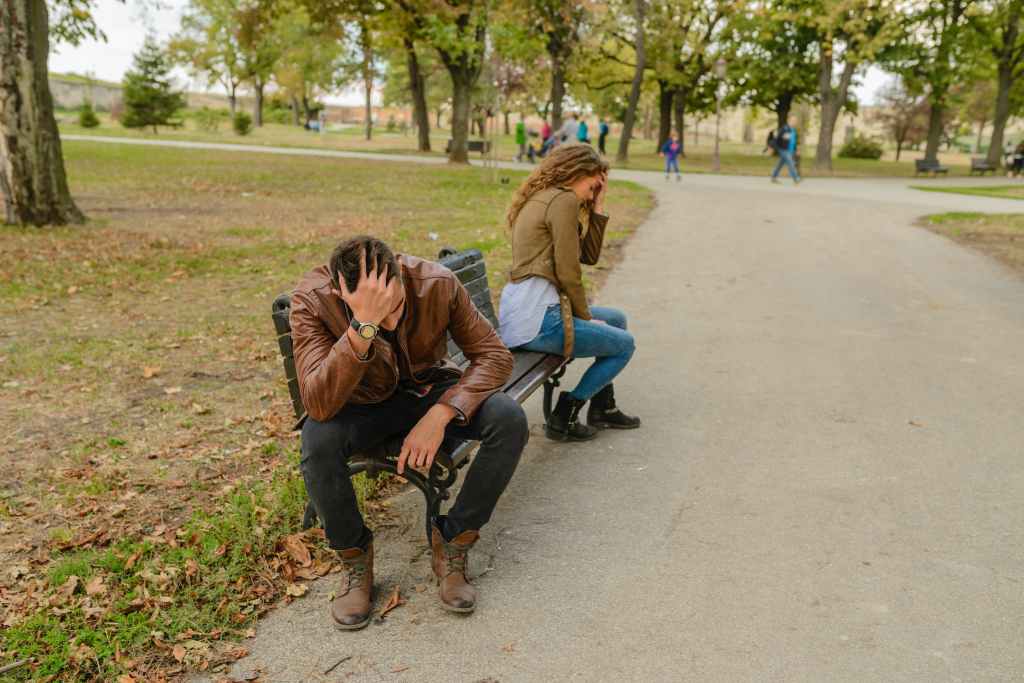
Breakups and Trauma Brain.

Breakups often suck under the best of circumstances. 

Don’t get me wrong, sometimes they don’t suck, at least not entirely. If a relationship is stagnant or painful enough to end, breaking up might be the first bit of relatively good news n awhile. 

But in general, breakups are recognized as one of the more painful human experiences out there. 

Breakups often suck— but when we’ve survived trauma, breakups are often especially complicated, emotionally. 

No mater how gentle or mutual a breakup is, for complex trauma survivors, they often scrape up feelings of rejection and abandonment from “back then.”

I was once criticized by a well-known (at least, in his mind) psychoanalytic therapist on Twitter for writing one of these blogs about the abandonment fears of trauma survivors. His position was, everybody has abandonment issues— why emphasize the particular abandonment issues of trauma survivors? 

My response— which got me blocked by him— was that, sure, maybe a lot of people have abandonment issues…but THIS particular blog was about the specific abandonment issues of trauma survivors. 

Because the rejection and abandonment issues that arise from complex trauma aren’t quite the same as the universal, abstract “abandonment issues” experienced by everyone, are they? 

Many complex trauma survivors struggle with NEVER feeling wanted. 

Many survivors struggle with NEVER feeling like enough. 

Many survivors struggle with feeling misunderstood— especially by those who are “supposed” to understand them. 

And many survivors struggle with feeling unloved— especially by those who were “supposed” to love them the most. 

When all that forms our basic programming, our base layer of conditioning about ourselves and relationships, relationship endings in adulthood can trigger particularly strong feelings and reactions. 

No matter how amicable or mutual— or not— a breakup is, for a complex trauma survivor it can trigger strong emotional flashbacks. 

We can feel small. 

We can feel alone. 

We can feel unwanted. 

We can feel unworthy. 

Our “adult” brain might know all of that is “irrational.” As adults, we know that relationships end— that relatively few relationships last indefinitely, and breakups are a fact of life for even the most desirable, “together” people. 

But our Trauma Brain may not know that. 

Our Trauma Brain might be holding up this breakup as evidence that we’ll never get it together. 

It might be pointing to this breakup as evidence that no one will EVER want us. Not really. 

When we’ve survived complex trauma, we need to be compassionate and patient with ourselves every day— but particularly when we go through something like a breakup. 

The temptation is going to be to beat the sh*t out of ourselves. 

The temptation is going to be to relapse. 

The temptation is going to be to act out. 

The temptation is going to be to list all the reasons why we are unlovable and will be forever alone. 

We need to rest that temptation. 

We need to work our recovery even as we work through our breakup. 

It’s not easy. Just like every f*cking recovery task. 

But the fact is, even if you’ve been dumped or had to dump someone, it doesn’t mean what your inner prosecutor wants to claim it means. 

Really. 

Goldilocks and complex PTSD.

There are gonna be times in trauma recovery when we feel overwhelmed, overstimulated— when we feel like we need some space. 

So we take some space, spend some time alone…and then we feel, well, lonely. 

We get lonely and sad and a little dissociative, and we regret distancing ourselves from our friends or others, at least right then. 

Then we get frustrated with ourselves, for the whole “Goldilocks” thing: we don’t want too much stimulation, but we don’t want too LITTLE interaction; what the hell DOES our too-hot, too-cold nervous system actually WANT from us, anyway? 

Managing the traumatized nervous system very often does feel like Goldilocks trying to find the right temperature of porridge. 

It’s true that our traumatized nervous system can be very easily overwhelmed. 

And it’s true that our inner child can be very sensitive to feeling isolated and lonely. 

And our job in trauma recovery is often to navigate between the two— which can seem maddening on some days (or, especially, some nights). 

No doubt about it: managing our competing needs for support and stimulation on the one hand, and quiet and space on the other, can be a struggle. 

Sometimes the effort involved in managing those competing needs can be so frustrating that we fall into blaming and shaming ourselves for what seems like an impossible balance we need to somehow find, day after day after day. 

We begin to think, maybe “they” were right. 

Maybe I AM too “high maintenance.” 

Maybe I’m “too needy.” 

Maybe I’m experiencing all these needs, and all this discontent, because I’m immature. I haven’t learned to “grow up” and accept the fact that we can’t always get what we want. 

It can be real easy to go down a self-critical rabbit hole when we come face to face with our complex needs as trauma survivors. 

As easy as it can be to go down that rabbit hole: resist. 

When the inner prosecutor tries to tell you you’re “too needy,” respond, calmly and evenly: “Human beings have needs. I’m exactly as needy as I am. No more; no less.” 

When the inner prosecutor tries to tell you no one will possibly put up with your neediness, respond, calmly and evenly: “I may not be for everyone— but not everyone is for me. I am not the first, last, or only person to experience these needs. My needs don’t make me bad or unlovable.” 

Spoiler alert: some of what you respond to the inner prosecutor with, will sound…well, kind of stupid. 

We’re not going to believe everything we say back to the inner prosecutor— but that doesn’t actually matter. 

The point in responding to the inner prosecutor at all is to declare that we have no intention of either debating him or being persuaded by him. 

Your lovability is actually not dependent upon you being “low maintenance.” 

Peoples’ needs, and their “neediness,” vary tremendously during the course of trauma recovery. 

You may or may not be particularly “needy” now— but as you continue to work your recovery, that will change. 

Some days, weeks, even years, will be “needier” than others.

And that’s okay. 

Our needs as trauma survivors are often intense and contradictory— and that’s a pain in the ass, but ultimately it’s okay, too. 

We experience what we experience. We need what we need. Shaming and blaming ourselves won’t change any of it. 

What we actually need, more than anything else, is to communicate to our inner self that we are committed to accepting and meeting our needs— whatever they are. 

Some days we won’t do it perfectly— but that doesn’t matter. What matters is that our nervous system comes to trust our commitment to being there for ourselves. 

Trauma recovery is about repairing our damaged relationship with ourselves. 

And we don’t do that by hating on our own needs— even when they’re inconvenient or inconsistent. 

Families and churches and trauma.

Trauma survivors are told “you’re wrong” dozens of times, in dozens of ways, every day. 

We’re told we’re wrong about what we remember. 

We’re told we’re wrong about whether it was “trauma” or not. 

We’re told that our reactions are wrong. 

We’re told our feelings are wrong. 

We’re told we “should” feel certain ways about family members— and that certain feelings about family just aren’t okay. 

After all— they’re FAMILY. How can you feel THAT way about them? 

We’re told we “should” feel certain ways about the church— that the church “deserves” our respect and, literally, our reverence. 

After all— it’s the CHURCH. How DARE we think or feel THAT about it? 

Over and over and over again, we’re told, in little ways and big was, implicitly and explicitly, that what we feel, how we react, what we need, is “wrong.” 

Is it any wonder that suicidality is one of the most common symptoms of chronic complex trauma? 

We’re told that MOST of the things we experience and feel aren’t “okay”— and then we’re often blamed for experiencing and feeling those things. 

We’re told to consider our role in what happened to us. 

We’re told to “forgive.” 

We’re told that the reason we’re having such a strong reaction to what happened to us is because we have a “negative mindset.” A “victim mindset.” 

We’re told we are wrong and/or at fault so often, that after awhile it becomes really, really hard to see our situation in any way that ISN’T blaming and shaming us. 

Here’s the thing: the culture doesn’t blame and shame us for what we went through and how it affected us for the hell of it. It does this because if we’re to blame for our pain, than the culture doesn’t have to reconsider its relationship with certain of its institutions— including the family and the church. 

The truth is, some pretty awful things happen in some families. More families than you think. 

Some pretty awful things happen in churches. More churches than you think. 

But many survivors struggle to acknowledge how painful their experiences were with their families and/or their churches, because our culture bends over backwards to exonerate both from fault or responsibility for complex trauma. 

Why does any of this matter? 

Because, if we’re going to realistically recover from complex trauma, we have to tap the brakes on the relentless blaming and shaming of ourselves that we learned “out there.” 

We have to start going ourselves the benefit of the doubt. 

We have to be on our own side. 

We have to acknowledge, as painful as it may be, that maybe we didn’t, and don’t, have complete control over what happened or happens to us out there. 

The reason why our culture is so big on victim blaming is because lots of people really, really don’t want to admit how vulnerable they are. 

The truth is, EVERYBODY is vulnerable to coercion and abuse— and families and churches are in unique position to victimize people and get away with it. 

We don’t like that. So we deny and disown it. Hence, a culture steeped in victim blaming. 

Realistic trauma recovery requires us to expel that culture of victim blaming from our head. 

If we really want to take responsibility for our life and recovery, it needs so start with acknowledging what we were NOT responsible for. 

If you’re reading this, you are likely told how “wrong” you are when it comes to your trauma and your reactions, day after day after day. 

But you’re not wrong. 

You’re not crazy. 

It happened. 

And it hurt. 

It affected you. 

Start there.