
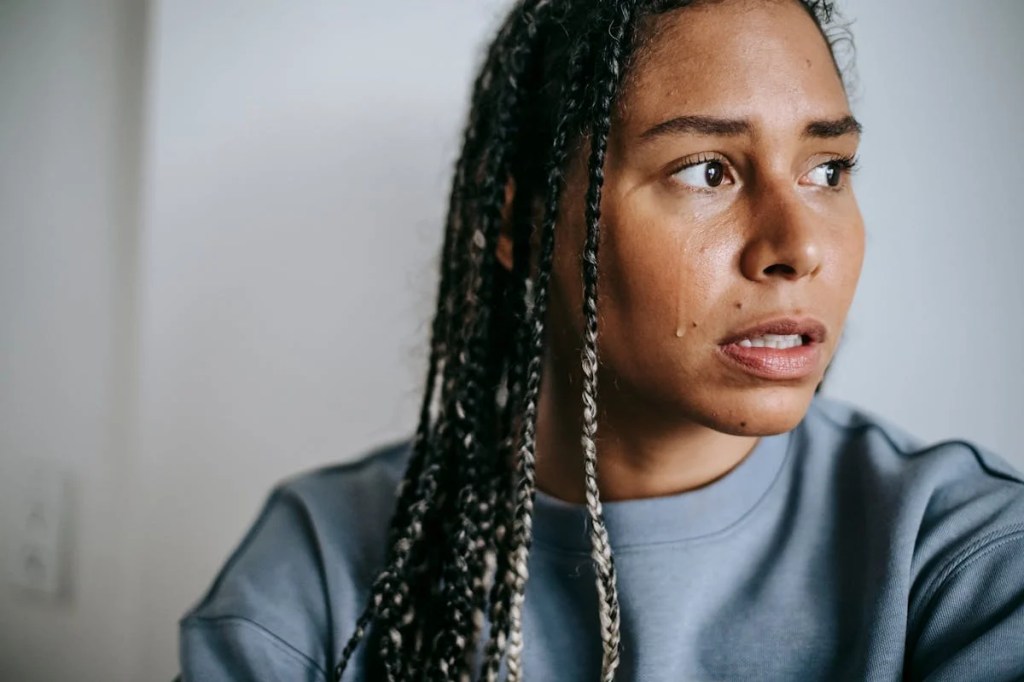
There is no shame in being afraid.
Are you kidding me? With some of the things you and I and most of the people reading this blog have been through?
Those are definitely things worth being afraid of.
When we’re young, and we’re exposed to events and relationships that are far, far outside the realm of what our young body and brain were designed to handle— that’s scary.
When we grow up being betrayed, abandoned, mocked, or otherwise abused or neglected by the people who were supposed to take care of us— that’s scary.
When we’re subjected to years of spiritual, social, or sexual coercion by a high control church or community— either as a child or as an adult— that’s scary.
Nobody is in trauma recovery for anything that isn’t scary.
Fear is a normal, adaptive human experience. There is nothing shameful about it.
So why do we so often feel so much shame around fear?
For many of us, we’ve been flooded with toxic messages about what fear means.
Our culture celebrates “bravery”— which gets misrepresented as a lack of fear.
I’ve always found it weird that we think “lack of fear” is some sort of amazing virtue. After all, if someone isn’t actually afraid of something, why then is it special that they faced that thing?
I’ve always felt it was far more worthy of celebration if someone is afraid of something— maybe very afraid— and they do the thing anyway.
That, to me, is real bravery.
Put another way— there can be no true courage without fear.
Fear doesn’t, actually, represent any kind of weakness.
To the contrary, fear often reflects a neuropsychological record of, and reflexive behavioral reaction to, things that have actually happened to us.
That is to say: we don’t get afraid out of nowhere.
Handling fear represents a very specific kind of intelligence— which trauma survivors often have in abundance.
We may FEEL afraid a lot of the time, and that may be frustrating to us— but it’s my observation that we trauma survivors are absolute champions at Doing The Thing Afraid.
The fact that we’ve been shamed for our fear doesn’t actually represent anything about us. It represents what shaming usually represents: somebody needed something to give us sh*t about, and they chose fear.
There is a myth about trauma survivors that we are “controlled” by fear.
With respect: bullsh*t, we’re “controlled” by fear.
Feeling fear, even a lot of fear on a regular basis, is not the same as being “controlled” by it.
It’s my experience that trauma survivors, as a rule, will do triple backflips through flaming hoops to avoid being “controlled” by anything— including fear.
For many of us, if we feel afraid of something, we process that as a challenge: it means we absolutely MUST do the thing, now.
So much of trauma recovery is about untangling our feelings, reactions, and needs from the shame that was conditioned into us by our family, church, or culture.
Fear represents survival intelligence, not weakness.
And the people most afraid of being “controlled” by fear are usually the ones least likely to let ANYTHING control them.

 Use Your Damn Skills