
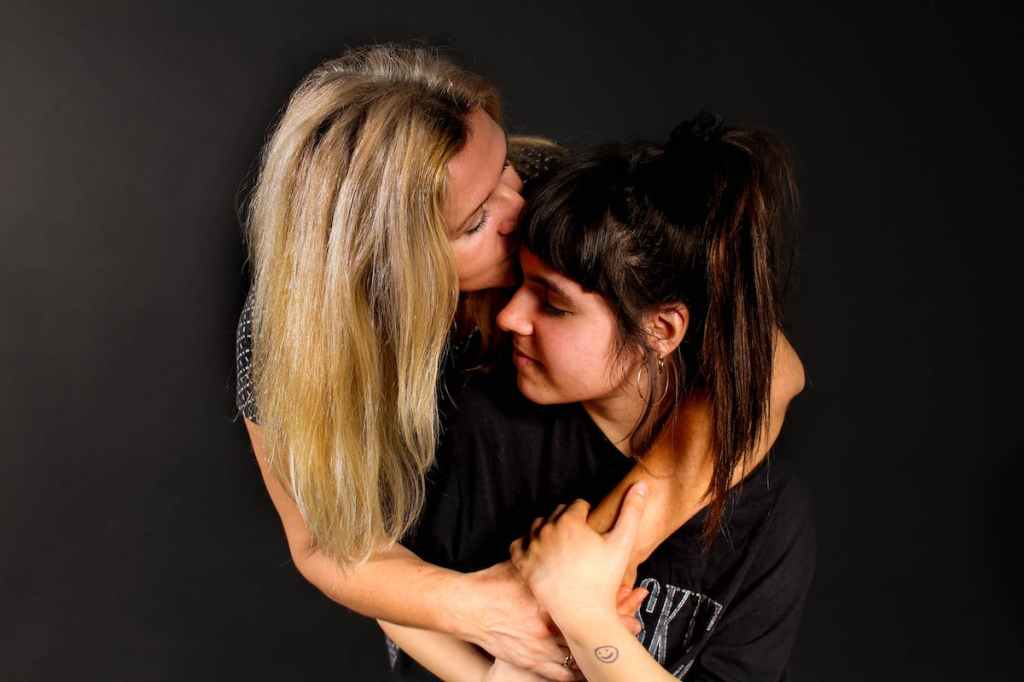
You’re not weird, “gross,” or “immature” for wanting hugs or other physical contact.
And, you’re not particularly weird if you really, really DON’T want physical contact— even from people you actually like, love, and/or trust.
This is true whether or not your trauma revolves mostly around physical violation OR emotional, verbal, or other less physical kinds of harm.
The essence of complex trauma is that it head-f*cked us about autonomy and attachment.
Complex trauma, by definition, was trauma that was functionally inescapable— like our families and other social systems when we’re kids.
We couldn’t just “opt out” of them.
When we’re repeatedly exposed to pain we cannot escape, a psychological phenomenon called “learned helplessness” sets in: we lose any kind of faith in our ability to escape or meaningfully control ANY aspect of our situation.
Also by definition, complex trauma was entwined with our important relationships.
It wasn’t just about the fact that we were being hurt— WHO did the hurting really mattered, especially to our self-esteem and self-concept.
Complex trauma tended to maul any kind of boundaries or limits we might have been able to set in a healthier environment.
Survivors of complex trauma are VERY familiar with essentially ANY kind of privacy or physical safety they EVER had, being ignored.
Fast forward to being a survivor in recovery: it would be really weird if we DIDN’T have strong feelings about and reactions to being touched.
For all of this therapy work and self-exploration work and personal growth that we’re asked to do in trauma recovery— all of this objectively exhausting work— sometimes we really feel that all we actually want, all we actually need, is to be hugged.
More than hugged. Held.
Sometimes we want that safe, soothing physical touch we didn’t get in childhood. The touch of someone who we could trust to both pay attention to and respect our bodily autonomy and boundaries.
On the flip side of that, sometimes physical touch triggers us in a very specific way.
Even when physical touch is meant well, and even when we feel nothing negative about the person potentially touching us, our nervous system very often registers physical intimacy as a potential violation of our safe space.
In trauma recovery it’s real important we honor what our nervous system is telling us— even if it seems “reactive” or “irrational” in the moment.
Sometimes we’re going to be shamed— and often we might shame ourselves— for even wanting to be hugged, let alone held.
We’ll tell ourselves that that’s the kind of thing children want. The kind of thing babies want.
Yes, that’s true— children and babies DO frequently want to be touched and held by someone safe.
But it’s also true that it makes perfect sense for a survivor who didn’t get that safe, reliable touch growing up to crave it, think about it…to even “miss” it, even if it’s something they never experienced in the first place.
It also makes perfect sense for us to respect our nervous system’s insistence that physical touch just isn’t something we can tolerate right now.
We are not going to shame or bully ourselves into any kind of successful recovery.
We’re not going to recovery by calling our basic physical attachment needs” “stupid” or “gross” or “childish.”
We’re not going to strong-arm ourselves into accepting physical touch if it’s just no something our nervous system can tolerate right now.
As with everything in recovery, the key is self-compassion.
We literally have to give ourselves, our needs, and our reactions the attention and patience they never got— that we never got— growing up.
That means no sham. Grace over guilt. Patience with and listening to and caring for ourselves.
Whether touch is good or bad for you right now— your job is to listen to you.
Easy does it.

 Use Your Damn Skills